Solar panels are everywhere—from rooftops in cities to open fields in the countryside. Many people are curious: How much energy does a solar panel produce? This question seems simple, but the answer depends on many factors. If you are thinking about using solar energy for your home or business, understanding how much electricity you can get from a solar panel is essential. This article will guide you step by step, so you can make smart choices, save money, and help the environment.
You will learn how solar panels work, what affects their energy output, and how much power you can expect in real life. We’ll cover different solar panel types, sizes, and brands. You’ll discover how location, weather, and installation angles can change your results.
This guide also explains solar panel ratings, efficiency, and how to calculate your potential energy production. Whether you are a homeowner, student, or business owner, by the end of this article, you will know exactly how to estimate solar panel output and avoid common mistakes.
What Is Solar Panel Energy Output?
The energy output of a solar panel is the amount of electricity it produces from sunlight. This is measured in watts (W) or kilowatt-hours (kWh). One watt is a small unit, so most home solar panels are rated between 250 to 450 watts. The energy output tells you how much power a panel can produce under ideal conditions.
However, real life is rarely ideal. Weather, shade, temperature, and even dust can lower the actual output. For example, a 400-watt panel might only produce 300 watts on a cloudy day. Solar panel energy output is not just about the panel itself—it’s about where you live, how you install it, and how well you maintain it.
How Do Solar Panels Work?
Solar panels use photovoltaic (PV) cells to convert sunlight into electricity. When sunlight hits these cells, they create an electric current. This current is direct current (DC), which flows in one direction. Most homes and businesses use alternating current (AC), so a device called an inverter changes DC into AC power.
Each panel has many PV cells connected together. The more cells in a panel, the higher its power rating. Multiple panels can be connected to create a solar array, which can power a home, a factory, or even feed electricity back to the local grid.
Key Factors Affecting Solar Panel Energy Production
Many people think all solar panels give the same results. In reality, several factors affect how much energy a solar panel produces. Here are the most important ones:
1. Sunlight (solar Irradiance)
The amount of sunlight that reaches your panel is the biggest factor. This is called solar irradiance and is measured in watts per square meter (W/m²). The more sunlight, the more electricity you get. For example, sunny locations like California receive more irradiance than northern Europe.
2. Panel Orientation And Tilt
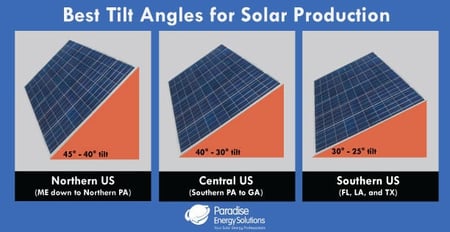
Solar panels work best when they face the sun directly. In the northern hemisphere, panels should usually face south. The tilt angle should match your latitude for the best results. Even a small mistake in angle can cut your energy output by 10-20%.
3. Shading
Shadows from trees, chimneys, or nearby buildings can block sunlight. Even a little shade on one part of a panel can reduce its output by a lot. Some panels have special technology to reduce this loss, but it’s still important to avoid shade.
4. Temperature
Solar panels like sunlight, but not heat. When panels get too hot, their efficiency drops. For example, a panel rated at 25°C (77°F) may lose 10-20% of its output if it gets much hotter.
5. Panel Efficiency
Efficiency is how well a panel turns sunlight into electricity. Most panels are 15-22% efficient. Higher efficiency means more power from the same size panel. For small roofs, efficient panels are better, but they usually cost more.
6. Age And Maintenance
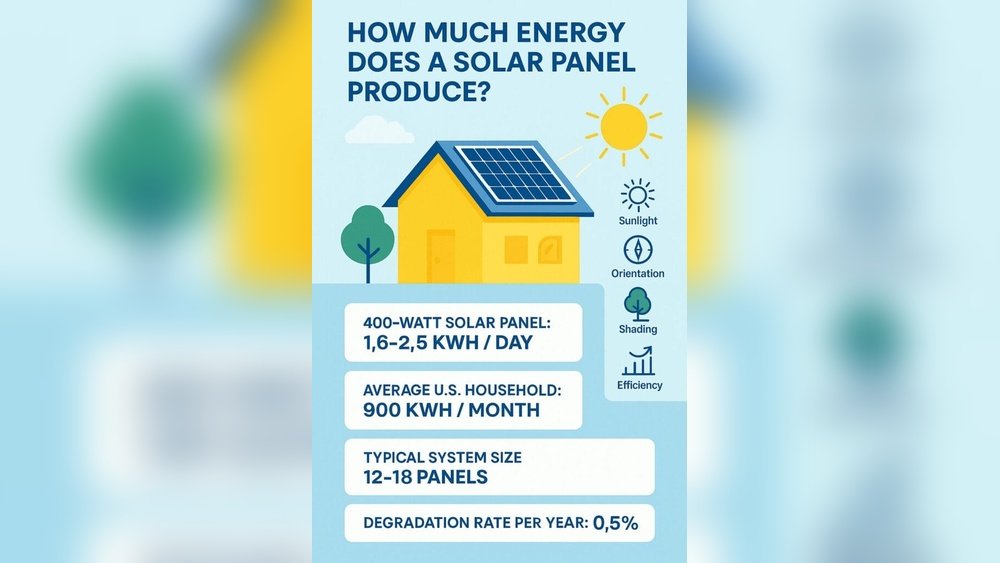
Solar panels slowly lose efficiency as they age. Most lose about 0.5% per year. Dirt, dust, and bird droppings also block sunlight. Cleaning panels regularly keeps them working at their best.
7. Inverter And System Losses
No system is perfect. Wires, inverters, and other parts also waste some energy—usually about 10-15%. Always include these losses when calculating total output.
Types Of Solar Panels And Their Typical Output
There are three main types of solar panels. Each has different energy output and best uses.
Monocrystalline Panels
These are made from a single crystal of silicon. They are the most efficient (18-22%) and work well in small spaces. They are also the most expensive. A typical monocrystalline panel is rated at 300-450 watts.
Polycrystalline Panels
Made from many silicon crystals, these panels are less efficient (15-17%) and slightly cheaper. They are blue in color and often used for larger installations. Typical ratings are 250-400 watts.
Thin-film Panels
These panels are light, flexible, and cheap, but much less efficient (10-13%). They are best for large areas or special uses like RVs and boats. Typical output is 100-200 watts per panel.
Here’s a quick comparison of average outputs by type:
| Panel Type | Typical Efficiency (%) | Common Power Range (W) |
|---|---|---|
| Monocrystalline | 18-22 | 300-450 |
| Polycrystalline | 15-17 | 250-400 |
| Thin-Film | 10-13 | 100-200 |
Solar Panel Wattage: What Does It Mean?
Solar panel wattage is the maximum power it can produce under perfect conditions. For example, a panel labeled “400W” can give 400 watts of power when the sun is strong, the temperature is 25°C, and there is no shade.
But in real life, conditions change all the time. The real output is usually less than the rated wattage. That’s why experts use watt-hours (Wh) or kilowatt-hours (kWh) to talk about real energy produced over time.
Example:
If a 400W panel gets full sun for one hour, it produces 400Wh (0. 4kWh). If the sun is weaker or the angle is wrong, the output will be lower.
How To Calculate Solar Panel Energy Production
Calculating how much energy a solar panel will produce can seem hard. But you can do it in a few simple steps. Here’s a practical guide:
Step 1: Find The Panel’s Wattage
Look at the panel label or datasheet. For example, 350W.
Step 2: Find The Average Sun Hours
Every place on earth gets a different number of full sun hours per day. This is not the same as daylight hours. A “full sun hour” is when the sun gives 1000 W/m². For example, Los Angeles gets about 5.5 full sun hours per day.
Step 3: Multiply Panel Wattage By Sun Hours
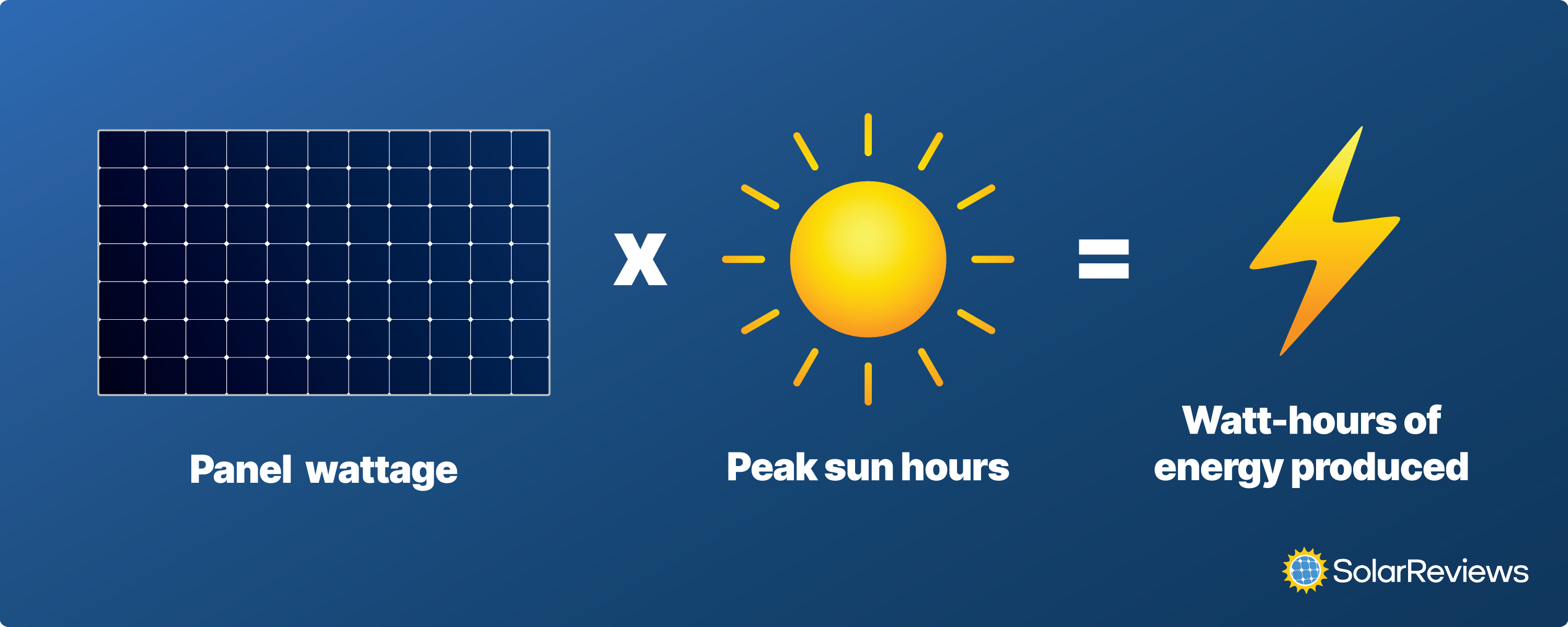
Energy Per Day = Panel Wattage × Sun Hours
For a 350W panel in Los Angeles:
350W × 5. 5 = 1,925 Wh (or 1. 93 kWh) per day
Step 4: Subtract System Losses
Remember, inverters and wires waste some energy. Subtract about 15% for losses.
- 93 kWh × 0.85 = 1.64 kWh per day (usable energy)
Step 5: Multiply By Number Of Panels
If you have 10 panels:
1.64 Kwh × 10 = 16.4 Kwh Per Day
This is enough to power a small home for a day.
Real-world Examples: Solar Panel Output In Different Locations
The amount of energy from a solar panel changes a lot depending on where you live. Here are some examples of daily output from a 400W panel in different cities, assuming 15% system losses:
| City | Average Sun Hours | Daily Output (kWh) |
|---|---|---|
| Phoenix, USA | 6.5 | 2.21 |
| London, UK | 3.1 | 1.05 |
| Delhi, India | 5.6 | 1.91 |
| Berlin, Germany | 2.9 | 0.99 |
| Sydney, Australia | 5.3 | 1.80 |
You can see the difference is big. Location is one of the most important factors for solar energy production.
Seasonal Changes In Solar Panel Output
Solar panels produce more energy in summer and less in winter. This is because days are longer, and the sun is higher in the sky during summer months. In winter, short days and low sun angles mean less electricity.
For example, in New York, a panel might make twice as much electricity in July as in December. Solar owners need to plan for these changes, especially if they rely on solar as their main energy source.
Solar Panel Output Over Time: Degradation And Lifespan
Solar panels are durable, but they slowly lose power as they age. This is called degradation. Most panels lose about 0.5% of their output per year. After 25 years, a panel will make about 87% of what it made when new.
Most good panels come with a 25-year warranty for at least 80% of their original power. This means you can trust solar panels to give steady energy for many years, but you should include this small loss in your long-term plans.
Comparing Solar Panel Brands And Models
Not all panels are equal. Even panels with the same wattage can have different real-world outputs. Some brands use better materials or advanced technology to give higher performance.
Here’s a comparison of three popular 400W monocrystalline panels:
| Brand | Efficiency (%) | Warranty (years) | Estimated Output After 25 Years (%) |
|---|---|---|---|
| SunPower | 22.8 | 25 | 92 |
| LG | 21.7 | 25 | 90 |
| Canadian Solar | 20.5 | 25 | 86 |
Look for high efficiency, long warranty, and good reviews when choosing a panel.
Understanding Kwh: The Real Measure Of Solar Energy Production
Many people confuse watts and kilowatt-hours. Here’s the difference:
- Watt (W): The rate of energy production at a moment (like the speed of a car).
- Kilowatt-hour (kWh): The amount of energy produced over time (like the distance driven).
When you get your electricity bill, you pay for kWh, not watts. So, always think about how many kWh your solar panels will produce each month or year.
For example, if your home uses 900 kWh per month, and your solar system makes 30 kWh per day, you can cover all your needs.
How Many Solar Panels Do You Need?
To find out how many panels you need, follow these steps:
- Find your average daily electricity use (in kWh). Look at your bill.
- Find your location’s average sun hours.
- Choose your panel wattage.
- Use the formula:
Number of Panels = (Daily Use) / [(Panel Wattage × Sun Hours × 0. 85)]
Example:
If you use 20 kWh per day, have 5 sun hours, and use 400W panels:
20 / (0. 4 × 5 × 0. 85) = 20 / 1. 7 ≈ 12 panels
So, you would need about 12 panels.
Common Mistakes When Calculating Solar Panel Output
Many beginners make simple mistakes that lead to poor results. Here are some to avoid:
- Ignoring system losses (wires, inverter)
- Using daylight hours instead of full sun hours
- Not counting shading or roof direction
- Forgetting about panel degradation over time
- Overestimating winter output
For best results, use a conservative estimate and talk to a local installer.
What About Cloudy Days And Bad Weather?
Solar panels still work when it’s cloudy, but their output drops. On a heavy cloud day, you might get only 10-30% of normal output. Rain, snow, and fog also reduce production. However, panels can still make some energy, and rain helps clean off dust.
Interestingly, solar panels can perform slightly better in cool, cloudy weather compared to hot, sunny days because lower temperatures increase efficiency. Still, sunny days are best for maximum output.

Credit: www.solar.com
Solar Panel Output And Battery Storage
If you want to store solar energy for use at night or during blackouts, you need batteries. The size of the battery bank depends on your daily energy needs and your solar panel output.
For example, if your panels make 10 kWh per day, and you want to store one day’s energy, you need a battery that holds at least 10 kWh, plus extra for cloudy days.
Battery efficiency and losses also matter. Most batteries are 85-95% efficient.
Solar Panel Output For Different Uses
Solar panels come in many sizes for different uses. Here are some examples:
- Home use: Most homes need 10-20 panels to cover all their needs.
- RVs and boats: Small panels (50-200W) can run lights, fans, or small appliances.
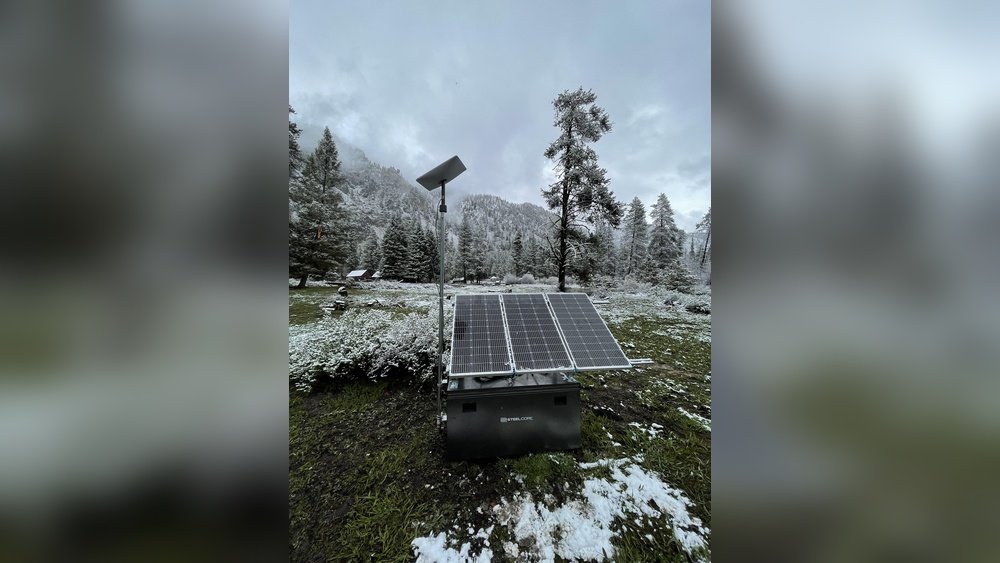
- Off-grid cabins: 4-8 panels plus batteries can power a small cabin.
- Business/industrial: Large arrays with hundreds of panels can power factories or offices.
The key is to match your panel size and number to your energy needs.
Credit: www.paradisesolarenergy.com
Solar Panel Output And Net Metering
Many countries and states offer net metering. This means if your panels make more energy than you use, you can send the extra back to the grid. You get credit on your bill for this power. This helps you save money and makes solar more attractive.
Check your local rules, as net metering is not available everywhere and may have limits.
Monitoring And Measuring Your Solar Panel Output
Modern solar systems come with monitoring tools. You can see how much energy your panels produce every hour, day, or month. Some systems send alerts if output drops because of shade, dirt, or faults.
Regular monitoring helps you catch problems early and keep your panels working well. Many apps and websites, like PVWatts Calculator from the U.S. National Renewable Energy Laboratory, can help estimate and track your solar output.
The Impact Of Solar Panel Size
Panel size is measured in physical dimensions (length × width) and power (watts). Larger panels usually make more power, but not always. Some small panels are very efficient and can match the output of bigger, older panels.
When roof space is limited, choose high-efficiency panels. If you have lots of space, you can use bigger or cheaper panels.
Solar Panel Output In Different Climates
Solar panels work best in sunny, mild climates. However, they also work in cold or cloudy places, just at lower output. In very hot places, panels lose efficiency because high temperatures reduce power.
Snow can cover panels and stop production, but it usually slides off quickly. Some people install panels at steeper angles to help snow slide off.
Dust storms or heavy pollution can also reduce output. Cleaning panels once or twice a year helps prevent this loss.
Advanced Technologies That Boost Solar Panel Output
Solar panel technology is always improving. Here are some features that can boost your energy production:
- Half-cut cells: Panels with split cells are less affected by shade and make more power.
- Bifacial panels: These can use sunlight from both sides, increasing output when light reflects off surfaces like roofs or snow.
- PERC technology: Panels with Passivated Emitter Rear Cells are more efficient, especially in low light.
These advanced features can add 5-15% more energy over a year, especially in tough conditions.
How Solar Panel Output Affects System Cost
Higher output means fewer panels for the same energy. But high-output panels cost more per watt. Sometimes it’s cheaper to buy more, lower-output panels if you have space. Other times, small roofs need the best panels you can get.
Always compare the cost per kWh produced, not just the price per panel. This tells you which system gives the best value for your money.
Credit: www.solarreviews.com
Government Incentives And Solar Panel Output
Many governments offer tax credits, rebates, or feed-in tariffs based on how much energy your panels make. High-output panels can help you get more benefits. Check your local programs before you buy.
For example, in the United States, the federal solar tax credit lets you claim 30% of your solar system cost on your taxes. Many states also offer extra incentives.
Maintenance Tips To Maximize Solar Panel Output
To keep your panels working at their best:
- Clean them regularly to remove dust and dirt.
- Trim trees to avoid new shading.
- Check for loose wires or connections.
- Monitor your output for sudden drops.
Most panels need little care, but a little attention can boost your energy by 5-10% over the years.
Solar Panel Output: Myth Vs. Reality
Some people believe solar panels will always meet all your energy needs. In reality, output changes with weather, season, and age. Panels don’t work at night, and cloudy days can cut output sharply. Batteries or grid connections help fill the gaps.
Another myth is that panels don’t work in cold climates. In fact, they often work better when it’s cold, as long as the sun is shining.
Non-obvious Insights Most Beginners Miss
- Panel output depends more on sun hours than panel wattage. Even a high-wattage panel gives little energy in a dark location. Always check your local sun hours.
- System losses add up. Between inverter losses, wiring, and panel degradation, you can lose 15-25% of your expected output. Always include these losses in your plans for realistic results.
How To Choose The Right Panels For Maximum Output
- Check real-world tests: Lab ratings are useful, but real-life performance may be different.
- Ask about local support: Good service and warranty support can save you money if there is a problem.
- Look for panels with low temperature loss: Some brands handle heat better than others.
- Consider your roof space: High-efficiency panels are best for small spaces.
Solar Panel Output And Environmental Impact
Each kWh from solar panels replaces energy from fossil fuels, reducing pollution and greenhouse gases. Even one small panel can make a difference over its 25+ year life. The more panels and higher output, the greater the benefit for the environment.
The Future Of Solar Panel Output
Solar panel technology is improving fast. New panels are reaching 23-25% efficiency in the lab, and prices keep dropping. In the future, even small panels may produce much more energy, making solar power possible for almost everyone.
Frequently Asked Questions
What Is The Average Daily Output Of A Typical Solar Panel?
The Average Daily Output Depends On Panel Size, Efficiency, And Location. A Common 400w Panel In A Sunny Area (5 Sun Hours Per Day) Produces About 1.7 Kwh Per Day After Losses. In Less Sunny Places, Expect 1.0–1.3 Kwh Per Day.
Do Solar Panels Produce Energy On Cloudy Days?
Yes, But Less Than On Sunny Days. Most Panels Make 10-30% Of Their Normal Output On Cloudy Days. Rainy Or Foggy Weather Also Reduces Energy, But Panels Still Work.
How Long Do Solar Panels Keep Their Output?
Most Panels Last 25–30 Years. They Lose About 0.5% Per Year Of Their Output. After 25 Years, A Good Panel Still Makes About 85–90% Of Its Original Energy.
Can I Run My Whole House On Solar Panels?
Yes, But You Need Enough Panels To Cover Your Energy Use And Local Sun Hours. Most Homes Need 10–20 Panels (350–450w Each) For Full Coverage. You May Need Batteries For Power At Night Or During Blackouts.
Where Can I Find Accurate Sun Hour Data For My Location?
Many Online Tools And Government Agencies Provide This Data. One Trusted Source Is The u.s. National Renewable Energy Laboratory, Which Offers Maps And Calculators For Many Countries.
Solar panels can be a smart, green investment. Understanding how much energy a solar panel produces helps you plan, save, and enjoy the benefits of clean energy for years to come. Whether you’re starting small or planning a big project, knowing the facts will help you make the best choices for your needs.