Solar panels are becoming more common on rooftops, businesses, and even in remote areas. People love them for clean energy and lower electric bills. But before installing solar panels, one important question comes up: How much do solar panels weigh? This detail matters for your roof’s safety, handling during installation, and transport. Yet, many homeowners and even some contractors don’t fully understand all the factors that affect solar panel weight.
In this article, you’ll discover everything you need to know about solar panel weight. We’ll look at different types, what makes some heavier than others, how weight affects installation, and what to check before putting panels on your roof. You’ll find real numbers, examples, and insights that help you make smart choices—whether you’re planning a home system, a large business project, or just curious about solar technology.
What Determines Solar Panel Weight?
The weight of a solar panel depends on several factors. The most obvious is size—large panels weigh more than smaller ones. But there’s more to it. The type of materials, the panel’s frame, and even the technology inside all play a role.
Size And Surface Area
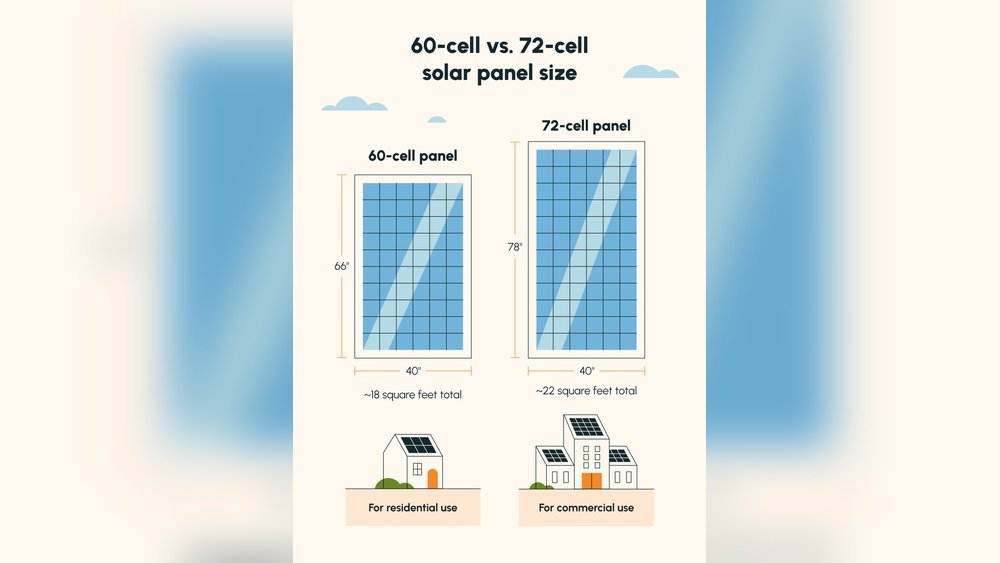
Solar panels come in many sizes. The most common residential panels are around 60 cells (about 3.25 ft x 5.4 ft or 1 x 1.65 meters). Larger 72-cell panels are often used in commercial settings. The bigger the surface area, the more glass, metal, and silicon are used, making the panel heavier.
It’s important to remember that solar panel manufacturers sometimes produce panels in custom sizes for special applications, such as solar carports or off-grid cabins. These specialty panels may be longer, wider, or shaped differently, and their weight can vary significantly from the standard panels most people see on houses.
Frame Material
Most panels use an aluminum frame. Aluminum is strong but light, which helps keep the total weight manageable. Frameless panels are less common and often used in special projects, but they can actually be heavier because they need thicker glass.
Some high-durability panels may use reinforced frames or even steel in the corners for extra strength, especially for locations with frequent storms or hurricanes. This reinforcement can add weight, but it increases the panel’s ability to resist bending or twisting during extreme weather.
Glass Thickness
Solar panels are covered in tempered glass to protect the cells. Some panels use thicker glass for extra strength, especially in places with heavy snow or hail. Thicker glass adds weight.
For example, panels designed for northern climates, where snow can pile up for months, may use glass up to 4mm thick instead of the standard 3. 2mm. That extra thickness seems small but adds several kilograms to each panel. Some bifacial panels (glass on both sides) have two layers of glass, which can nearly double this part of the weight.
Solar Cell Technology
Monocrystalline, polycrystalline, and thin-film panels all have different weights.
- Monocrystalline panels are often a bit lighter for the same power.
- Polycrystalline panels may use more silicon per watt, making them slightly heavier.
- Thin-film panels are usually much lighter but also less efficient.
It’s worth noting that new cell designs, like half-cut cells or shingled cells, can also impact panel weight. These advanced layouts sometimes allow for thinner glass or less frame material, slightly reducing overall weight without losing strength.
Backing Material
The back of a solar panel can be made from different materials. Most use a polymer sheet, but some high-end panels use glass on both sides (bifacial panels). This double-glass construction increases the weight.
Bifacial panels are gaining popularity because they can capture light from both the front and the back, increasing energy production. However, this benefit comes with added weight, and installers must ensure the roof or ground mounts can handle the load.
Junction Box And Wiring
Every panel has a junction box (where wires connect). While not heavy, these add a little extra, especially when considering many panels together.
For large installations, the combined weight of junction boxes, cables, and connectors can add up to several kilograms across an entire solar array. For small home systems, the effect is minor, but it’s still important to include every component in your weight calculations.
Average Weight Of Common Solar Panels
Let’s look at some real numbers. The most common panels for homes are 60-cell models. Commercial sites often use 72-cell panels. Thin-film panels are used in special cases.
| Type | Cells | Size (ft) | Weight (kg) | Weight (lbs) | Watts |
|---|---|---|---|---|---|
| Monocrystalline | 60 | 3.25 x 5.4 | 18-20 | 40-44 | 300-350 |
| Monocrystalline | 72 | 3.25 x 6.5 | 22-25 | 48-55 | 370-450 |
| Polycrystalline | 60 | 3.25 x 5.4 | 19-21 | 42-46 | 270-320 |
| Thin-Film | Varies | 3 x 6 | 12-16 | 26-35 | 150-200 |
| Bifacial (Glass/Glass) | 72 | 3.25 x 6.5 | 25-30 | 55-66 | 400-450 |
These numbers are averages. Each brand and model can be a bit different, but this gives you a clear idea of what to expect. If you are comparing two panels with similar wattage but different weights, look at the frame and backing materials—they usually explain the difference.
Why Solar Panel Weight Matters
You might wonder, “Why does a few kilograms matter?” In practice, solar panel weight affects several things:
- Roof strength: Too much weight can damage your roof or make it unsafe.
- Installation: Heavier panels need more workers or special equipment.
- Transport and handling: Moving panels is easier if they’re light.
- Mounting system: Heavier panels need stronger mounts.
Ignoring weight can lead to problems. For example, some older homes aren’t built for extra weight. In a few cases, roofs collapsed because installers didn’t check the structure first.
Another point to consider is that heavier panels can put stress not just on the roof surface but also on supporting walls and foundations. Over time, a slightly overloaded roof can develop leaks, cracks, or even sagging. For commercial buildings, especially those with large open interior spaces and fewer support columns, checking the load limit is even more important.
Solar Panel Weight Per Square Meter And Per Watt
For a fair comparison, it helps to look at weight per square meter and per watt.
Per Square Meter
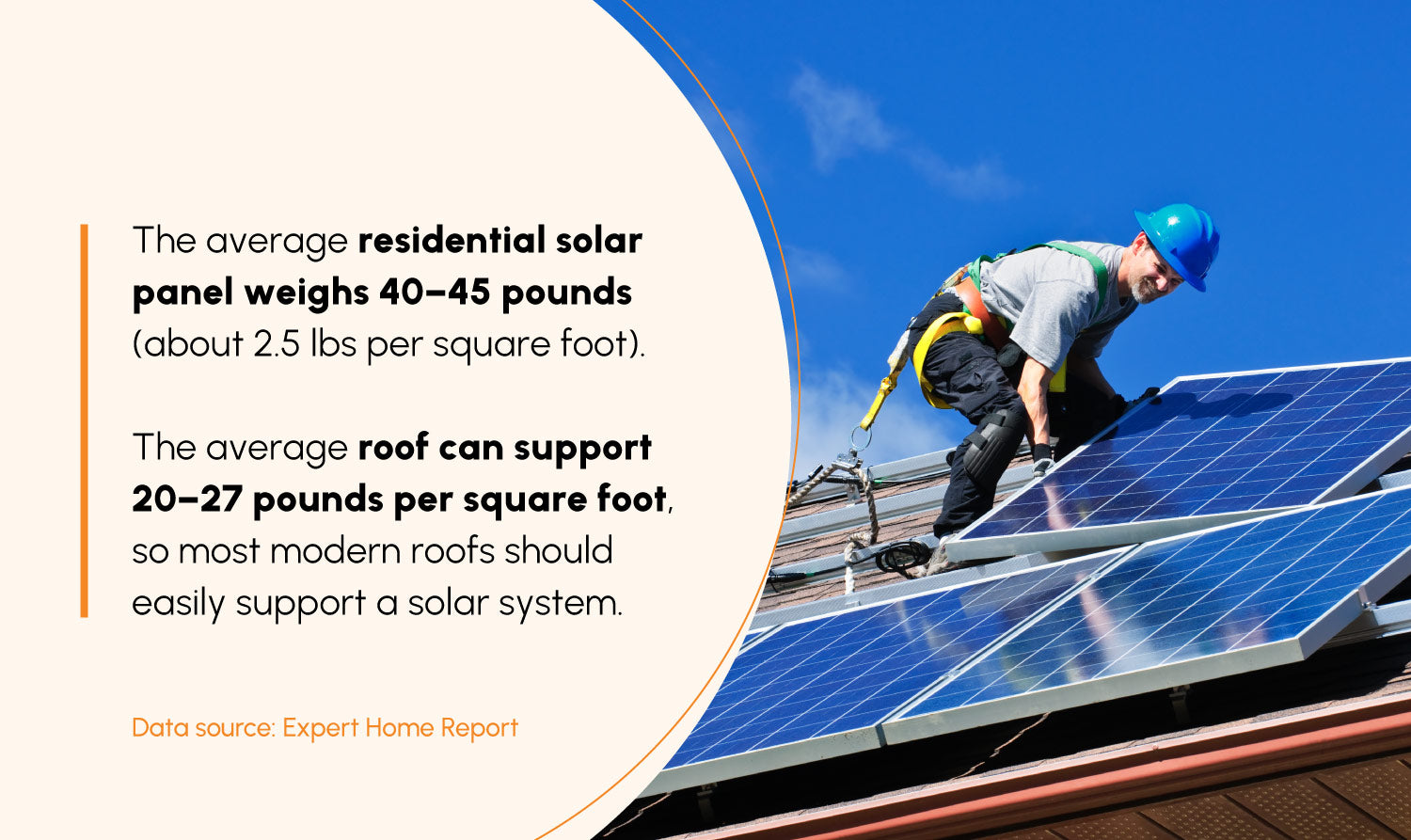
Most standard solar panels weigh around 10-12 kg per square meter (about 2-2.5 lbs per square foot). Thin-film panels can be as low as 6-8 kg/m².
Some specialty panels, like those designed for lightweight rooftops or mobile applications, can go even lower. For instance, certain flexible panels can weigh just 2-4 kg/m², making them suitable for fragile or mobile roofs.
Per Watt
A typical monocrystalline panel has about 5-6 kg per 100 watts (about 11-13 lbs per 100W). Thin-film panels may be heavier per watt because they’re less efficient, meaning you need more area for the same power.
Efficiency plays a huge role here. If you need a 5kW system and choose low-efficiency panels, you’ll need more panels and thus a higher total weight—even if each panel is individually lighter. On the other hand, high-efficiency monocrystalline panels allow you to reach your power goal with fewer panels, reducing both the total weight and the number of roof penetrations needed for mounting.
How Many Solar Panels Are Needed For A Home? (and Their Total Weight)
Most homes use between 4-8 kW of solar power. Let’s use a 6 kW system for example.
- If you use 300W panels: 6000W / 300W = 20 panels
- If each panel weighs 19 kg (42 lbs): 20 x 19 = 380 kg (840 lbs) total
For a bigger home needing 10 kW:
- 10,000W / 350W (modern panel) = about 29 panels
- If each panel weighs 20 kg (44 lbs): 29 x 20 = 580 kg (1,276 lbs) total
This is just the weight of the panels, not including mounting racks or wiring.
It’s easy to underestimate the overall weight of a solar system. For example, adding a few more panels for “future needs” can push your roof past its safe load. Also, larger systems may require reinforcement or special engineering, especially for homes with unique roof designs or lightweight materials.
Can Your Roof Handle The Weight?
Most modern roofs can easily support the weight of solar panels. Building codes often require roofs to handle at least 20 lbs per square foot of live load (like snow). Solar panels usually add only 2-4 lbs per square foot.
But older homes, or those with damage, might not be strong enough. Here’s what you should do:
- Get a roof inspection by a qualified roofer or engineer.
- Check local building codes for weight limits.
- Consider roof age and material (tiles, shingles, metal, etc. ).
A common mistake is to skip the inspection. Just because your neighbor installed solar doesn’t mean your roof is ready. Each roof is different.
For example, clay tile roofs may not support as much extra weight as asphalt shingles. Some historic homes were built with lighter rafters that can’t handle modern loads. Even if your roof “looks fine,” hidden damage from past leaks or termites can weaken it.
An inspection costs little compared to the risk of costly repairs or a collapsed roof.
Flat Roofs Vs. Sloped Roofs
The type of roof makes a difference in how weight is spread.
Sloped Roofs
Most homes have sloped roofs. Solar panels are attached directly to rafters or beams. The weight spreads evenly, and water or snow usually slides off.
Sloped roofs have the advantage of natural drainage, which reduces the load from standing water or snow. However, installers must be careful not to damage shingles or tiles during mounting, as this can cause leaks.
Flat Roofs
On flat roofs, installers often use ballasted (weighted) mounts. They may add extra weight (concrete blocks) to hold panels down in strong winds. This can more than double the total weight on the roof.
Example: A 6 kW system on a flat roof might add 850 lbs of panels, plus 900 lbs of ballasts.
Always check with a structural engineer before installing on a flat roof.
In addition, flat roofs can collect water, which may increase the load temporarily during heavy rain. Ballasted systems are popular because they avoid drilling holes in the roof, but the trade-off is much higher total weight. Some buildings, especially older commercial structures, may not be designed for this kind of load.
Ground-mounted Solar Panel Weight
Ground-mounted systems are built on the ground using racks or poles. Here, panel weight is less important because the ground can support much more.
But you still need strong mounts, especially in windy or snowy areas. Heavy panels may need deeper foundations.
It’s also easier to use heavier, more durable panels for ground-mounted arrays because you aren’t limited by roof structure. This flexibility allows for larger installations, but you still need to consider soil stability and the risk of shifting over time, especially in areas with heavy rain or frost.
Thin-film Solar Panels: How Much Do They Weigh?
Thin-film panels are much lighter than traditional ones. Instead of thick glass, they use flexible materials like plastic or thin glass.
- Typical thin-film panel: 12-16 kg (26-35 lbs) for a 3×6 ft panel
- Weight per square meter: 6-8 kg
- Flexible thin-film: Sometimes as little as 2-4 kg/m²
Thin-film panels are popular for:
- Lightweight roofs (metal, membrane)
- RVs, boats, and portable solar kits
But remember: thin-film panels are less efficient. You need more of them for the same power, so total weight can add up.
Some thin-film panels are designed to be peeled and stuck directly onto metal roofs, which makes installation much faster and reduces the need for heavy mounting frames. However, the lifespan of these panels is sometimes shorter, and they may not be as resistant to hail or debris.
Bifacial And Double-glass Panels
Bifacial panels capture sunlight from both sides. They use glass on the front and back, making them heavier.
- Typical weight: 25-30 kg (55-66 lbs) for a 72-cell panel
- They are mostly used in commercial solar farms
The extra weight needs stronger mounts and sometimes special installation methods.
Bifacial panels are often installed on raised racks to allow light to reach the rear side. This setup works best on surfaces that reflect light, such as white rooftops, gravel, or snow. While bifacial panels can generate more power, their extra weight means they are rarely used on standard residential rooftops unless the roof structure is exceptionally strong.

Credit: www.theecoexperts.co.uk
How Weight Affects Installation Costs
Heavier panels are harder to lift, carry, and install. This can increase labor costs, especially for:
- Large commercial systems
- Tall buildings (cranes may be needed)
- Roofs with difficult access
Installers may charge more for heavy panels, or need extra crew. If your roof can only handle lighter panels, your choices may be limited.
For example, installing panels on a three-story building may require special lifts or cranes, and heavier panels increase the risks of injury or breakage. On the other hand, lightweight panels may save both time and money, since workers can move them by hand and finish the job faster.
In some cases, choosing lighter panels can reduce your overall installation bill by several hundred dollars.
What If The Roof Is Too Weak?
If your roof isn’t strong enough, you have a few options:
- Reinforce the roof: Add extra beams or supports. This can be costly.
- Use lighter panels: Thin-film or newer lightweight designs.
- Install a ground-mounted system: If you have space in your yard.
- Wait for a roof replacement: If your roof is old, combine replacement with solar installation.
Ignoring roof strength can lead to leaks, cracks, or even collapse. Always put safety first.
Some homeowners choose to reinforce only the part of the roof that will hold panels, rather than the entire structure. This can lower costs, but it requires careful planning. Remember, safety should always come first—saving money by skipping reinforcement can lead to much bigger expenses later if the roof fails.
Solar Shingles And Lightweight Alternatives
Solar shingles look like regular roof tiles but generate power. They are lighter per piece but cover less area, so you need more of them.
- Tesla Solar Roof shingles: About 15 kg/m² (3 lbs/ft²)
- Other brands: Similar weights
Solar shingles are good for new roofs or full replacements. They are more expensive but put less weight on the roof than a traditional solar panel array.
Solar shingles blend in with your roof, making them a great choice for people who want a less noticeable solar system. However, because each shingle is small, the installation process can be more complex and time-consuming, sometimes increasing labor costs.
Still, for fragile or historic roofs, this lighter, integrated approach is often the best option.
How Shipping And Handling Are Affected
Solar panels are large and awkward to move. Heavier panels:
- Cost more to ship (especially overseas)
- Need more workers to unload and carry
- May be more likely to break if dropped
Installers often prefer panels under 50 lbs for easy handling. If you live in a remote area, check transport costs before buying.
Shipping costs can become a significant part of your project’s budget, especially if you are importing panels or live far from a distribution center. Some manufacturers use special packaging or pallets to protect heavier panels during transport, but this can add even more weight.
Occasionally, panels arrive damaged because the extra weight made handling difficult for workers.
Real-world Examples Of Solar Panel Weight
Let’s look at popular panels and their weights:
- SunPower Maxeon 6 (Residential, 425W): 21.8 kg (48.1 lbs)
- LG NeON 2 (Residential, 370W): 18.0 kg (39.7 lbs)
- Canadian Solar HiKu (Commercial, 445W): 24.9 kg (54.9 lbs)
- Q CELLS Q.PEAK DUO (Residential, 340W): 19.9 kg (43.9 lbs)
- First Solar Series 6 (Thin-film, 440W): 17.5 kg (38.6 lbs)
Some brands make extra-light panels for special uses, but most fall within these ranges.
Looking at these examples, it’s clear that two panels with similar power output can have very different weights. This is why it’s important to check the specifications and not just assume all panels are about the same.
Solar Panel Weight And Snow/wind Loads
Solar panels must handle the weight of snow and the force of wind. Heavier panels aren’t always stronger, but they often have thicker glass and tougher frames.
- Standard panels can support 5400 Pa (113 lbs/ft²) snow load
- Commercial panels may be rated higher for severe weather
If you live where snow piles up, choose panels with a high snow load rating. The panel weight is less important than how well it’s built.
Wind is another factor. Panels installed in hurricane-prone areas must be rated for high wind loads, and the mounting system must be secured to resist uplift. Sometimes, installers use additional fasteners or special brackets to meet local codes.
International Standards And Codes For Solar Panel Weight
Most countries have building codes that set limits for roof loads (weight on the roof). Installers must follow these rules. For example:
- USA: International Building Code (IBC) requires roofs to handle live and dead loads, including solar panels.
- Europe: EN 1991 standard sets load limits for buildings.
Always ask your installer if they follow local codes. Some regions also require permits and inspections.
It’s also wise to check if your city or insurance company has special requirements for solar installations. In some places, you may need to show proof that your roof can safely support the planned solar array before getting a permit.
How Manufacturers Reduce Solar Panel Weight
Modern technology is making panels lighter without losing strength:
- Thinner glass (with stronger materials)
- Lighter frames (using special alloys)
- New cell designs (like shingled or half-cut cells)
- Back-contact panels (less wiring on the front)
Some companies offer “ultra-light” panels for special markets, like solar for RVs or portable solar.
For example, one manufacturer reduced the frame thickness from 40mm to 30mm by using a stronger alloy, cutting total weight by almost 2 kg per panel. Another company uses composite backing instead of glass to save weight. These small changes add up, especially for large systems.
Myths About Solar Panel Weight
Many people believe:
- “Solar panels will break my roof.” Not true for most modern homes.
- “All panels are heavy.” Some are much lighter than others.
- “Heavier panels are better.” Not always; strength matters more than weight.
The real risk is poor installation, not the panel weight itself.
Another myth is that heavier panels are always more durable. While thicker glass can help, it’s the quality of the frame, mounting, and installation that truly protects your investment. Lightweight panels made with modern materials can be just as durable as heavier ones.
The Role Of Mounting Systems In Total Weight
The racking and mounting system adds weight too. Most racks are made of aluminum and add about 2-4 kg (4-9 lbs) per panel.
If your mounting system uses concrete ballasts (on flat roofs), the added weight can be much higher.
A complete system = panels + racking + wiring + inverters. All these should be considered in your roof’s load calculations.
For example, a 20-panel system with aluminum racking may add 80 kg (176 lbs) of extra weight. If ballasts are used, this number can triple. It’s important to include every part of the system in your calculations to avoid surprises after installation.
How To Check The Exact Weight Of A Solar Panel
To find the exact weight:
- Check the manufacturer’s datasheet (usually a PDF online).
- Look for “Weight” or “Panel Weight” in the specifications.
- If you can’t find it, contact the company or dealer.
Don’t guess based on size alone. Two panels of the same size can have different weights.
The datasheet will also show other important details, like size, efficiency, and mounting options. If you’re unsure, ask your installer to help interpret the information.
Environmental Impact Of Solar Panel Weight
Lighter panels use less material, which can lower their carbon footprint. Also, lightweight panels are easier to recycle at the end of their life.
But sometimes, lighter means thinner glass, which may be less durable. There’s always a balance between weight, strength, and lifespan.
Some manufacturers now use recycled materials in their panels and frames, further reducing environmental impact. Choosing a lighter, recyclable panel can be a good way to make your solar project even greener.
Solar Panel Weight For Off-grid And Portable Use
Off-grid cabins, RVs, boats, and tiny homes all use solar power. Here, weight matters even more:
- Portable solar panels: Often foldable, 2-8 kg (4-18 lbs) each
- Flexible panels: Can be glued or taped to surfaces, 2-4 kg/m²
For off-grid use, lighter panels are easier to mount and move. But they may be less durable in storms or high winds.
Some portable panels come with built-in stands or carry cases, making them ideal for camping or emergency backup. However, these lightweight panels usually have lower output and may not last as long as standard glass panels.
Comparing Solar Panel Weight By Brand
Let’s compare the weight of popular solar panel brands:
| Brand | Model | Watts | Weight (kg) | Weight (lbs) |
|---|---|---|---|---|
| SunPower | Maxeon 6 AC | 425 | 21.8 | 48.1 |
| LG | NeON 2 | 370 | 18.0 | 39.7 |
| Canadian Solar | HiKu | 445 | 24.9 | 54.9 |
| REC | Alpha Pure-R | 410 | 21.5 | 47.4 |
| First Solar | Series 6 | 440 | 17.5 | 38.6 |
| Trina Solar | Vertex S | 405 | 21.8 | 48.1 |
Notice that even among top brands, there are differences of several kilograms.
These differences can be due to different frame designs, glass thickness, or cell technologies. When comparing brands, always look at both efficiency and weight to find the best fit for your roof.
Common Mistakes People Make About Solar Panel Weight
- Not checking the roof strength: Always get a professional to inspect your roof.
- Ignoring racking and ballast weight: Don’t forget the mounts add weight too.
- Choosing panels based only on power: Some high-wattage panels are much heavier.
- Assuming all thin-film panels are light: Some are actually heavier per watt.
Two less obvious mistakes:
- Believing that adding more panels is always possible. The real limit is often roof weight, not space.
- Ordering panels before checking if they can be carried up narrow stairs or ladders.
Another common oversight is not considering the access for installation. In some homes, the only way to the roof is through small hatches or tight spaces. Even a lightweight panel can be impossible to install if it won’t fit through your attic or stairwell.
How To Reduce The Impact Of Solar Panel Weight
If you’re worried about weight, here’s what you can do:
- Choose panels with higher efficiency: Fewer panels for the same power = less total weight.
- Pick lightweight or frameless panels for special roofs.
- Spread panels over a larger area if possible, to reduce weight per square foot.
- Use professional installers who check load calculations.
You can also consider hybrid systems, combining lightweight thin-film panels with a few high-efficiency monocrystalline panels to optimize both power and weight.
Solar Panel Weight For Special Projects
Some projects need special panels:
- Solar carports: Use strong steel frames, can handle heavier panels.
- Greenhouses: Use lightweight, semi-transparent panels.
- Historic buildings: May require ultra-light panels to avoid damaging the roof.
Always match the panel weight to your project’s needs.
For example, greenhouses often use semi-transparent panels that are both lightweight and let some sunlight through for plants. For historic or fragile buildings, look for panels specifically designed for low-weight applications.
The Future: Will Solar Panels Get Lighter?
Technology is improving quickly. Newer panels are:
- Using lighter frames and backing materials
- Getting more efficient (more power per panel, so fewer panels needed)
- Designed for easier recycling
One example is perovskite solar panels—a new technology that could be much lighter. But these are still in development.
Another trend is the use of advanced polymers and composites that replace traditional glass or aluminum, further reducing weight while keeping panels strong. Over the next decade, expect to see solar options that are both lighter and more powerful.
Credit: sistinesolar.com
Summary Table: Solar Panel Weight By Type
Here’s a quick summary for reference:
| Panel Type | Average Weight (kg) | Average Weight (lbs) | Typical Power (W) | Weight per m² (kg) |
|---|---|---|---|---|
| Monocrystalline (60-cell) | 18-20 | 40-44 | 300-350 | 10-12 |
| Monocrystalline (72-cell) | 22-25 | 48-55 | 370-450 | 10-12 |
| Polycrystalline | 19-21 | 42-46 | 270-320 | 10-12 |
| Thin-Film | 12-16 | 26-35 | 150-200 | 6-8 |
| Bifacial (Glass/Glass) | 25-30 | 55-66 | 400-450 | 12-15 |
You can use this table to compare different types when planning your system.
Two Insights Beginners Often Miss
First, weight isn’t the only thing that matters. Sometimes, a slightly heavier panel is much more durable and lasts longer—especially in harsh weather. Always balance weight with quality.
Second, total system weight includes more than just the panels. Mounting hardware, wiring, inverters, and even snow or dust can add significant load to your roof. Always calculate the complete system, not just the panels.
Also, remember that installation methods and roof conditions can change the safe weight limit. For example, if your roof has a steep pitch, installers may need to use more secure (and heavier) mounting systems.
When To Ask A Structural Engineer
If your building is:
- Over 20 years old
- Has visible sagging or cracks
- Built with lightweight materials (like metal sheets)
- Has a flat roof with ballast
It’s wise to get a structural engineer to check if your roof can handle the total system weight. This small step can prevent big problems later.
Even if your roof passed inspection years ago, changes like water damage, renovations, or settling can affect its strength. A structural engineer can give you peace of mind and help you avoid expensive repairs.
Where To Find More Data
Manufacturers often list panel weight on their websites. For deeper research, check the National Renewable Energy Laboratory (NREL) or the Wikipedia page on Solar Panels.
You can also ask your installer for datasheets, or contact local building departments for code requirements in your area.
Final Thoughts On Solar Panel Weight
Knowing how much solar panels weigh helps you plan a safe and efficient solar project. Most roofs can handle the added weight, but every situation is different. Don’t guess—check your roof, choose quality panels, and work with experienced installers. Lighter isn’t always better, but ignoring weight can lead to serious problems. With the right information, you’ll enjoy clean energy for years without worry.
Frequently Asked Questions
How Much Does A Standard Residential Solar Panel Weigh?
A typical residential solar panel (60-cell, 300-350W) weighs between 18-20 kg (40-44 lbs). Always check the exact weight in the manufacturer’s datasheet.
Will Solar Panels Damage My Roof Because Of Their Weight?
For most modern roofs, solar panels add only 2-4 lbs per square foot—well below what roofs are designed to support. But it’s important to have a professional check your roof’s condition before installation.
Are Thin-film Solar Panels Always Lighter Than Standard Panels?
Thin-film panels are lighter per area, but they are less efficient. You need more panels (and more area) for the same power, so the total weight may be similar or even higher for large systems.
Does The Mounting System Add A Lot Of Extra Weight?
Most standard racking adds 2-4 kg (4-9 lbs) per panel. On flat roofs with ballasted systems, the extra weight can be much higher. Always include mounting weight in your roof load calculation.
Can I Install Solar Panels Myself If They Are Light?
Even lightweight panels can be large and awkward to handle. Professional installers have the tools and experience to mount panels safely and correctly. DIY installation is risky without the right knowledge.
With this complete guide, you now understand every important detail about how much solar panels weigh—and how to use this knowledge for your project’s success.
Credit: www.solartap.com