Solar panels are everywhere now. People see them on roofs, in fields, and even on streetlights. They help us use the sun’s energy, which is clean and renewable. But if you live where winter brings snow, you may wonder: Do solar panels work with snow on them? Can they still make electricity when covered with a white layer? Or does snow block the sun and stop power completely?
Many homeowners and businesses want to know if solar panels are a good choice in snowy places. Maybe you’re considering solar for your home, or you already have panels and worry about winter. The good news is, solar panels can still work in winter and even with snow.
But there are important facts, challenges, and smart solutions to understand.
This article will explain everything you need to know about solar panels and snow. You’ll learn how snow affects energy production, what happens during heavy storms, ways to keep your panels clear, and how to design a solar system that works well in winter.
We’ll look at real-world examples, data, and expert advice so you can make the best decisions for your situation.
How Solar Panels Work
Before discussing snow, it helps to know how solar panels produce electricity. Solar panels use photovoltaic cells (also called PV cells) to convert sunlight directly into electricity. When sunlight hits these cells, it excites electrons, creating an electric current. This electricity is sent to your house or the power grid.
Solar panels work best when:
- The sun shines directly on them
- The panels are clean and free from shade or dirt
- The temperature is cool (panels can actually be more efficient in cold weather)
If something blocks the sunlight—like leaves, dust, or snow—the amount of electricity drops. In the case of snow, the effect can be much bigger than a little dirt.
What Happens When Snow Covers Solar Panels?
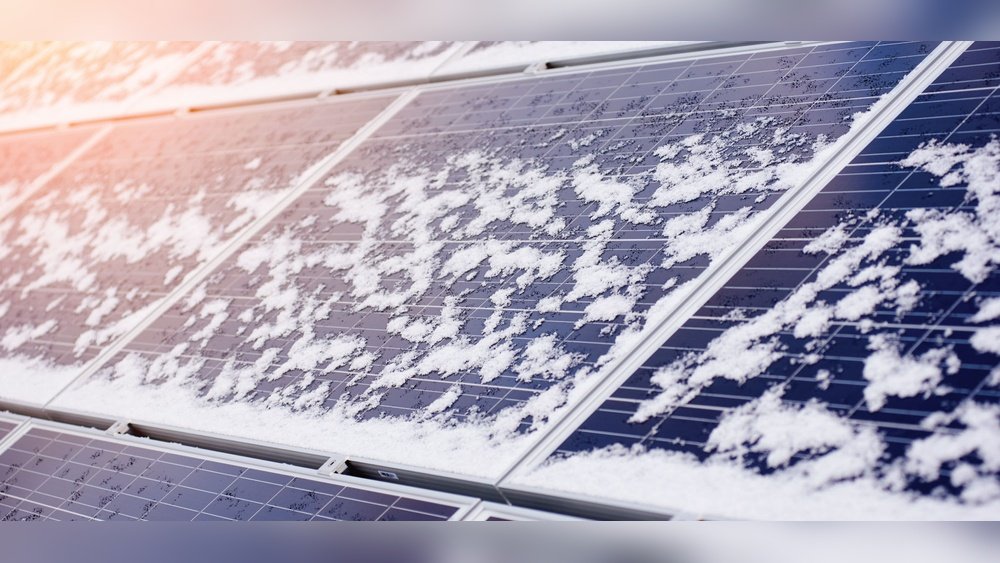
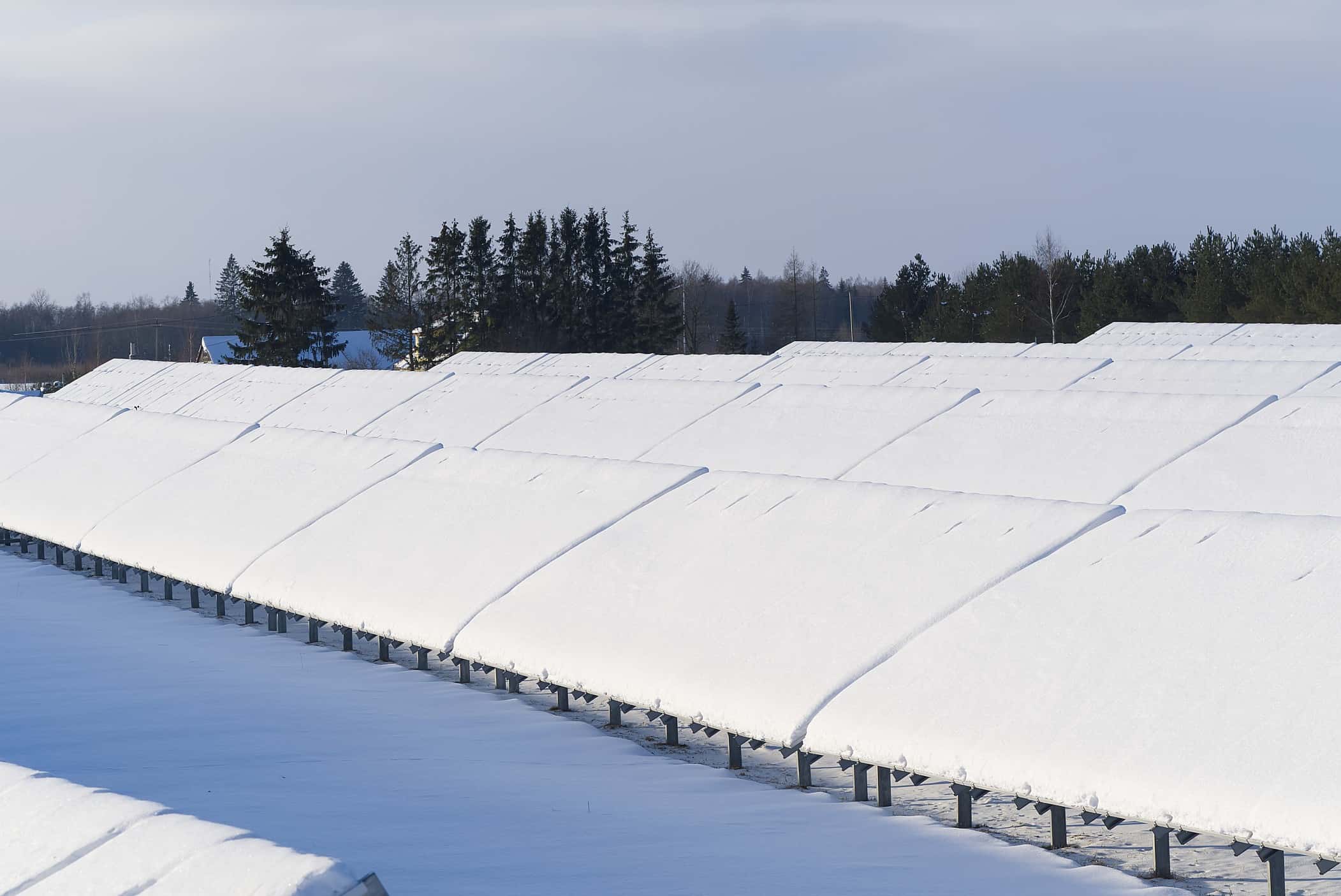
When snow falls and sticks to your solar panels, it acts like a blanket. This blanket blocks sunlight from reaching the PV cells, so power production drops or stops until the snow melts or slides off.
The effect depends on:
- How thick and heavy the snow is
- How long the snow stays on the panels
- The angle and design of your solar panels
Light snow or a thin layer may let some sunlight through, especially if the snow is fluffy and clean. But thick, wet, or icy snow can block almost all the light.
Data: Energy Loss During Snow Events
Researchers have measured how much electricity is lost during snow events. A study by the National Renewable Energy Laboratory (NREL) in the United States found that:
- A light dusting of snow reduces output by 20% to 40%
- A heavy snow cover can cut output by 90% or more
- Most energy is lost while the panels are fully covered
- Once the snow starts sliding off, production returns quickly
But here’s a key point: Solar panels usually lose only a small percentage of their total yearly output due to snow. In much of the United States and Europe, the loss is 1% to 5% of annual production. In very snowy places, the loss can be higher, but it’s rarely more than 10% for the whole year.
Why Solar Panels Still Make Sense In Snowy Areas
It may sound bad if snow stops your solar panels for hours or days. But there are reasons why solar works well even in cold, snowy places.
1. Winter Days Are Often Sunny
After a snowstorm, the sky often clears and the sun shines bright. Snow on the ground reflects extra light onto your panels, which can increase their output once they are clear. This is called the albedo effect.
2. Panels Are Slippery And Tilted
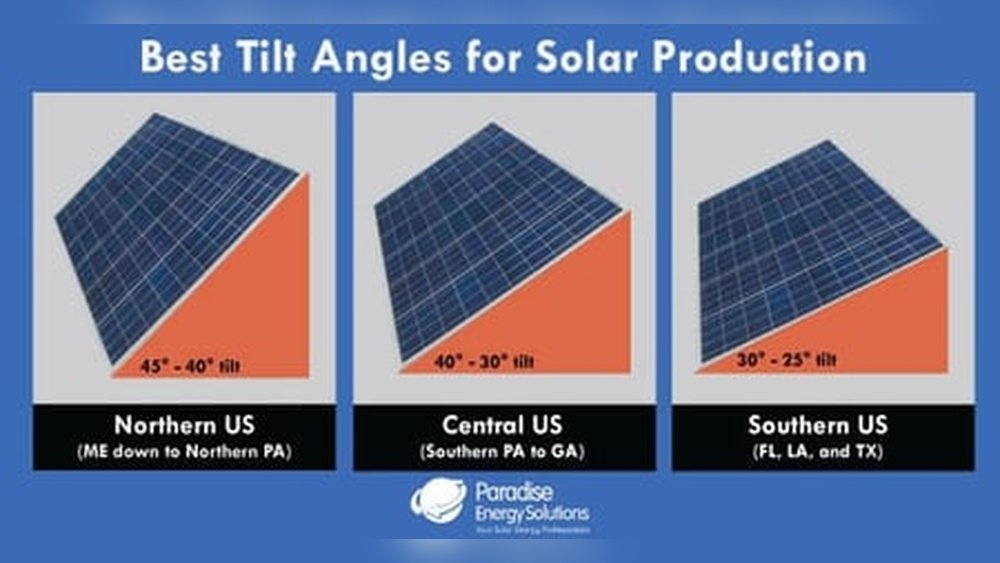
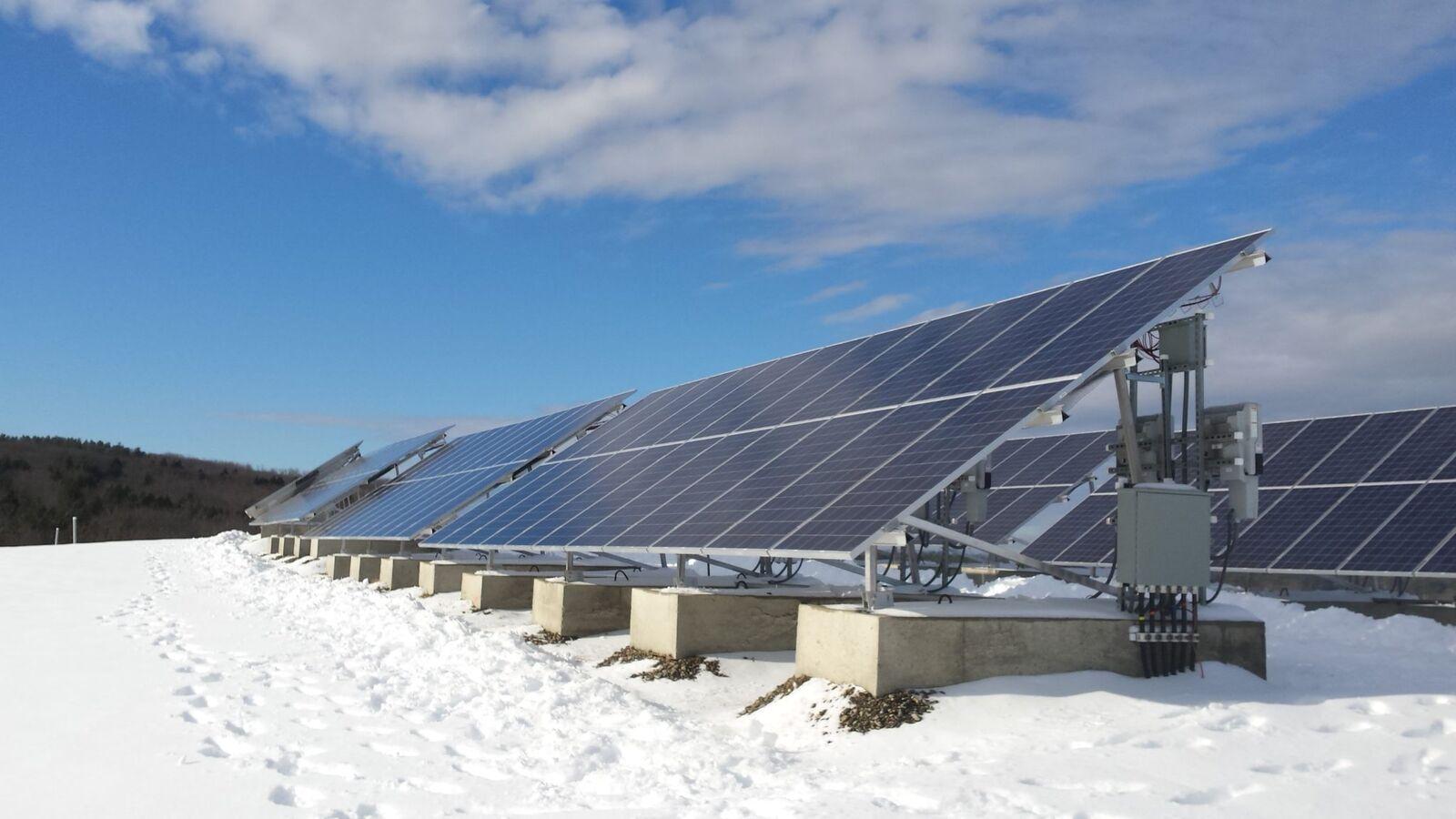
Most modern solar panels have a smooth, slippery surface. When installed at the right tilt angle (usually 30–45 degrees), snow often slides off on its own, especially as the sun warms the panels.
3. Cold Weather Helps Efficiency
Solar panels actually work more efficiently in cold temperatures. Hot weather reduces their performance. So while winter days are shorter, the cold air helps the panels produce more electricity per hour of sunlight.
4. Most Energy Is Made In Summer
Solar panels produce the most electricity in the spring and summer when days are longer and the sun is higher. Losing a few days of production in winter usually does not affect your overall savings by much.
5. Solar Is Used In Snowy Countries
Countries like Germany, Canada, and Sweden use a lot of solar energy, even though they have snowy, cold winters. This shows that solar works well if you plan for the climate.
How Much Does Snow Really Impact Solar Production?
To see the real effect, let’s look at some numbers and examples.
Case Study: Denver, Colorado
Denver gets about 60 inches (150 cm) of snow each year. NREL researchers tracked solar panel output in the city.
- Most snowstorms covered the panels for 1–3 days
- Annual energy loss was 3% to 7%
- Panels with a tilt above 30 degrees cleared snow faster
This means the panels still produced more than 90% of their possible yearly output.
Case Study: Toronto, Canada
Toronto has long, snowy winters. Local studies found:
- Flat panels (on flat roofs) lost up to 12% of yearly output
- Tilted panels lost 5% or less
- Most snow melted or slid off within 24–48 hours
Side-by-side Comparison: Flat Vs. Tilted Panels
Here’s how snow affects different panel angles:
| Panel Tilt Angle | Average Annual Snow Loss (%) | Typical Snow Shedding Time |
|---|---|---|
| 0° (Flat) | 8–15% | 2–5 days |
| 15° | 5–9% | 1–3 days |
| 30–45° | 1–5% | 0.5–2 days |
Insight: The steeper the panels, the faster snow falls off, and the less energy is lost.
Credit: www.revisionenergy.com
Factors That Affect Snow Accumulation On Solar Panels
Not all panels and locations are the same. Here’s what makes a difference:
1. Panel Tilt
As seen above, steeply tilted panels shed snow better. Flat panels hold snow longer.
2. Surface Material
Most modern panels have anti-reflective, smooth glass. Older or low-quality panels may have rougher surfaces, which hold snow and ice longer.
3. Roof Shape And Location
Panels on sloped roofs usually clear faster than those on flat roofs. If your roof faces south and gets lots of sun, snow melts quicker.
4. Shading And Obstructions
Trees, chimneys, and other objects can cause snow to pile up in certain areas, or shade the panels so they don’t warm up as fast.
5. Type Of Snow
Light, powdery snow slides off faster than wet, heavy snow or ice. Freezing rain can create an icy layer that blocks sunlight more stubbornly.
6. Panel Mounting And Row Spacing
If panels are mounted close to the roof, snow may pile up at the bottom edge. Panels with a small gap beneath allow air to circulate and heat to rise, helping snow slide off.
Do Solar Panels Get Damaged By Snow?
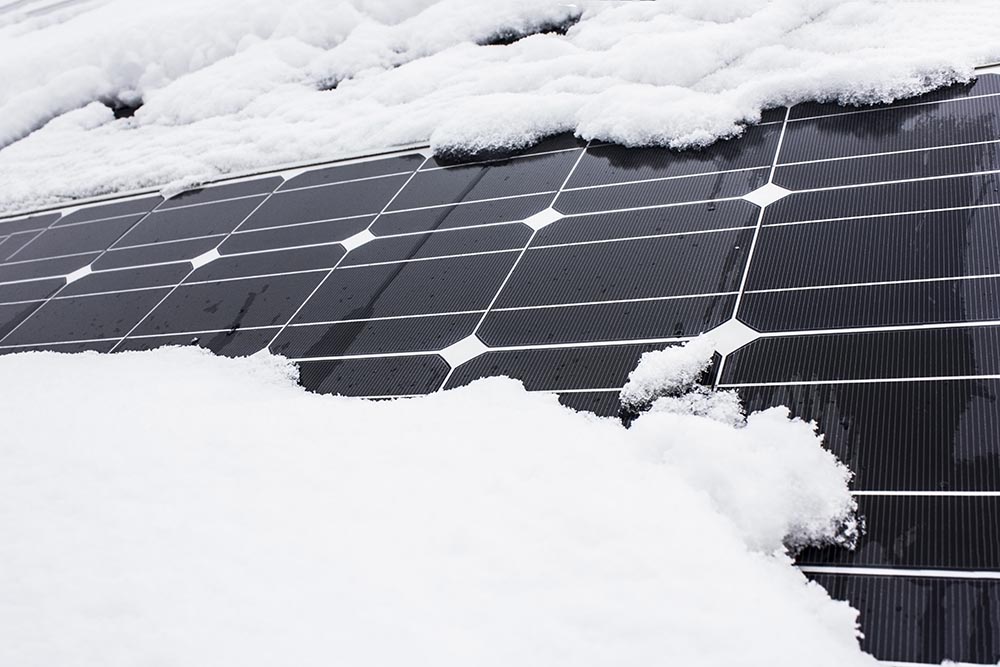
Homeowners sometimes worry that heavy snow will break their panels. In fact, solar panels are designed to handle snow loads. Most are tested to hold at least 5400 pascals (Pa) of pressure—about 113 pounds per square foot (550 kg/m²).
Problems are rare, but possible if:
- Snow builds up for weeks and is not cleared
- Ice dams form at the edges and force water under the panels
- Very old or poorly installed panels are used
In most cases, panels survive even harsh winters without any damage. Regular snow is not a threat to a properly installed solar system.
Credit: www.ionsolar.com
Ways To Reduce Snow Impact On Solar Panels
If you live in a snowy place, you can take smart steps to keep your solar panels working well in winter.
1. Install Panels At The Right Angle
A tilt of 30° to 45° works well for snow shedding in most climates. If you have a flat roof, consider tilted mounts or solar “racking” that lifts panels at an angle.
2. Choose High-quality Panels
Modern panels with anti-reflective glass and good build quality shed snow faster and are less likely to be damaged.
3. Keep Panels Unshaded
Install panels where they get maximum sun in winter. Avoid places where trees or buildings cast long shadows.
4. Use Microinverters Or Power Optimizers
If one panel is covered with snow, it can affect the whole system if you use a “string inverter.” With microinverters or power optimizers, each panel works independently. This means uncovered panels keep working even if some are blocked.
5. Clear Panels Safely (if Needed)
In some cases, you may want to remove snow from your panels. But be careful! Never use metal tools, as they can scratch the glass. Use a soft roof rake, a long brush, or wait for the sun to do the job.
Important: Safety comes first. Do not climb a snowy roof yourself.
6. Heated Panels Or Coatings
Some companies offer heated solar panels or special coatings that help melt snow faster. These solutions are expensive and usually not needed for most homes.
7. Panel Layout And Spacing
Leave enough space between panel rows for snow to slide off and fall to the roof, not pile up against the next row.
8. Monitor System Output
Use a solar monitoring app or system to track your panel output. If you see low output, check for snow or shade problems.
Should You Clear Snow Off Solar Panels?
People often ask if they should remove snow themselves. Here’s what experts recommend:
- If snow will melt or slide off in a day or two, it’s better to wait.
- If panels are easy to reach from the ground, you can gently clear them.
- If your panels are high up or on a steep roof, do not risk injury. The energy lost is usually small compared to the danger.
Most of the time, snow melts or slides off with the sun’s help. If you live in a place with many days of heavy snow, you might want to hire a professional to clear the panels safely.
Real-life Examples: Solar In Snowy Climates
Solar panels are used successfully in many of the world’s coldest, snowiest places. Here are some examples:
Germany
Germany gets less sunlight than most of the United States and has snowy winters. Still, it’s a world leader in solar energy, with over 50 gigawatts of installed solar. German homes and businesses use solar year-round, relying on good design and smart installation.
Minnesota, Usa
Minnesota is known for its cold, snowy winters. The state has over 1 gigawatt of solar installed. Many solar companies in Minnesota have developed systems that handle snow well, using tilted panels, sturdy mounts, and microinverter technology.
Japan
Japan’s northern regions get heavy snowfall. Solar installations there are designed with steep tilt angles, and some even use robotic snow removers or heated panels for critical systems.
Common Myths About Solar Panels And Snow
There are many myths and misunderstandings about how solar panels perform in snow.
Myth 1: Snow Destroys Solar Panels
Fact: Panels are built to survive snow, ice, and wind. Damage is very rare with proper installation.
Myth 2: Solar Panels Don’t Work In Winter
Fact: Panels work in winter and can be more efficient in cold air. Only thick snow cover stops production, and usually only for a short time.
Myth 3: It’s Not Worth Installing Solar In Snowy Places
Fact: Solar is popular in many cold, snowy countries. With good design, snow losses are small compared to yearly savings.
Myth 4: You Must Clear Snow Off Every Time
Fact: Most snow melts or slides off on its own. Removing snow is optional and only needed in special cases.
The Science: How Snow Slides Off Solar Panels
Solar panels warm up when they’re exposed to sunlight—even in freezing air. This warmth melts the snow touching the panel’s glass. As a thin layer of water forms, the snow loses its grip and slides off, especially on tilted panels.
This “slide-off” effect can be dramatic. Sometimes, a large sheet of snow will suddenly slip off, clearing the panel in seconds. On flat roofs, this effect is slower, and snow may need to melt more before it moves.
Panel Technologies And Snow Performance
Different solar panel types react differently to snow.
Monocrystalline Vs. Polycrystalline
Both main types—monocrystalline and polycrystalline—have smooth glass faces. There is little difference in how they handle snow. Both shed snow well if tilted properly.
Thin-film Solar Panels
Thin-film panels are less common on homes. They may have a slightly rougher surface, which can make snow stick longer. They also tend to be installed flat on roofs, which increases snow buildup.
Bifacial Solar Panels
Bifacial panels collect sunlight from both sides and are often raised higher off the roof. This allows more air to circulate and sometimes helps snow melt faster.
Comparing Solar Output: Snowy Vs. Non-snowy Regions
How much does a snowy climate affect total yearly solar production? Here’s a comparison of two cities at similar latitudes:
| City | Average Annual Snowfall | Annual Solar Production (kWh per kW) | Snow Loss (%) |
|---|---|---|---|
| Boulder, Colorado (USA) | 88 in (224 cm) | 1,700 | 4% |
| San Francisco, California (USA) | 0 in | 1,800 | 0% |
Insight: Boulder loses only about 4% of its annual solar energy to snow, despite heavy winter storms.
Snow And Solar Panel Warranties
Most manufacturers cover damage from normal snow loads under their warranties. But they may not cover:
- Damage from using metal tools to clear panels
- Damage from ice dams caused by poor roof design
- Improper installation
Always follow the manufacturer’s guidelines and use professionals if you need to clear snow from your panels.
Advanced Solutions: Smart Technology For Snow
New technology is making solar panels even better in winter.
Snow Sensors
Some solar systems use snow sensors to detect when panels are covered. These sensors can trigger heaters or send alerts to the owner.
Automatic Heating
A few high-end systems include heating wires under the panels. These use a small amount of electricity to melt snow quickly. This is mainly used for critical sites, like hospitals or off-grid cabins.
Self-cleaning Coatings
Research is ongoing into hydrophobic (water-repelling) coatings that help snow and ice slide off even faster.
Cost Vs. Benefit: Is It Worth Removing Snow?
Let’s say you lose 5% of your annual solar output due to snow. For a typical home system (5 kW), that’s about 400 kWh per year—worth $40 to $100, depending on electricity prices.
If you spend hours or pay for snow removal, you may spend more than the energy value you gain. For most homes, it makes sense to let nature do the work, unless you have special needs or very heavy snow.
Insurance And Solar Panels In Snowy Regions
Homeowners insurance usually covers solar panels as part of the building. If a rare event (like a roof collapse from snow) happens, your policy may help. Check with your insurer to be sure.
Planning Solar For Snowy Climates: Best Practices
If you are designing or buying a solar system in a snowy area, follow these tips:
- Choose a steep tilt (30–45 degrees) for best snow shedding.
- Select quality panels with smooth glass and good snow load ratings.
- Space rows to let snow slide off safely.
- Avoid shaded areas that slow melting.
- Use microinverters to keep some panels working if others are covered.
- Ask your installer about local experience with snow.
- Consider snow guards or barriers to keep sliding snow from damaging gutters or walkways.
Is Solar Still Worth It If You Get Snow?
For most people, the answer is yes. The benefits of solar—lower energy bills, clean power, and less pollution—far outweigh the small losses from winter snow. Even in places with long, snowy winters, solar panels pay for themselves over time.
Non-obvious insight: When you design your solar system for snow, you also prepare it for leaves, dust, and rain. A well-tilted, quality system needs less cleaning and works better year-round, not just in winter.
Environmental Impact: Solar Vs. Snow Removal
Some people use snow blowers, salt, or chemicals to clear snow from their panels. But these tools can hurt the environment or damage the panels. Letting snow melt naturally or using safe, manual methods is better for the planet and your solar investment.
What About Off-grid Solar In Winter?
If you live off the grid and rely on solar for all your power, snow is a bigger issue. You may need:
- Backup generators for long snowstorms
- Battery storage to save power on sunny days
- Regular snow removal for critical systems
But even off-grid homes in snowy Alaska and Canada use solar successfully by planning ahead.
Solar Panel Maintenance In Winter
Winter is a good time to check your solar system:
- Make sure mounts and wiring are secure
- Watch for ice dams around the edges
- Clear debris after storms if safe to do so
- Check your monitoring system for any drops in output
Regular checks keep your system working well, even in tough weather.
Expert Tips For Maximum Winter Performance
Solar professionals suggest:
- Install panels at the highest safe tilt for your area
- Use sturdy racking designed for local snow loads
- Ask about warranty coverage for snow and ice
- Monitor output with an app or web portal
- Don’t risk your safety for a little extra power
The Bottom Line: Solar And Snow Can Work Together
Solar panels can lose some power during snowstorms, but with smart design and a little patience, they keep working well year-round. For most homes, the annual energy loss is small—often less than 5%. With the right system, you can enjoy clean energy even if winter brings a blanket of white.
If you are considering solar in a snowy region, talk to local installers and ask about their experience. Look at the numbers, and you’ll see that solar is still a bright choice, even when the forecast calls for snow.
For more technical details on snow and solar, you can read the research summary at National Renewable Energy Laboratory.
Credit: battlebornbatteries.com
Frequently Asked Questions
How Much Energy Do Solar Panels Lose Due To Snow?
Most solar systems lose 1% to 5% of their yearly energy due to snow. In very snowy areas, the loss can be up to 10%, especially for flat-mounted panels. Most of the energy is lost during heavy snowstorms, but the panels recover quickly once the snow melts or slides off.
Should I Remove Snow From My Solar Panels?
In most cases, you do not need to remove snow yourself. Panels usually clear naturally within a day or two. If you want to clear them, only use soft tools and never climb a snowy roof. For hard-to-reach panels, it is safer to wait or hire a professional.
Do Solar Panels Break Under Heavy Snow?
No, solar panels are designed to handle heavy snow loads. Most are tested to survive over 100 pounds per square foot. Damage is rare unless the panels are old, poorly installed, or the snow is allowed to build up for weeks without melting.
Do Solar Panels Work Better In Cold Weather?
Yes, solar panels are more efficient in cold temperatures. Their output increases as the air gets colder, but only if sunlight can reach the panel. Snow may block the sun, but the cold itself helps the panels perform better when they are clear.
Can I Use Solar Energy In Places With Long, Snowy Winters?
Yes, many countries with cold, snowy winters use a lot of solar energy. With the right tilt, quality panels, and good design, you can still get most of your yearly energy needs from solar—even if snow covers your panels for a few days at a time.