Are Solar Panels Expensive
The idea of switching to solar energy is exciting for many people. The sun’s power is clean, renewable, and available almost everywhere. But one question stops many homeowners and businesses from making the change: Are solar panels expensive? There’s a lot of talk about the high price tag, but not enough clear answers. Some hear stories about big savings, while others worry about costs running into the thousands.
This article gives a clear, honest look at the true cost of solar panels. We’ll break down what you really pay, what you get in return, and why prices vary so much. You’ll discover the main factors that affect costs, hidden expenses most people miss, and even how solar panels can pay you back over time.
We’ll dive into real examples, compare solar with other home investments, and discuss global pricing. By the end, you’ll have a solid understanding of whether solar power is worth it for you, without any confusion or surprises.
What Goes Into The Cost Of Solar Panels?
When people ask, “Are solar panels expensive? ”, they usually mean more than just the panels themselves. The total cost includes equipment, installation, and other fees. Let’s look at each part so you know exactly what you’re paying for.
1. Solar Panel Hardware
The solar panels are just one piece of the system. They turn sunlight into electricity, but you need more than that.
- Photovoltaic (PV) modules: These are the panels that sit on your roof. They’re made with silicon cells that capture sunlight and create electricity. There are different types, like monocrystalline (highest efficiency but more expensive), polycrystalline (mid-range), and thin-film (cheaper, but usually less efficient and needs more space).
- Inverter: This device changes the electricity from DC (direct current) to AC (alternating current), which your home uses. There are different inverter types: string inverters (one device for all panels), microinverters (one for each panel—costs more, but better for shaded roofs), and power optimizers (a hybrid solution).
- Mounting system: These are racks and hardware that hold the panels securely on your roof or the ground. The design must match your roof’s shape and material—metal, tile, or shingles each need different mounts.
- Wiring and safety equipment: These connect everything and keep the system safe to use. This includes disconnect switches, grounding, conduit, and sometimes surge protection.
It’s important to know that the quality of each component affects the total cost, reliability, and how much energy you get. For example, high-efficiency panels cost more but can produce more power in the same space—helpful if your roof is small or shaded part of the day.
2. Installation Costs
You can’t just put panels on your roof and plug them in. Professional installation includes:
- Labor for mounting panels and connecting wiring. This involves safely working at heights, handling heavy materials, and securing everything to the roof. Mistakes can damage your home or cause leaks.
- Electrical work and permits. Licensed electricians connect the solar system to your home’s wiring and main electric panel. They make sure everything is up to code and safe for your family.
- System testing and inspection. Before you can use the system, it’s tested for safety and performance. Local inspectors check the work before giving final approval.
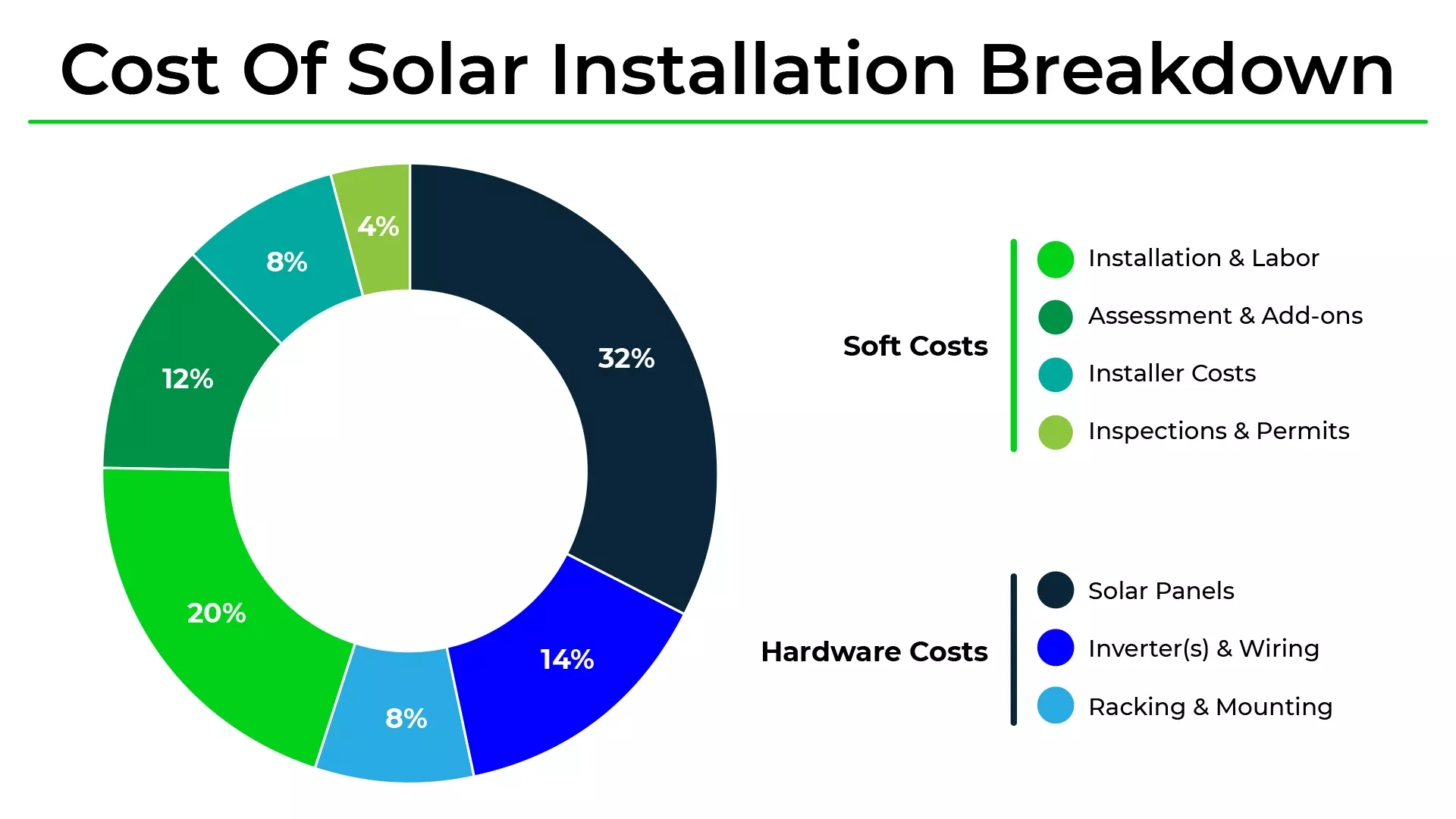
Good installers make sure everything meets local building codes and works safely. Labor usually makes up 10%–20% of the total cost. In areas with high wages or strict regulations, labor can be a bigger part of the cost. Also, if your roof is tricky—steep, high, or covered with obstacles like skylights—installation takes longer and costs more.
3. Additional Fees And Services
Some costs don’t show up on the first quote but are important to know:
- Permitting fees: Your city or county may charge fees for inspection and approval. This can range from $100 to $1,000 depending on your location.
- Design and engineering: Each system must fit your home’s roof and electric needs. Some homes require custom engineering, especially if your roof is unusual or your local weather is harsh (for example, heavy snow or wind areas).
- Maintenance plans: Some companies offer ongoing service for repairs or cleaning. These can be annual contracts or “pay as you go.”
- Sales tax: In some areas, you pay tax on the equipment or installation. Some states exempt solar from sales tax, which can save you hundreds of dollars.
These “soft costs” can add up to 30% of your total price. Always ask for a detailed quote, so you know exactly what’s included.
4. Optional Extras
You might choose to add more features for convenience or safety:
- Battery storage: Stores extra energy for use at night or during outages. Batteries like the Tesla Powerwall, LG Chem, or Enphase Encharge cost $8,000–$15,000 installed for a typical home. They’re optional but growing in popularity.
- Monitoring systems: Lets you track how much power your system makes, spot problems early, and see your savings in real time. Some companies include this for free; others charge a small fee.
- Smart home integration: Connects your solar panels to other devices in your home, like thermostats, EV chargers, or smart lights. This adds convenience and can help you use more of your own solar power instead of selling it back to the grid.
These extras increase the price but add value and flexibility. For example, batteries can keep your lights on during blackouts, which is a big selling point in areas with unreliable electricity.
Typical Prices: How Much Do Solar Panels Cost?
It’s not easy to give one price for every home. Costs change by location, system size, and many other factors. But let’s look at real numbers so you can see what’s typical.
National Average Costs
As of 2024, the average price for home solar panels in the United States is:
- $15,000 to $25,000 for a typical 6 kW system, before incentives or tax credits
This range covers equipment, installation, and basic fees. After federal and state incentives, the net price is often lower. Keep in mind, high-cost areas like Hawaii or California can be above this range, while sunny states with low labor costs may be less.
Price Per Watt
Solar systems are often priced by the watt (how much electricity they can produce). In 2024:
- The average installed price is $2.50 to $3.50 per watt
So, a 6 kW (6,000 watt) system costs between $15,000 and $21,000. This makes it easier to compare quotes from different installers or to figure out how much a larger or smaller system might cost.
Larger And Smaller Systems
- Small homes (4 kW system): $10,000–$14,000. Great for condos or small families with low energy use.
- Large homes (10 kW system): $25,000–$35,000. Needed for big houses, electric vehicles, or homes with pools.
Bigger systems cost more overall, but the price per watt may be lower because of bulk savings. Installers often offer better rates for larger projects since the overhead is spread out.
Commercial And Utility-scale Prices
- Commercial systems: $1.50 to $2.50 per watt (usually bigger than home systems, installed on businesses, schools, or warehouses)
- Utility-scale solar farms: Sometimes under $1 per watt because of large size and cheaper land
Big projects get lower costs because they buy in bulk and install many panels at once. However, these prices don’t include the cost of land, which can be high in some areas.
How Location Changes Price
Solar panels cost more in some states than others. Reasons include labor costs, local incentives, and weather. For example:
- California: Higher average prices, but bigger incentives. Also, more experienced installers and larger markets can mean better deals.
- Texas: Lower installation costs but fewer state incentives, so the final price after incentives may not be as low as it seems.
- Northeast (New York, Massachusetts): Higher labor costs, more rules, but strong state rebates and high electricity prices, so solar can still pay off quickly.
In cold or cloudy states, you may need a larger system to make the same amount of energy as a sunny state, which can affect total cost.
Recent Price Trends
Solar panel prices have dropped more than 70% since 2010. Technology improvements and increased production have made solar more affordable. Ten years ago, a typical home system could cost $30,000–$40,000 before incentives. Today, prices are much lower and the systems are more efficient.
One insight many people miss: even though solar panel prices are falling, “soft costs” like permits, labor, and marketing are now a bigger share of the total price. This means further price drops will likely come from better regulations, easier permitting, and more competition among installers.
What Makes Solar Panels Seem Expensive?
Some people see the price tag and feel shocked. But it’s important to understand why solar panels look costly, especially at first.
Upfront Vs. Long-term Costs
- Upfront cost is what you pay at the start. This is the biggest barrier for most people.
- Long-term cost is what you pay (or save) over the system’s life, usually 25–30 years.
Solar panels are expensive upfront, but they save money over time. The challenge is that you pay for 25 years’ worth of power all at once, instead of little by little.
Comparing To Monthly Electric Bills
If your current electric bill is $120 per month, that’s $1,440 per year. Over 25 years, you’ll pay $36,000—and that’s before energy prices rise. A $20,000 solar system can pay for itself if it covers most of your needs.
Some people don’t realize that solar “front-loads” your energy cost. You invest now, then save for decades. If you stay in the home for 10+ years, you’re almost certain to come out ahead.
Financing Vs. Paying Cash
Few people pay the full cost in cash. Most use:
- Loans: Spread the cost over years, like a car loan. Some loans are unsecured (higher rates), while others are secured (lower rates but use your home as collateral). Solar loans often have rates between 3%–7%.
- Leases or Power Purchase Agreements (PPAs): You pay a monthly fee instead of buying the system. The installer owns the panels, handles maintenance, and sells you the power for less than your current electric rate. You save money, but don’t get the tax credits or increase your home value as much.
Financing helps reduce the upfront pain, but you pay interest or fees. Still, for most people, the monthly payment is less than their old electric bill, so they save money right away.
“sticker Shock” Explained
Solar panels are a big investment, like a car or remodeling your kitchen. But unlike those, they can save you money every month. And once you pay off the system, your energy is almost free (except for small fees or maintenance).
Key Factors That Affect Solar Panel Prices
Why do some systems cost more than others? Here are the main reasons:
1. System Size
Larger systems cost more, but they may be a better value per watt. The right size depends on your energy use.
- High energy use = bigger system needed
- Small home = lower cost
Your installer will look at 12 months of electric bills to recommend a system size. Oversizing (buying too big a system) means wasted money, while undersizing means you’ll still pay electric bills. It’s smart to allow for future changes, like buying an electric car or adding central air.
2. Roof Type And Condition
- Complex roofs (steep, many angles, dormers, skylights) cost more to install. Extra labor, custom mounts, or working around obstacles all add time.
- Old roofs may need repairs before solar panels can be added. Most installers recommend your roof have at least 10–15 years of life left; otherwise, you’ll pay extra to remove and reinstall the panels later.
Some materials, like clay tile or slate, are more expensive to work with. Flat roofs need special ballasted mounts or tilt frames.
3. Local Labor Rates
Some cities have higher wages and insurance costs for installers, raising the price. Urban areas with strong unions or high cost of living (like San Francisco or New York) will be pricier than rural or suburban regions.
4. Brand And Panel Quality
- High-efficiency panels cost more but make more electricity in less space. Brands like SunPower, LG, and REC offer high-end panels with long warranties.
- Cheaper panels save money but may not last as long, and warranties can be shorter. If you have lots of roof space, standard panels are often good enough.
Don’t pay extra for the “best” panels unless your roof is small, shady, or you want the longest possible warranty.
5. Incentives And Rebates
Government programs can lower your cost by thousands of dollars.
- Federal tax credit (26% as of 2024). This is a credit, not a deduction, so it directly reduces your tax bill.
- State/local rebates or tax breaks. Some states (like New York, Massachusetts, and New Jersey) offer extra cash incentives or property tax exemptions. Others have little or none.
A good installer will help you find all available incentives. Don’t miss out—these can change year to year.
6. Permitting And Inspection Fees
Rules and fees vary by city and county. Some places are faster and cheaper than others. Delays or strict inspectors can add weeks to your project and hundreds of dollars to the cost.
7. Additional Equipment
- Battery backup or electric car chargers add to the price.
- Special mounting for flat or tile roofs costs more.
- Snow guards or critter guards (mesh to keep squirrels out) are extra.
8. Installer Reputation
Well-known, experienced companies charge more but may offer better service and warranties. Newer or smaller companies may offer lower prices to win your business, but check reviews and references. A good warranty and solid track record are worth a few extra dollars.
Understanding The Value: Are Solar Panels Worth The Cost?
It’s one thing to know the price, but another to know if it’s a good deal. Let’s look at how to measure the value of solar panels.
Lifetime Savings
A good solar system lasts 25–30 years. Over that time, you can:
- Cut electric bills by 50–100%. If your system is well-sized and your roof is sunny, you may pay only a small “connection fee” each month.
- Avoid rising energy prices. If electricity rates go up, your savings grow each year.
- Possibly earn credits for extra power you send to the grid (net metering). Some states pay you for extra energy your panels produce, cutting your bill even more.
In most places, solar panels pay for themselves in 6 to 10 years. After that, it’s all savings.
Return On Investment (roi)
- ROI is how much you get back compared to what you spend.
- A typical home system can have an ROI of 10–15% per year.
This is often better than many savings accounts or investments. Solar is one of the few home improvements that actually puts money back in your pocket.
Energy Independence
With solar, you make your own power. You’re less affected by utility price hikes or outages. If you add battery storage, you can run your home during blackouts—valuable in areas with unreliable grids or storms.
Increased Home Value
Many buyers pay more for homes with solar panels. On average, homes with solar sell for $15,000 more than similar homes without solar. Multiple studies, including from Zillow, show that solar increases home value and can help your home sell faster.
Environmental Benefits
Solar power cuts your carbon footprint and helps fight climate change. Each kilowatt-hour of solar power replaces fossil fuel energy, reducing pollution and greenhouse gases. For eco-conscious buyers, this can be as important as the money savings.
Ways To Lower The Cost Of Solar Panels
If the price seems high, don’t give up. There are smart ways to make solar more affordable.
1. Use Incentives And Tax Credits
- Federal solar tax credit: Deduct 26% of the cost from your taxes (2024 rate). This is a huge help and makes solar much more affordable.
- State rebates: Some states offer $1,000–$5,000 or more.
- Local utility programs: Extra rebates or performance payments for the energy you produce.
Ask your installer to help find all incentives you qualify for. Some programs have deadlines or limited funding, so don’t wait too long.
2. Shop Around For Quotes
Get at least three quotes from different installers. Compare:
- Price per watt
- Warranty length (for both panels and inverters)
- Experience and reviews
Don’t just pick the cheapest. Look for quality, service, and clear explanations. Ask for a breakdown of all costs so you’re not surprised later.
3. Consider A Smaller System
You don’t have to go 100% solar. A smaller system saves money and still cuts your bills. For example, if your budget only covers half your energy use, start there—you can always add more panels later.
4. Lease Or Finance
If you can’t pay cash, look for low-interest loans or lease offers. These spread the cost over time. Some banks and credit unions offer special solar loans with better terms than credit cards or personal loans.
5. Group Purchasing
Some areas offer “solarize” programs. Neighbors buy together for a bulk discount. These programs help lower marketing and labor costs and sometimes include extra rebates.
6. Diy Solar (with Caution)
Handy homeowners can buy kits and install themselves, but this is risky. Mistakes can void warranties, cause safety hazards, or break local laws. You’ll also need to arrange for inspections and connect to the grid—often tricky for beginners.
7. Wait For Better Technology
Solar panels get cheaper and better each year. If the price is too high now, you might wait. But energy savings start as soon as you install. The longer you wait, the more you pay your utility company.
Pro tip: If you plan to stay in your home for at least 5–10 years, going solar sooner usually means more savings—even if prices drop a bit in the future.
Credit: optiononesolar.com
Hidden And Ongoing Costs People Miss
Most people focus on the sticker price. But there are other costs to know about.
1. Maintenance
Solar panels need little care, but not zero.
- Clean panels if they get dusty or covered with leaves. In dry or dusty areas, cleaning once or twice a year can improve output.
- Inspect wiring and mounts every few years, especially after big storms.
- Inverters may need replacement after 10–15 years ($1,000–$2,000). Panels last longer, but inverters are more “high-tech” and wear out sooner.
Good news: most warranties cover defects and some labor for 10–25 years.
2. Roof Repairs
If your roof leaks or needs replacement, you must remove and reinstall the panels. This can cost $1,000–$3,000. If your roof is old, replace it before going solar to avoid this extra step.
3. Insurance
You may need to increase your homeowners insurance. This usually adds $50–$150 per year, depending on your system’s value and your insurer.
4. Monitoring Fees
Some systems charge a small monthly fee ($5–$15/month) to use advanced monitoring apps. Basic monitoring is usually free.
5. Moving Or Selling
If you move, you may need to pay off a loan or transfer the solar lease. This can get complicated, so check before you buy. Some buyers won’t want to take over a lease; others see solar as a plus.
Non-obvious insight: If you’re planning to sell soon, buying a system (instead of leasing) usually adds more value to your home and makes selling easier.
Solar Panel Cost Breakdown: Example Table
Let’s see how a typical 6 kW home solar system price might break down:
| Item | Typical Cost |
|---|---|
| Solar panels | $5,400 |
| Inverter | $1,500 |
| Mounting, wiring, safety | $2,000 |
| Installation labor | $3,000 |
| Permitting and inspection | $900 |
| Design and engineering | $800 |
| Sales tax (if applicable) | $1,000 |
| Total before incentives | $14,600 |
| Federal tax credit (26%) | -$3,796 |
| Net total | $10,804 |
Your numbers will differ, but this gives a realistic view of the costs and savings. Ask for a detailed quote for your own home.
:max_bytes(150000):strip_icc()/types-of-solar-panels-pros-and-cons-5181546_finalcopy-93f1db65349840bdba2822f75fa592f9.jpg)
Credit: www.treehugger.com
Comparing Solar Panels To Other Home Investments
Solar panels are a big purchase. How do they compare to other common home upgrades?
| Upgrade | Typical Cost | Money Saved or Earned | Payback Time |
|---|---|---|---|
| Solar panels (6 kW) | $10,000–$15,000 (after incentives) | $1,000–$2,000/year | 6–10 years |
| New roof | $8,000–$12,000 | None (unless energy-efficient) | Never |
| Kitchen remodel | $20,000–$30,000 | $10,000 resale value added (average) | Never (rarely pays for itself) |
| Energy-efficient windows | $8,000–$15,000 | $200–$400/year | 20–30 years |
Solar often pays for itself faster than other upgrades. Most upgrades are about comfort or looks, not savings.
Key Insights Most People Miss
Even after hours of research, beginners often overlook two important details:
1. Electricity Rate Increases
Utility companies often raise rates by 2–4% each year. This means your solar savings grow over time, even if your panels make the same amount of power. Many people forget to factor this in.
If your bill is $120 now, it could be $180 in 10 years without solar. Locking in your energy cost with solar protects you from these increases.
2. System Sizing Mistakes
A common error is buying a system that’s too big or too small. Oversizing costs more than needed. Undersizing means you still pay electric bills. Accurate sizing based on your past 12 months of bills is crucial.
Tip: A good installer reviews your actual energy use, roof space, and budget to recommend the right size.
Bonus Insight: Solar Panel Degradation
Most panels lose about 0. 5% efficiency per year. After 25 years, they still make about 87–90% of their original power. This small loss is usually included in savings estimates, but some quotes forget to mention it.
Are There Cheaper Alternatives To Solar Panels?
Solar panels are the most common way to make your own electricity, but not the only one.
1. Community Solar
You buy or lease a share in a larger solar farm. You get credit on your electric bill without panels on your roof.
- Good for renters or people with shaded roofs
- Usually costs less upfront, but savings are smaller
Community solar is growing in many states, especially for people who can’t install panels at home.
2. Solar Water Heaters
Instead of making electricity, these heat water using sunlight.
- Lower cost ($2,000–$4,000)
- Only works for hot water needs
Great for sunny climates and homes that use a lot of hot water.
3. Wind Turbines
Small wind systems can work in very windy areas.
- Higher maintenance
- Often not allowed in neighborhoods
Wind is less common for homes, but can be good on farms or open land.
4. Energy Efficiency Upgrades
LED lights, better insulation, and smart thermostats cut your bills for less money than solar panels. These upgrades can be a smart first step.
Insulation, air sealing, and efficient heating/cooling systems often have a faster payback than solar.
How Solar Panel Prices Compare Worldwide
Solar is not just a US trend. Costs and savings vary by country.
| Country | Average Cost per Watt (USD) | Typical Incentives |
|---|---|---|
| United States | $2.50–$3.50 | Federal tax credit, state rebates |
| Germany | $1.50–$2.00 | Feed-in tariffs, loans |
| Australia | $1.00–$1.30 | Government rebates |
| Japan | $2.50–$3.00 | Local subsidies |
| India | $0.80–$1.20 | State and national incentives |
Australia and Germany have some of the lowest prices due to large markets and strong support. The US is above average, but prices keep falling.
Non-obvious insight: Countries with high electricity prices (like Germany and Australia) see faster payback, even with lower sunshine, because the alternative is more expensive.
Credit: umasolar.com
What About Cheap Solar Panels Online?
Some websites sell “cheap solar panels” at very low prices. Is this a good idea?
Risks Of Bargain Panels
- Poor efficiency: Cheap panels may make less power.
- Short warranties: No coverage if something breaks.
- No installer support: You may have to install yourself or find someone willing.
- No incentives: Many rebates require approved installers.
Cheap panels may work for small projects (like a shed or RV), but for your home, quality matters. Solar is a 25-year investment—cutting corners can cost more in the long run.
When It’s Ok
If you’re building a shed, RV, or small project, cheap panels might be fine. For your home, it’s usually better to pay for quality. Look for trusted brands and long warranties.
The Real Reason Solar Panels Are An Investment
The most important thing to remember: Solar panels are not just an expense—they’re an investment. They can pay you back in three ways:
- Monthly savings: Lower electric bills for decades.
- Home value: Higher resale price if you sell.
- Energy security: Less risk from outages or price hikes.
Unlike a car, which loses value every year, solar panels work for you and your wallet. With the right design and installer, solar can be one of the few home improvements that pays for itself and then some.
Are Solar Panels Expensive? The Final Verdict
So, are solar panels expensive? The answer is: It depends on how you look at it.
- The upfront price is high for many families.
- But over 25+ years, most people save money.
- Incentives and smart shopping can cut costs.
- Compared to other upgrades, solar often gives the best payback.
- If you value clean energy and energy independence, the benefits go beyond money.
In the end, solar panels are a big decision. If you do your research, use all available incentives, and get the right system for your needs, solar panels can be one of the smartest investments for your home.
If you want more details about solar costs, the U.S. Department of Energy offers an excellent guide: U.S. Department of Energy.
Frequently Asked Questions
How Long Does It Take For Solar Panels To Pay For Themselves?
Most home solar systems pay for themselves in 6 to 10 years. This is called the “payback period.” It depends on your energy use, local electricity rates, and how much sunlight your panels get. After this period, the electricity your system makes is basically free.
If you live in a sunny area with high electric rates, payback can be as quick as 4–5 years. In cloudy regions with cheap electricity, it might take 10–12 years.
Will Solar Panels Work If My Roof Is Shaded?
Solar panels need sunlight to make power. If your roof is mostly shaded by trees or buildings, you may not get good results. Some systems use microinverters or optimizers to help with partial shade, but full shade is usually a problem. Community solar or ground-mounted systems could be alternatives.
Remember, even small shadows (like a vent pipe or chimney) can lower output on traditional systems. Good installers use special tools to check your roof’s shade before you buy.
Do Solar Panels Work During Power Outages?
Most solar systems shut off during an outage to protect utility workers. If you want power during an outage, you need a battery storage system or a special “islanding” inverter. These add to the cost but give backup power.
A battery system can run your fridge, lights, and other basics for hours or days, depending on its size. If outages are common in your area, ask your installer about backup options.
Can I Install Solar Panels Myself?
Handy homeowners can buy solar kits and install them, but it’s risky. DIY installation may void equipment warranties, cause safety hazards, and might not qualify for incentives. Most people use professional installers for peace of mind and better performance.
Even if you’re skilled, connecting to the grid and passing inspections can be complicated. For most homes, hiring a pro is worth it.
What Happens To Solar Panels After 25 Years?
Most panels keep working after 25 years but at lower efficiency (usually 80–90% of original). Many companies offer 25-year warranties. After this time, you can keep using the system, replace some parts, or upgrade to newer panels.
Some panels keep working for 30–40 years, just making a bit less power. Inverters and batteries may need replacing sooner, so plan for that cost.
If you take time to learn, compare options, and plan carefully, solar panels can be a smart investment for your future.