When you look at a solar panel on a roof, you might wonder: how much energy does it actually make in one day? The answer is not simple because it depends on many things like the size of the panel, how much sun it gets, and where you live. But understanding this topic can help you decide if solar is right for your home or business. This guide will walk you through all the key factors, numbers, and real examples, so you get a clear picture of how much energy solar panels produce each day—and what that means for your electricity needs.
What Determines Solar Panel Energy Production?
Many people think all solar panels produce the same amount of energy, but that’s not true. Several things affect how much energy you actually get. If you want an accurate estimate, you need to look at more than just the wattage sticker.
Solar Panel Wattage
Every solar panel has a watt rating. This is the maximum amount of power the panel can make in perfect sunlight. Common home panels are rated from 250 watts to 450 watts. Higher watt panels usually cost more but also produce more energy per panel.
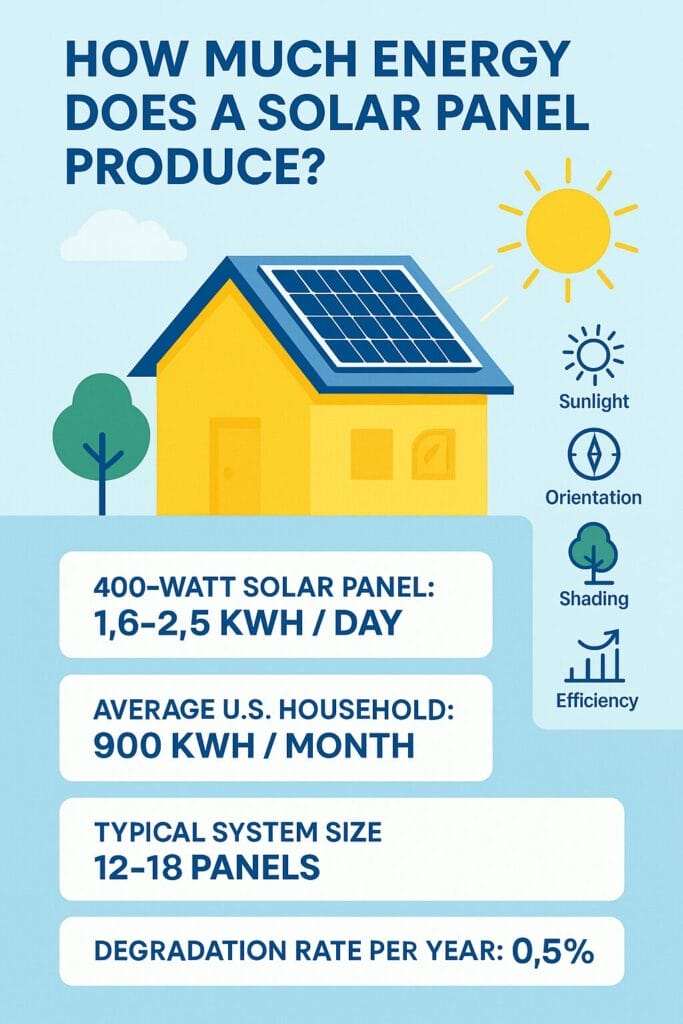
But remember, the watt rating is measured in a lab with full sun on a cool day. In real life, the actual output is often lower. For example, a 400-watt panel will not always produce 400 watts every hour. Instead, it only reaches that output during the strongest sunlight.
Panels with higher wattage are useful if your roof has limited space. For example, if you have a small roof and want to make as much energy as possible, picking panels closer to 400–450 watts helps you reach your goal with fewer panels.
Hours Of Sunlight
The energy a panel makes depends on how many hours of sunlight it gets. For example, panels in Arizona get more sun hours than those in London. The average is called “peak sun hours,” which means strong sunlight, not just daylight. Most places have between 3 to 6 peak sun hours per day.
Peak sun hours are not the same as the total number of daylight hours. For example, you might have 12 hours of daylight, but only 5 hours are “peak” where the sun is high and bright enough for maximum energy.
The rest of the day, the sunlight is weaker, and the panels make less power.
Peak sun hours also change by season. In winter, days are shorter and the sun is lower in the sky, which reduces the number of peak hours. In summer, you might get much more. If you want a yearly average, you need to look at both summer and winter.
Efficiency Of The Panel
Panel efficiency tells you how much sunlight the panel can turn into electricity. Most panels today are 15% to 22% efficient. Higher efficiency means more energy from the same amount of sun.
For example, if two panels are the same size, but one is 22% efficient and the other is 15% efficient, the 22% panel will make much more energy. This is important if your roof area is limited—efficient panels let you get more power from each square meter.
Some high-end panels, like those from premium brands, can even reach above 22% in lab conditions. For most homes, panels between 18%–21% efficiency offer a good balance of price and performance.
Angle And Direction
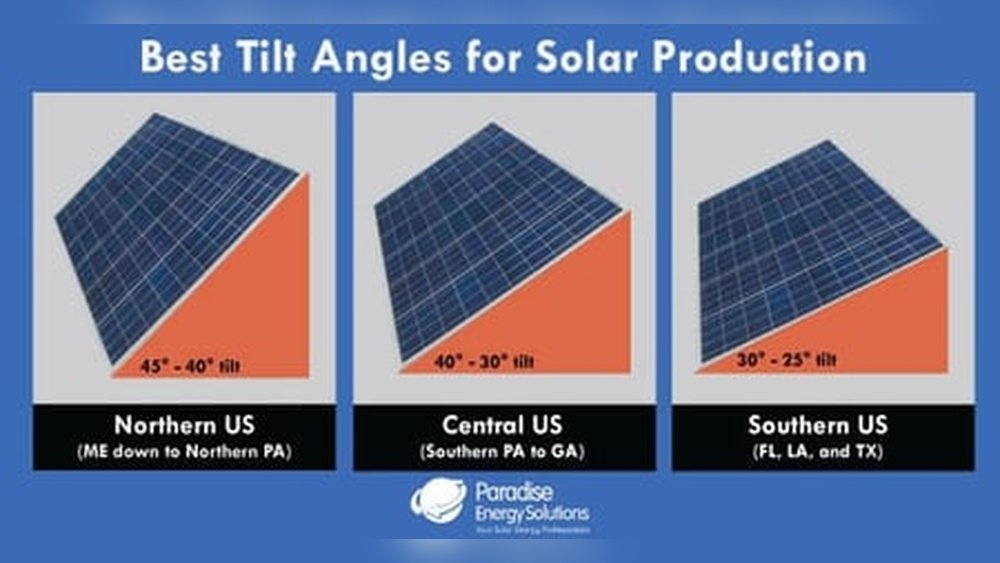
Panels work best when they face the sun directly. In the northern hemisphere, panels should face south. The tilt angle should match your latitude for best results. If the angle or direction is off, energy production drops.
For example, a panel installed flat on a roof will make less energy than one tilted at the best angle. In the US, a south-facing roof with a tilt equal to your latitude usually gives the best result. If your roof faces east or west, you will get about 10–20% less energy.
Adjusting the tilt seasonally—if possible—can boost output a little, but most homes use a fixed angle. If you have a flat roof, mounting brackets can help set the right tilt.
Shading And Obstructions
Even a little shade—from trees, chimneys, or other buildings—can cut energy production. Dust, snow, or leaves can also block sunlight. Keeping panels clean and free from shade is important for good performance.
Shading is a bigger problem than most people think. If a small part of a panel is shaded, the whole panel’s output can drop a lot. That’s why installers use tools to measure shade before putting up panels. For homes with partial shading, using microinverters or power optimizers can help reduce energy loss.
Temperature
Solar panels actually work better in cooler temperatures. Very hot weather can lower their efficiency slightly. This is why desert areas might not always have the highest energy output, even with lots of sun.
Most panels are tested at 25°C (77°F). For every degree above this, the panel loses a small amount of output—this is called the temperature coefficient. For example, with a coefficient of -0. 4% per degree, a 10-degree rise reduces output by 4%.
That means panels in very hot places might not reach their full rated power, even with lots of sun.
Real-world Losses
In real life, some energy is lost in the wiring, inverter, and other parts of the system. Most solar setups have about 10-20% system losses. Good design and quality parts can reduce these losses.
Wiring that is too thin, long cable runs, or cheap connectors can add to these losses. Also, dust and bird droppings on the panels can cut output. That’s why regular maintenance and choosing quality equipment matter.
How To Calculate Daily Solar Panel Output
Now, let’s turn these ideas into real numbers. Here’s a simple formula for estimating daily energy production from one panel:
Solar Panel Output (kWh/day) = Panel Wattage × Peak Sun Hours × Panel Efficiency × System Loss Factor
But usually, you see the calculation as:
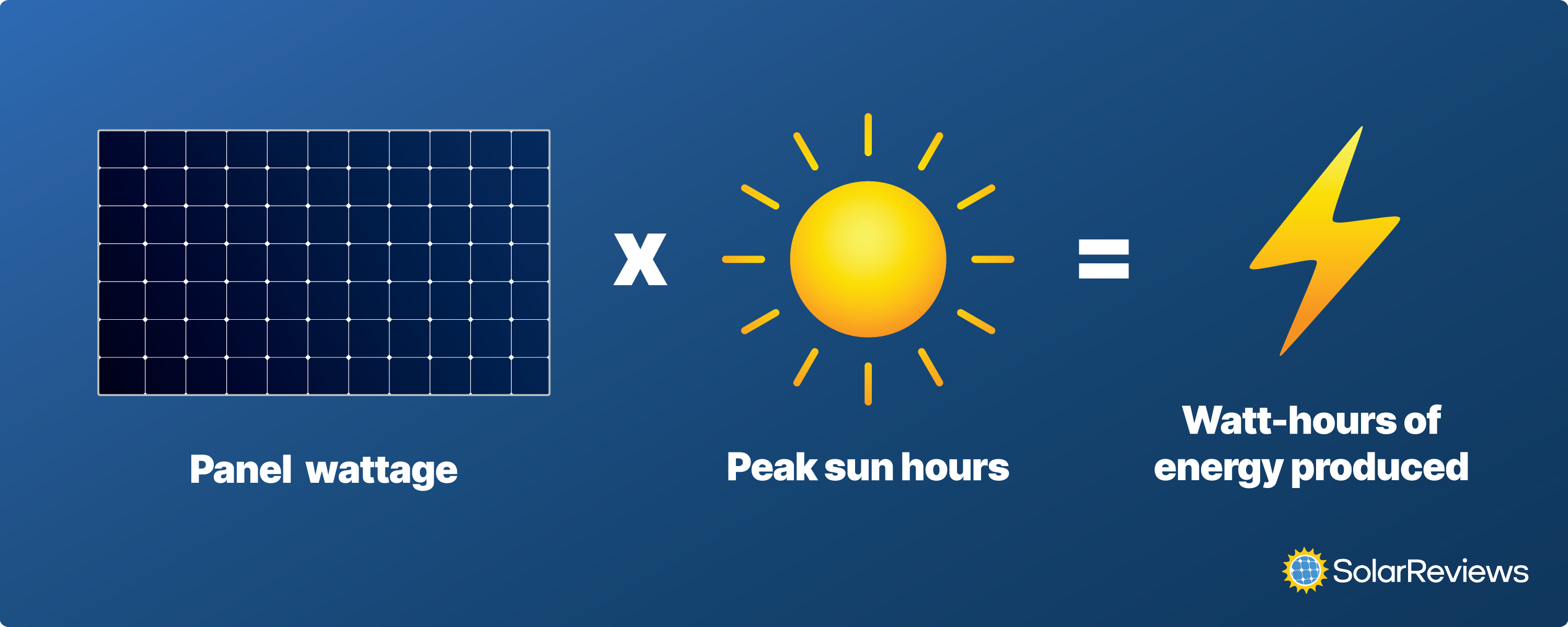
Daily Output (kWh) = Panel Wattage (W) × Sun Hours / 1000
This formula assumes the panel is working at its rated efficiency, and system losses are already considered.
You can also add a system loss factor (like 0. 8 or 0. 85) if you want a more accurate estimate.
Example Calculation
Let’s say you have a 350-watt panel, your location gets 5 sun hours per day, and the system losses are about 15%.
- Panel wattage: 350 W
- Sun hours: 5
- System losses: 15% (multiply output by 0.85)
First, calculate the total watt-hours:
350 W × 5 = 1,750 Watt-hours
Now, convert to kilowatt-hours (kWh):
1,750 ÷ 1,000 = 1.75 Kwh
Now, adjust for system losses:
1.75 × 0.85 = 1.49 Kwh Per Day
So, this panel will generate about 1.5 kWh per day in these conditions.
If you use more efficient panels or have more sun hours, your output increases. If your system has more losses or less sun, output drops.
How Much Energy Do Solar Panels Produce Per Day In Different Locations?
Energy output varies a lot depending on where you are. Here’s a comparison for a standard 350-watt panel in different cities:
| City | Peak Sun Hours | Expected kWh/Day |
|---|---|---|
| Los Angeles | 5.5 | 1.64 |
| New York | 4.0 | 1.20 |
| London | 2.5 | 0.75 |
| Sydney | 5.0 | 1.50 |
| Dubai | 6.0 | 1.80 |
As you can see, a panel in Dubai will make more energy per day than the same panel in London, just because of the extra sun.
Also, two homes in the same city can see different results based on roof angle, shading, or panel quality. For example, a panel on a shaded roof in Los Angeles might make less energy than a sunny roof in New York.
How Many Panels Do You Need For Your Home?
Most homes use a lot more energy than one panel can provide. To find out how many panels you need, you must know your daily energy use.
Step-by-step Sizing
- Check your electric bill. Find your average daily kWh use. In the US, a typical home uses about 30 kWh per day.
- Estimate how much each panel produces (see the table above). For example, if each panel makes 1.5 kWh per day.
- Divide your daily need by panel output:
30 Kwh / 1.5 Kwh = 20 Panels
This is a rough estimate. If your roof is small, you may need higher-wattage or more efficient panels.
Don’t forget to add a safety margin of about 10–20% to your calculation. This covers cloudy days, panel aging, and possible future increases in energy use.
Example: Small Home
If your home uses 10 kWh per day, and each panel makes 1.2 kWh, you’d need about 9 panels.
But if you plan to buy an electric car or add air conditioning, consider adding more panels now. Expanding later can be harder or more expensive.
Also, check your roof size and shape. Some roofs have space for only a certain number of panels, so high-efficiency panels may be a better investment for small roofs.
Solar Panel Output By Type
Not all solar panels are the same. Here’s how different types compare:
Monocrystalline Panels
- Efficiency: 18-22%
- Output: Highest per panel
- Best for: Small roofs
These panels are made from a single crystal structure. They are usually black and have a uniform look. Their high efficiency means you get more energy from less space, but they often cost more.
Polycrystalline Panels
- Efficiency: 15-18%
- Output: Slightly less than mono
- Best for: Larger roofs, lower cost
Polycrystalline panels are made from many crystals melted together. They are usually blue. They work well if you have a lot of roof space and want to save on costs.
Thin-film Panels
- Efficiency: 10-13%
- Output: Lowest per area
- Best for: Large spaces, flexible surfaces
Thin-film panels are flexible and lightweight. They are good for large buildings, sheds, or places where weight matters more than high efficiency.
Here’s a comparison of output for a 1 m² panel in good sun:
| Panel Type | Efficiency (%) | kWh/Day (1 m²) |
|---|---|---|
| Monocrystalline | 20 | 1.0 |
| Polycrystalline | 17 | 0.85 |
| Thin-film | 12 | 0.60 |
Choosing the right panel type affects how much energy you can make, especially if you have limited space.
Also, consider warranty and long-term performance. Monocrystalline panels usually come with longer warranties and lose less efficiency over time, which can save money in the long run.
Factors That Reduce Actual Output
Many beginners expect to get the full rated output, but real-world factors often lower the actual energy produced.
Dirt And Debris
A layer of dust or leaves can cut output by 5-20%. Cleaning panels every few months helps.
Bird droppings, pollen, and pollution also block sunlight. In dry, dusty climates, monthly cleaning can boost output, while in rainy areas, natural rain helps keep panels clean.
Inverter Losses
The inverter changes the DC power from your panels into AC power for your home. Most inverters are 95-98% efficient, so you lose a little energy here.
If your inverter is too small, it can “clip” extra power during peak sun hours, wasting potential output. Make sure your inverter matches your panel array size for best results.
Mismatch And Age
Panels wear out slowly and lose a bit of efficiency each year (about 0. 5% per year). Also, if one panel is shaded or faulty, it can affect the whole system if not properly designed.
This is known as “mismatch loss. ” Using microinverters or optimizers on each panel can reduce this effect, so one bad panel does not drag down the others.
Weather And Seasons
Cloudy days, rain, or snow reduce sunlight. Winter days are shorter and the sun is lower, so output drops compared to summer.
Even dust in the air after strong winds or wildfires can block sunlight and cut output for days or weeks.
Credit: nrgcleanpower.com
Understanding Peak Vs. Average Production
There is a difference between the maximum output (on a perfect sunny day) and the average output (over a year). Solar companies often talk about peak output, but most users care about the average, which takes cloudy days and seasons into account.
For example, if your system produces 10 kWh on a sunny day but only 3 kWh on a rainy day, your average over a month may be 6 kWh per day.
When planning your system, use the average number—not the best possible day—so you won’t be disappointed during cloudy weeks or winter.
You can check online solar maps for your region to get average yearly sun hours and estimate a realistic output.
Residential Vs. Commercial Solar Output
Bigger buildings can fit more panels. Commercial systems might use higher-wattage panels and have better installation angles, so they can make more energy per panel.
- Home system: Usually 5-10 kW (15-30 panels)
- Small business: 20-50 kW (60-150 panels)
- Large solar farm: 1 MW or more (thousands of panels)
But the calculation for energy per panel per day stays the same.
Commercial systems often have less shading and more open roof space, which means they can be designed for maximum output. Businesses can also use more of their energy during the day, matching solar production hours.
Credit: www.solarreviews.com
Comparing Solar Output To Household Needs
To see if solar is enough for your home, compare the energy you use to what solar can provide.
Example: Common Appliances
- Fridge: 1-2 kWh/day
- TV: 0.5 kWh/day
- AC (window unit): 1-5 kWh/day
- Lighting: 1 kWh/day
If your solar panels make 20 kWh/day, you can run these basics and still have energy left.
Large appliances like electric ovens, central air conditioning, or electric vehicle chargers use much more energy. If you plan to use these, size your solar system with extra capacity.
Seasonal Differences
In summer, you get more solar energy but may use more for cooling. In winter, you use more for heating but get less sun. Some people use battery storage or stay connected to the grid for backup.
If you use electric heating, winter solar output may not cover all your needs. In these cases, a hybrid system (solar plus grid) or adding batteries can help.
Solar Panel Output And Return On Investment
How much energy your panels make affects how quickly you’ll earn back your investment.
- Higher output = faster payback
- Low sun = longer payback
If you pay $10,000 for a system that saves $1,500 per year in electricity, your payback time is about 6-7 years. After that, your energy is almost free.
Local electricity prices, government incentives, and how much energy you use during the day affect your real savings. In some places, you get paid for extra energy you send to the grid, which shortens payback time.
Remember, if your panels make less energy than expected (due to shade, dirt, or poor installation), your payback will take longer. That’s why a good installer and regular maintenance are important.
Real-world Examples
Suburban Home In Texas
- System size: 6 kW (about 18 panels)
- Sun hours: 5.5 per day
- Daily output: 6,000 W × 5.5 = 33,000 Wh = 33 kWh
- Covers: Most of the home’s needs, some energy sold back to the grid
During spring and summer, this home may even produce extra energy. In winter, output drops, but the system still covers most needs.
Apartment Building In Germany
- System size: 20 kW (about 60 panels)
- Sun hours: 3 per day
- Daily output: 20,000 W × 3 = 60,000 Wh = 60 kWh
- Covers: Common area lighting, elevators, some apartments
Germany is known for cloudy weather, so the system is sized larger to meet the building’s needs.
Small Business In Australia
- System size: 10 kW (about 28 panels)
- Sun hours: 5 per day
- Daily output: 10,000 W × 5 = 50,000 Wh = 50 kWh
- Covers: Office equipment, lighting, reduces energy bills
In Australia, bright sun and clear skies help the business save money, especially since most work happens during daylight.
How Solar Panel Output Changes Over Time
Solar panels last a long time, usually 25-30 years. But their output drops a little each year.
- Year 1: 100% output
- Year 10: 95% output
- Year 25: 87-90% output
This slow decline is normal and is called degradation. Good panels have better warranties and lose less output over time.
Most warranties guarantee at least 80–85% of original output after 25 years. If you clean your panels and avoid shade, you might see even better results.
The Role Of System Size
Adding more panels increases your total energy, but only up to the limit of your roof space and budget. It’s better to use fewer high-efficiency panels if you have a small roof.
If you have extra space and money, “over-sizing” your system is a good way to prepare for future needs. Solar panels are cheapest to add during the first installation, not as an add-on later.
Sizing For Off-grid Vs. Grid-tied
- Off-grid systems need enough panels and batteries to cover days with little sun.
- Grid-tied systems can use the grid for backup, so sizing is more flexible.
If you want to go off-grid, add at least 20–30% extra capacity for cloudy days and consider seasonal changes.
Solar Panel Output And Climate
Climate affects output more than many people think.
- Cloudy, rainy areas: Lower output, need more panels to meet needs
- Hot, sunny areas: Good output, but extreme heat can lower efficiency a bit
- Dusty or snowy regions: Panels may need cleaning more often
If you live near the ocean, salt spray can build up on panels, reducing output. In snowy areas, panels should be installed at a steep angle so snow slides off easily.
Solar Panel Output: Typical Ranges
Here are the typical daily outputs for a single panel (350W), in different conditions:
| Condition | Peak Sun Hours | kWh/Day |
|---|---|---|
| Poor (cloudy, shaded) | 2 | 0.7 |
| Average (most of US/Europe) | 4 | 1.2-1.4 |
| Excellent (desert, tropics) | 6 | 1.8-2.1 |
Multiply this by the number of panels in your system to estimate your total daily output.
Remember, these numbers are only a starting point. Always check your own roof conditions and local climate for a more accurate estimate.
Common Mistakes When Estimating Solar Output
Even experts sometimes make mistakes in their calculations. Here are some pitfalls to avoid:
- Ignoring shading: Even a little shade can reduce output a lot.
- Using wrong sun hours: Daylight hours are not the same as peak sun hours.
- Not considering system losses: Always subtract about 15% for inverter and wiring losses.
- Relying on summer numbers: Winter output is often much lower.
- Forgetting about panel aging: Panels lose a bit of power each year.
Another common mistake is not checking for nearby new construction or growing trees, which can increase shade over time.
Credit: www.solarchoice.net.au
How To Maximize Solar Panel Output
If you want the most energy from your system, follow these tips:
- Install panels at the right angle and direction.
- Keep panels clean and free from shade.
- Use high-efficiency panels if space is limited.
- Choose a quality inverter and installer.
- Monitor your system regularly so you can fix problems quickly.
Also, trim trees and check for new buildings that might cast shade. Ask your installer about microinverters or optimizers if you have complex roof angles or partial shading.
Non-obvious Insights Most People Miss
1. “over-sizing” Is Often Smart
It can be wise to install more panels than you need right now. As you buy an electric car or add appliances, your energy use may grow. Solar panels are cheapest to add during the original install, not later.
Also, many incentive programs pay you based on the original system size, so extra panels can increase your payback.
2. Partial Shade Hurts More Than You Think
If even part of a panel is shaded, the output of the whole panel drops—not just the shaded part. Using microinverters or optimizers can help limit this loss, but basic systems without them can see big drops from just a little shade.
This is especially important for homes with chimneys, skylights, or nearby trees.
3. Output Changes Year To Year
Some years are sunnier than others. It’s normal for your actual output to vary by 10-20% from year to year, even if nothing else changes.
Tracking your system helps you spot long-term trends and see if your panels are performing as expected.
4. Local Air Quality Matters
Dust, pollution, and even pollen can block sunlight and lower your output. In cities with lots of air pollution, cleaning panels more often can really help.
Wildfire smoke, for example, can reduce solar output for weeks. After such events, washing panels can quickly restore lost production.
5. Roof Color Makes A Difference
A lighter-colored roof reflects more light onto the back of the panels, which can boost output a little. Dark roofs can make panels hotter, which lowers efficiency.
This effect is small—maybe 1–2%—but over many years, every bit adds up.
Monitoring And Tracking Your Solar Production
Modern solar systems come with apps or online dashboards. You can see:
- How much energy you make each day, week, or month
- If a panel is not working properly
- How much energy you send to the grid
Tracking helps you spot problems early, like a dirty or shaded panel, and fix them before you lose too much output.
Some advanced systems alert you by email or phone if output drops suddenly, so you don’t lose months of production without knowing.
Solar Panel Output Vs. Battery Storage
Batteries don’t increase how much energy your panels make, but they let you store extra energy for use at night or during power outages.
- Without batteries: You use solar power during the day, and grid power at night.
- With batteries: You can use your own solar energy even when the sun isn’t shining.
Good battery sizing matches your solar output and your nighttime energy use.
For example, if your panels make 20 kWh on a sunny day, but you use 10 kWh at night, a battery that stores 10 kWh will let you use only solar power 24 hours a day.
Impact Of Panel Quality And Brand
High-quality panels from major brands usually have better efficiency, longer warranties, and slower power loss over time. Cheaper panels might save money upfront but could lose output faster or break sooner.
Brands like LG, SunPower, and REC have strong reputations for reliability and warranty service. Always check reviews and warranty details before buying.
Government Incentives And Solar Output
Some countries offer tax credits, rebates, or feed-in tariffs based on how much energy your panels produce. This can make solar more affordable and improve your payback time. Always check the latest programs in your area.
For example, in the US, the Federal Solar Tax Credit lets you deduct a percentage of your system cost from your taxes.
Some local programs pay you for every kilowatt-hour your panels send to the grid. This can add up to hundreds of dollars per year.
Solar Panel Output And The Grid
In most places, you can sell extra solar energy back to the grid. This is called net metering. On days when you make more than you use, you get credits. On cloudy days, you use energy from the grid.
Not all utilities offer full credit for your solar energy. Check your local rules before you buy.
In some places, you might get paid a lower rate for extra energy. This affects how quickly you earn back your investment, so ask your installer to explain your utility’s policy.
Solar Output And Future Trends
Solar panel technology is always improving. New panels are more efficient and cheaper than old ones. In the future, we’ll see:
- More energy per panel
- Better performance in low light
- Longer-lasting panels
- Smarter monitoring and control
Staying updated with new technology can help you get more energy from your system over the years.
For example, bifacial panels (which collect sun from both sides) and panels with special coatings can boost output even more.
Example: Calculating Solar Output For A Family
Suppose you live in Florida and your family uses 25 kWh per day.
- You choose 400-watt panels.
- Your area gets 5.5 sun hours per day.
- Each panel: 400 × 5.5 = 2,200 Wh = 2.2 kWh.
- With 15 panels: 2.2 × 15 = 33 kWh per day.
This would cover your needs, with a bit extra for cloudy days.
If you want to add an electric car or pool pump, consider starting with 18–20 panels to give yourself a buffer.
Solar Panel Output: What The Numbers Mean For You
Knowing how much energy your solar panels can make per day helps you:
- Size your system correctly
- Estimate your savings
- Plan for future energy needs
It also helps you avoid common mistakes, like underestimating losses or overestimating sun hours.
If you want more technical details and real-world data, see the U.S. Department of Energy’s Solar Energy Technologies Office.
Frequently Asked Questions
How Much Energy Does A 1 Kw Solar System Produce Per Day?
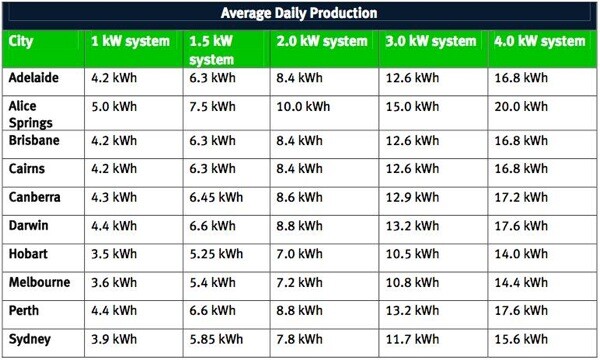
A 1 kW solar system (about 3 panels) makes 3-5 kWh per day in most places, depending on sun hours. In sunny areas, it could make a bit more. Multiply the system size (in kW) by your local peak sun hours to get an estimate.
For example, in California with 5 sun hours: 1 kW × 5 = 5 kWh per day.
Can Solar Panels Power A Whole House?
Yes, solar panels can power a whole house, but you need enough panels to match your daily energy use. Most homes need 15-25 panels. The exact number depends on your location, roof size, and energy habits.
Some homes with high energy use (electric heating, pools, large families) may need 30+ panels.
Do Solar Panels Work On Cloudy Or Rainy Days?
Solar panels still work on cloudy or rainy days, but make less energy—usually 10-25% of their normal output. Over a year, cloudy weather lowers your average output, but solar still saves money in most places.
If you live in a very cloudy place, size your system larger to cover your needs.
How Often Do Solar Panels Need Cleaning?
Panels should be cleaned every 6-12 months in most areas. If you live in a dusty or polluted area, you may need to clean them more often. Clean panels make more energy, especially in dry climates.
Some people use a garden hose and soft brush. Avoid harsh chemicals or scrubbing too hard.
How Long Do Solar Panels Last?
Most solar panels last 25-30 years or more. Their output drops a little each year, but good panels still make over 80% of their original power after 25 years. Warranties usually cover performance and defects.
With proper care, panels can keep working for decades, even after their warranty ends.
Solar panels are a smart way to make clean energy for your home or business. By understanding how much energy they produce each day—and what affects that number—you can plan the right system for your needs, avoid surprises, and enjoy reliable, low-cost power for decades.