How Big Is A Solar Panel?
Solar panels are everywhere now—from rooftops in busy cities to remote cabins in the mountains. But if you’re thinking about using solar energy, one of the first questions you might ask is: How big is a solar panel? The answer isn’t as simple as a single number. Solar panel size depends on many factors: the type, the technology, where it’s used, and what it’s designed to power. Let’s explore everything you need to know about solar panel size, including dimensions, wattage, weight, and what those numbers mean for your home or project.
What Determines The Size Of A Solar Panel?
There is no “one size fits all” when it comes to solar panels. Several factors shape their size:
- Panel type: Residential, commercial, and portable panels all differ.
- Cell configuration: The number and arrangement of solar cells affects size.
- Output capacity: Higher power usually means bigger panels.
- Frame and materials: Thicker frames or glass add to dimensions.
Understanding these factors helps you choose the right panel for your needs.
Standard Solar Panel Sizes
Most people imagine large, rectangular panels on rooftops. These are usually residential or commercial solar panels, and they follow industry standards.
Residential Solar Panels
Residential panels are designed to fit the average home roof, balancing power production and space usage.
- Typical physical size: About 65 inches by 39 inches (165 cm x 100 cm)
- Thickness: Usually 1.4 to 1.8 inches (35-46 mm)
- Weight: Around 40-45 pounds (18-20 kg)
- Wattage: Commonly 350-450 watts per panel
The reason for these dimensions is practical. They are large enough to generate useful electricity, but small enough for two installers to carry and mount safely.
Commercial Solar Panels
Commercial buildings often have more roof space and need more power. So, commercial panels are slightly bigger.
- Typical size: About 78 inches by 39 inches (200 cm x 100 cm)
- Weight: 50-55 pounds (23-25 kg)
- Wattage: 400-550 watts per panel
These panels have more cells (usually 72 or 96 vs 60 in residential panels), which means more surface area.
Portable And Specialty Panels
Not all solar panels are for rooftops. Some are designed to be lightweight and portable for camping, vehicles, or small devices.
- Size: Varies widely, from as small as a notebook to suitcase-sized.
- Wattage: 5-200 watts, usually less than rooftop panels.
- Weight: Lightweight, often under 10 pounds (4.5 kg).
Portable panels sacrifice power for convenience and mobility.
Solar Cell Count And Its Impact
The number of cells in a panel directly impacts size and output. Most standard panels use monocrystalline or polycrystalline silicon cells.
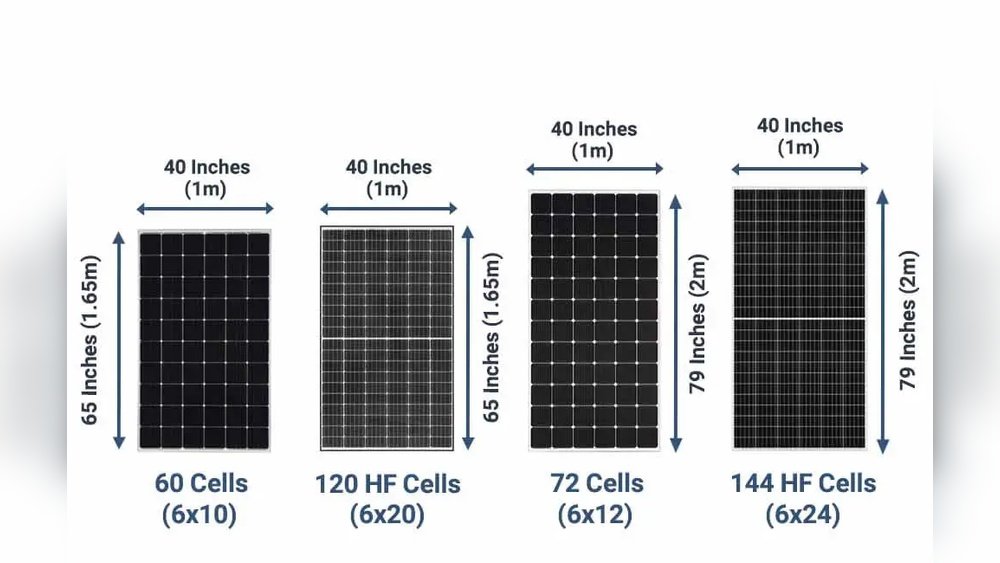
- 60-cell panels: Most common for residential; arranged in 6 rows of 10 cells. Size: 65 x 39 inches.
- 72-cell panels: Used in commercial; arranged in 6 rows of 12 cells. Size: 78 x 39 inches.
- 96-cell panels: High-output panels; larger and heavier.
Each cell is about 6 x 6 inches (15 x 15 cm). More cells mean more surface area and higher wattage.
Physical Dimensions Vs. Power Output
Some people think bigger panels always make more power. That’s not always true. Efficiency matters.
- High-efficiency panels can produce more power in the same space.
- Low-efficiency panels need more area to make the same power.
For example, two panels might both be 65 x 39 inches, but one produces 370 watts and another 450 watts, depending on cell quality and design.
How Panel Size Affects Installation
Choosing the right size isn’t just about what fits on your roof. It affects:
- Total number of panels: Smaller panels need more units for the same power.
- Wiring and mounting: Larger panels may need stronger supports.
- Aesthetics: How much of your roof or space is covered.
Installers often try to balance panel size, roof space, and required power output.
Comparing Common Solar Panel Sizes
Let’s look at the most popular panel sizes side by side. This helps you see the difference at a glance.
| Panel Type | Typical Dimensions (inches) | Cell Count | Wattage Range | Weight (lbs) |
|---|---|---|---|---|
| Residential | 65 x 39 | 60 | 350-450 | 40-45 |
| Commercial | 78 x 39 | 72 | 400-550 | 50-55 |
| Portable | 20 x 15 to 40 x 30 | Varies | 5-200 | 2-10 |
This table shows how panel size, wattage, and weight change depending on the use.
Solar Panel Size By Application
Home Rooftop Installations
Most homeowners use 60-cell panels because they fit well on common roofs and are easier to handle. For a typical U.S. home:
- Average system size: 6 kW (6000 watts)
- Panels needed: About 15-18 panels (at 350-400 watts each)
- Total area covered: 260-350 square feet (24-33 square meters)
If your roof is small or has obstacles (like chimneys), you might use high-efficiency panels. These are the same size but produce more power, so you need fewer panels.
Large-scale Solar Farms
Solar farms use 72-cell or larger panels. The goal is maximum power per dollar, not how the panels look or fit on a roof.
- Panel size: 78 x 39 inches or larger
- Rows and columns: Panels are set up in huge arrays across fields
- Total area: A 1 MW (1,000,000 watt) farm might cover 4-5 acres
Here, the number of panels can reach thousands, and the size of each panel helps reduce wiring and mounting costs.
Off-grid And Portable Systems
Small cabins, RVs, and boats use smaller panels. The size depends on how much power you need and where you can mount them.
- Panel size: As small as 20 x 15 inches for a 50-watt panel
- Mounting: Often on racks, poles, or rooftops of vehicles
- Portability: Some foldable panels are suitcase-sized for easy transport
These panels focus on convenience over maximum power.
How Do You Measure A Solar Panel?
When someone asks, “How big is a solar panel?” they may mean:
- Physical dimensions: Length x width x thickness (inches or centimeters)
- Surface area: Square feet or square meters
- Wattage output: How much power in ideal conditions (watts)
Be clear about which measurement you want. For roof planning, surface area is key. For power needs, wattage matters most.
Weight Of Solar Panels
Weight is as important as size, especially for roofs. A typical residential panel weighs 40-45 pounds (18-20 kg). Commercial panels are heavier, sometimes over 50 pounds.
Why Does Weight Matter?
- Roof strength: Not all roofs can support heavy loads.
- Installation safety: Two people can lift most residential panels, but large panels may need more help.
- Shipping and handling: Heavier panels cost more to move and install.
The glass, frame, and backing material add to weight. Thicker glass makes a panel stronger but heavier.
Solar Panel Thickness
Most panels are 1.4 to 1.8 inches thick (35-46 mm). Some frameless panels are thinner, but they’re less common.
- Standard framed panels: Easier to mount and more durable.
- Thin-film panels: Less thick, can be flexible, but usually lower efficiency.
Panel thickness rarely affects performance, but it can impact how you mount and wire the panels.
Solar Panel Wattage And Size Relationship
There is a direct link between wattage (power output) and panel size—but it’s not always one-to-one.
- Higher wattage usually means a bigger panel, but not always. High-efficiency cells can make more power in the same space.
- Older panels tend to be bigger for the same wattage compared to new, efficient models.
For example, a 350-watt panel from 2015 might be the same size as a 400-watt panel made in 2024.
Are All Solar Panels The Same Size?
No, and this is where beginners often get confused.
- Different brands may have slightly different sizes for the same wattage.
- Older panels can be larger for the same output.
- Thin-film, bifacial, and specialty panels can break the standard size rules.
Always check the specification sheet for exact measurements before buying or planning an installation.
Specialty Solar Panel Sizes
Some panels are made for unique needs:
- Bifacial panels: Capture sunlight from both sides. Can be larger and heavier.
- Building-integrated panels (BIPV): Replace roof tiles or windows. Sizes vary a lot.
- Flexible panels: Can be rolled or bent. Often used on boats, tents, or curved surfaces.
These specialty panels often trade some power for flexibility or unique features.
How Solar Panel Size Affects System Design
The size you choose affects many things:
- System layout: How many panels fit your space?
- Mounting hardware: Bigger panels need stronger mounts.
- Wiring and inverter: More panels may need more complex wiring.
- Aesthetics: Some people prefer fewer, larger panels; others want many small panels.
For complex roofs or limited space, high-efficiency, standard-sized panels are usually best. For ground mounts or large, open roofs, bigger commercial panels may save money.
Examples Of Real Solar Panel Models And Sizes
To make this more practical, let’s look at some real solar panels used today.
| Brand/Model | Type | Dimensions (inches) | Wattage | Weight (lbs) |
|---|---|---|---|---|
| SunPower X-Series | Residential | 61.3 x 41.2 | 360 | 41 |
| Q CELLS Q.Peak DUO | Residential | 65.7 x 41.3 | 400 | 48 |
| Canadian Solar CS3W-450MS | Commercial | 82.4 x 41.3 | 450 | 54 |
| Renogy 100W Portable | Portable | 41.1 x 21.3 | 100 | 19 |
You can see there is some variation, even among panels for the same application.
Why Not Just Use The Biggest Panels?
It might seem smart to use the largest panels you can find, but that’s not always the best idea.
- Handling and safety: Larger panels are heavier and harder to lift onto roofs.
- Wind resistance: Big panels catch more wind and need stronger mounts.
- Roof fit: Large panels may not fit around chimneys, vents, or skylights.
- Wiring limits: Some inverters have limits on panel voltage and current.
In some cases, using more standard-sized panels is safer and more flexible.
How To Choose The Right Panel Size For Your Project
Here’s how you can pick the right size:
- Measure your space: Know the length and width available.
- Calculate your power needs: How many kilowatts (kW) do you want?
- Check local codes: Some areas limit roof loading (weight per square foot).
- Talk to an installer: They can recommend the best size for your roof.
- Consider future expansion: Leave space for more panels if you’ll need more power later.
Remember, panel size is just one piece of the puzzle.
Solar Panel Size Vs. Roof Size: A Practical Example
Let’s say you have a roof that’s 30 feet long by 20 feet wide (600 square feet).
- Each 60-cell panel is about 17.6 sq ft (65 x 39 inches).
- You want a 6 kW system, using 400-watt panels.
Calculation:
- Panels needed: 6,000 watts / 400 = 15 panels
- Total area: 15 x 17.6 = 264 sq ft
You’d cover less than half your roof, leaving room for walkways or obstacles.
Solar Panel Size And Shading
Panel size affects how shading impacts your system:
- Larger panels: If one corner is shaded, more of the panel’s output drops.
- Smaller panels: Shading affects a smaller part of your system.
For roofs with partial shade, using more, smaller panels with microinverters can boost overall performance.
Thin-film Vs. Crystalline Panel Size
Thin-film panels are a different technology:
- Lighter and thinner than crystalline panels.
- Lower efficiency: Need more surface area for the same power.
- Flexible: Can go on curved surfaces.
You might see thin-film panels on bus stops, RV roofs, or building facades.
Solar Panel Size Trends Over Time
Solar panel technology is always improving:
- Panels are getting more efficient: More power per square foot.
- Sizes are more standardized: Easier for installers and buyers.
- Some new panels are bigger: To cut costs for large-scale projects.
In the past, a typical panel made 200 watts. Now, 400 watts is common in the same size, thanks to better cells and design.
How To Read A Solar Panel Specification Sheet
Every panel comes with a spec sheet. Here’s what to look for:
- Dimensions: Always check length, width, and thickness.
- Weight: Important for mounting and transport.
- Wattage (STC): Power output under standard test conditions.
- Cell count and type: Tells you about efficiency and layout.
- Max system voltage: What the panel can safely connect to.
If you’re not sure, ask your installer to explain each number.
Non-obvious Insights About Solar Panel Size
Here are two things people often miss:
- Bigger isn’t always better: Large panels might seem more cost-effective, but sometimes they don’t fit well around roof obstacles, or they require more expensive racking and handling.
- Efficiency can save space: A high-efficiency panel may cost more, but it can give you the same power with less roof space, which is vital for small or shaded roofs.
Planning For The Future: Will Panel Sizes Change?
Yes, but slowly. The industry likes standard sizes because it makes design, shipping, and installation easier. Most future changes will be in:
- Higher wattage in the same size (thanks to better cells)
- New specialty panels for vehicles, windows, or curved surfaces
If you plan now with standard-sized panels, you’ll be able to expand or replace them easily later.
Credit: www.cnet.com
Solar Panel Size And Building Codes
Some cities and towns have rules for solar installations:
- Weight limits: Maximum pounds per square foot on your roof.
- Setback requirements: Space must be left for firefighters.
- Wind and snow load ratings: Panels must handle local weather.
Always check local codes before buying or installing panels.
Are Custom Solar Panel Sizes Possible?
Yes, but it’s not common. Custom panels are usually more expensive and take longer to get. Most people use standard sizes for:
- Lower cost
- Easier installation
- Availability of replacement parts
Custom panels are used in special projects (like satellites or art installations), not regular homes.
Comparing Solar Panel Size To Other Energy Sources
Solar panels are unique because their size is tied to sunlight, not fuel. A small diesel generator might be the size of a suitcase but make lots of power. A solar panel needs more space because sunlight is weaker than fuel.
But solar panels have no fuel costs, make no noise, and last for decades.
How Much Power Per Square Foot?
A typical modern panel makes about 15-20 watts per square foot.
- High-efficiency panels: Up to 22 watts per sq ft
- Older or thin-film panels: 10-14 watts per sq ft
This helps you estimate how much roof or ground space you’ll need for your desired system size.
Solar Panel Size And Energy Yield
Panel size alone doesn’t guarantee more energy. Actual energy depends on:
- Panel orientation: Facing south (in the northern hemisphere) gives the most sun.
- Tilt angle: The right angle gets the most sunlight.
- Shading: Trees, buildings, or dirt can reduce output.
- Location: Panels in Arizona make more power than the same panels in Alaska.
A well-designed small system can outperform a poorly designed large system.
Maintenance And Cleaning: Does Size Matter?
Bigger panels may be harder to clean or reach, especially on high roofs. But regular cleaning (removing dust or snow) is important for all sizes.
- Self-cleaning coatings exist, but are not perfect.
- Access walkways should be planned for large installations.
If you can’t safely reach your panels, hire a professional.
Cost Implications Of Solar Panel Size
You might think bigger panels cost more. That’s sometimes true, but not always.
- Price per watt is the key number. Sometimes, larger panels are cheaper per watt.
- Installation costs can be higher for bigger, heavier panels.
- Shipping costs: Larger panels may need special handling.
Ask for a full quote, including all parts and labor, before you decide.
Are There Maximum Or Minimum Solar Panel Sizes?
There’s no strict maximum, but practical limits exist:
- Too large: Hard to transport, install, and handle wind loads.
- Too small: Not enough power for most uses.
Most panels are between 5 and 7 feet long, and 3 to 3.5 feet wide.
How To Maximize Power In Limited Space
If you have a small roof, use high-efficiency, standard-sized panels. If you have a large area, you can use bigger, less efficient panels and save money.
- Microinverters or power optimizers help maximize output from each panel, regardless of size.
Panel Size And Aesthetic Considerations
Some homeowners worry about how panels look. Standard-sized panels are usually black or dark blue, with black or silver frames.
- All-black panels can blend with dark roofs.
- Smaller panels can be arranged around roof features for a cleaner look.
Work with your installer to find the best balance of size, number, and appearance.
How Manufacturers Decide Panel Size
Panel size is a balance of:
- Manufacturing efficiency: Standard sizes keep costs low.
- Shipping: Panels must fit in shipping containers.
- Installation: Easy for two people to carry and mount.
- Market demand: What installers and buyers want.
That’s why you see the same few sizes from most brands.
Impact Of Solar Panel Size On System Upgrades
If you want to add more panels later, using standard sizes makes it easier. If you use a rare or specialty size, you might not be able to match the look or wiring later.
Plan ahead for upgrades if you think your energy needs will grow.
Can You Cut Or Resize A Solar Panel?
No. Solar panels are factory-sealed units. Cutting them destroys their function and warranty. Always plan your array with full-size panels.
Global Standards For Solar Panel Size
Most countries use similar panel sizes, but local rules may affect mounting and spacing. Check with your installer if you’re outside the U. S. , or if you’re using imported panels.
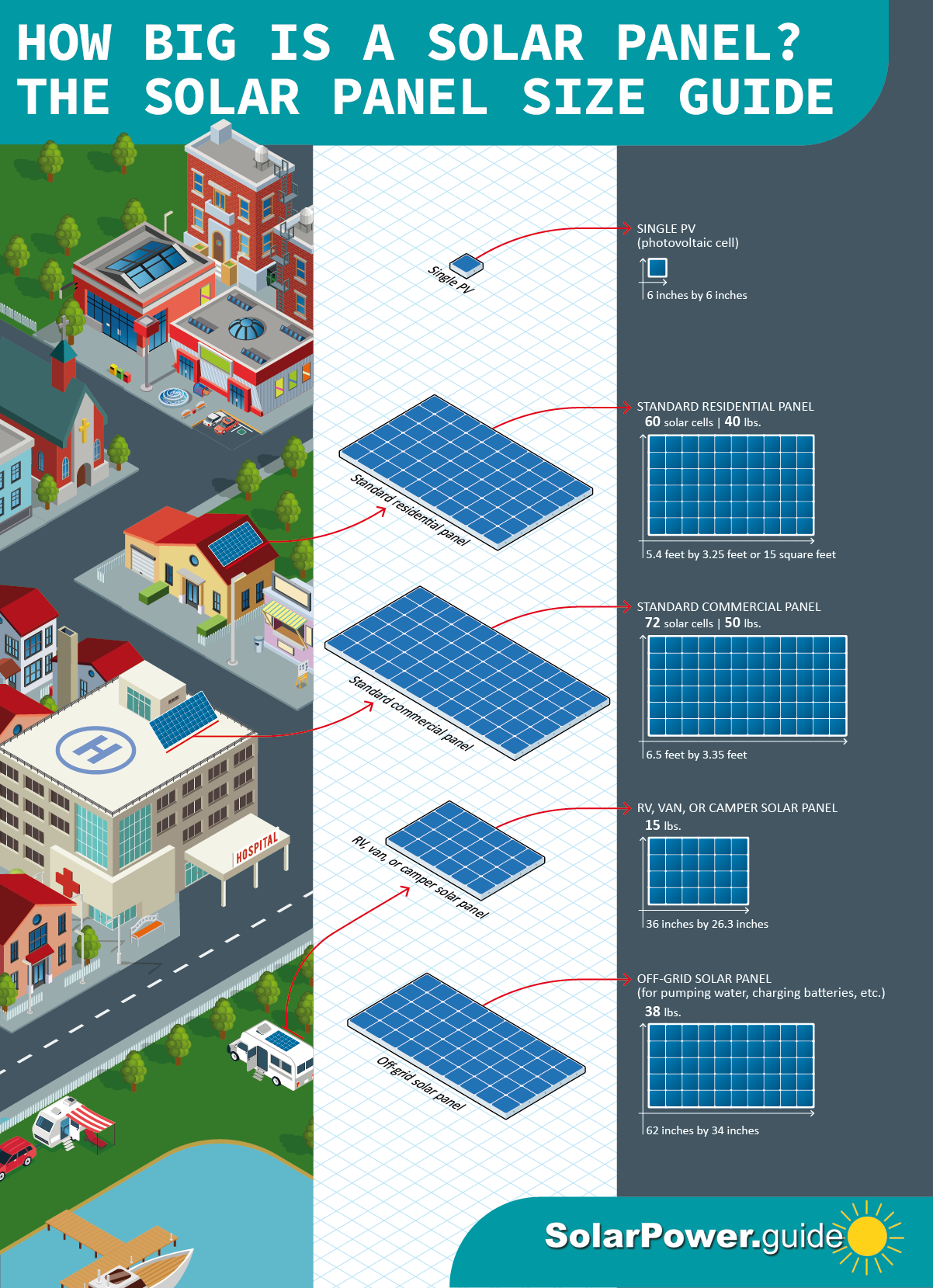
Credit: solarpower.guide
Are Bigger Panels Always More Efficient?
Not necessarily. Efficiency is about how much sunlight turns into power, not just size. A smaller, high-efficiency panel can make more power per square foot than a bigger, low-efficiency panel.
Solar Panel Size And Power Warranty
Most brands give a 25-year power warranty. This covers output, not size. But larger panels may have different warranty terms, so always check the paperwork.
Solar Panel Size For Boats, Rvs, And Tiny Homes
When space and weight are critical:
- Panel size: Often smaller (50-200 watts per panel)
- Mounting: Must fit curved or limited surfaces
- Weight: Needs to be light, so thin-film or flexible panels are common
These panels are less powerful but perfect for small, mobile energy needs.
Two More Non-obvious Insights
- Panel orientation can matter more than size. Mounting your panels at the wrong angle or direction can lose more energy than using a slightly smaller panel.
- Panel spacing for cooling: Large panels packed too closely may overheat in hot climates, losing efficiency. Leaving a small gap can improve performance.
The Future: Ultra-large And Ultra-small Panels
Research is ongoing into ultra-large panels for giant solar farms, and tiny, flexible panels for wearables or electronics. But for homes and businesses, standard sizes will stay popular.
For more technical details about solar panel technology, you can read this Wikipedia article on solar panels.
Frequently Asked Questions
How Big Is The Average Residential Solar Panel?
The average residential solar panel is about 65 inches long by 39 inches wide (165 x 100 cm). It weighs around 40-45 pounds (18-20 kg) and produces between 350 and 450 watts.
How Much Roof Space Do I Need For A 5 Kw Solar System?
A 5 kW system usually needs 12 to 14 standard panels (at 350-400 watts each). That’s about 210 to 250 square feet (20-23 square meters) of roof space, depending on the panel size and efficiency.
Are Commercial Solar Panels Much Bigger Than Residential Panels?
Yes. Most commercial panels are longer, about 78 inches (200 cm) compared to 65 inches (165 cm) for residential panels. They also have more solar cells and higher wattage.
Can I Use Smaller Panels To Fit A Complicated Roof?
Absolutely. Using more, smaller panels can help fit around chimneys, vents, or odd-shaped roofs. But it may increase the total cost slightly due to more wiring and mounting hardware.
Do Solar Panels Come In Custom Sizes?
Custom sizes are possible, but rare for home and business use because they are more expensive and harder to replace. Most people use standard sizes for cost and convenience.
Solar panels come in many sizes, but understanding how size, power, and efficiency fit your needs is the key to a successful solar project. The right choice means more clean energy, lower bills, and a perfect fit for your space.
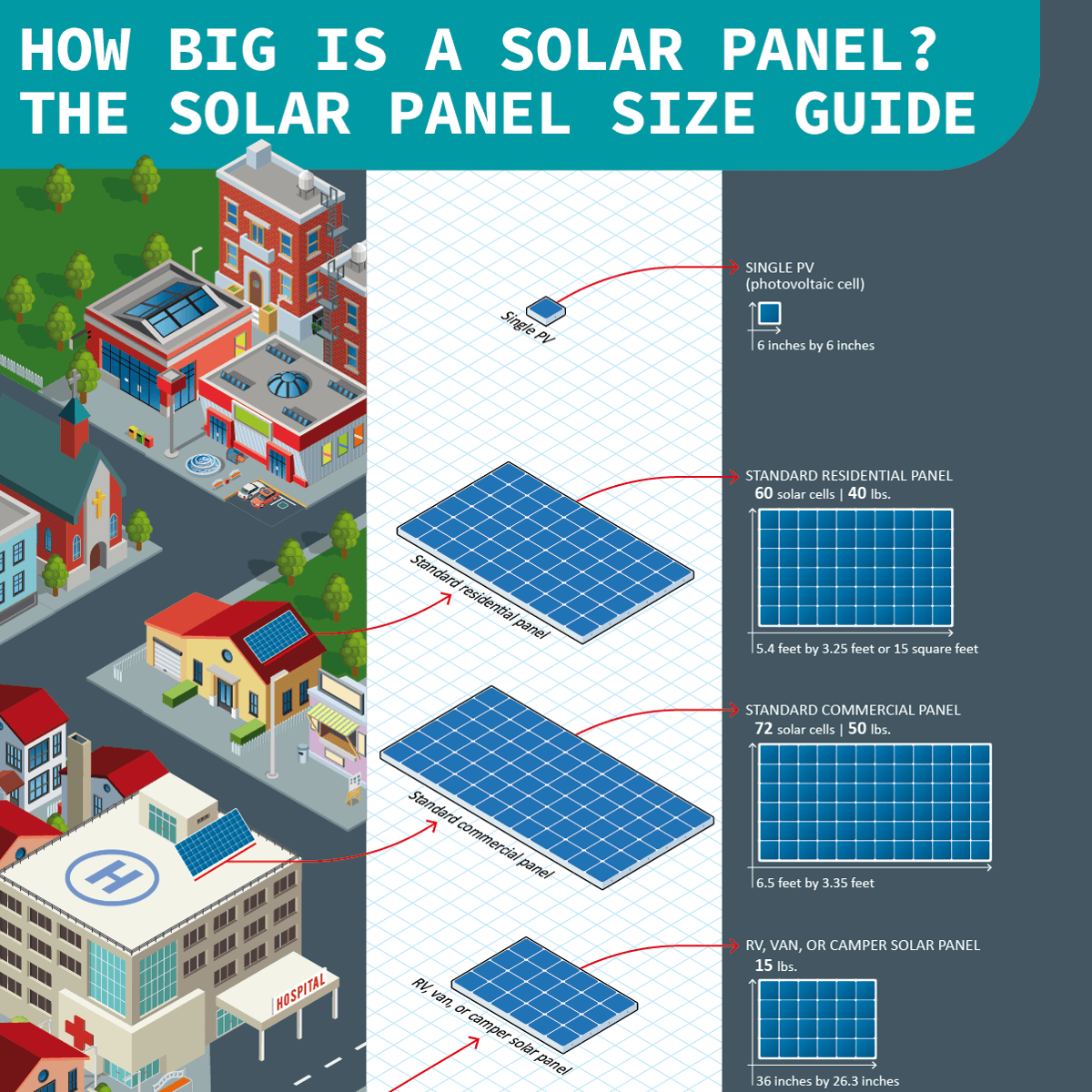
Credit: solarpower.guide