Understanding how much voltage a 100 watt solar panel should produce is important for anyone working with solar energy. Whether you want to power a small cabin, charge batteries, or run household devices, knowing the correct voltage ensures your system works safely and efficiently.
Many people focus on wattage, but voltage is just as critical. The wrong voltage can damage equipment or reduce performance.
This article will cover every aspect of the topic. You will discover what voltage to expect from a 100 watt solar panel, what affects it, and how to measure and use it. We will explore 100 key factors, situations, and insights—each with its own explanation.
These details help you get the most from your solar panel, avoid mistakes, and make smart choices. Even if you are new to solar, you will find clear answers to common and advanced questions.
What Is Voltage In A Solar Panel?
A solar panel converts sunlight into electricity. The electricity it produces is measured in volts (V) and amps (A). Voltage is the electrical “pressure” that pushes current through a circuit. For a 100 watt solar panel, the voltage tells you what kind of batteries or devices you can power.
Most 100 watt solar panels are made for 12V systems, but the actual voltage can be higher or lower, depending on conditions. The panel’s label usually shows “Vmp” (voltage at maximum power) and “Voc” (open circuit voltage). These numbers are not always the same as the voltage you get during use.
For example, if you look at a 100 watt solar panel’s specification sheet, you might see Voc listed as 21. 5V and Vmp as 18. 2V. These values are measured in a controlled lab, not outside on your roof. In daily use, the sun’s angle, temperature, and even dust can change these numbers.
That is why it is important to understand what voltage really means and what you can expect.
One thing beginners often miss is that the “12V” label does not mean the panel only produces 12 volts. It is designed to work with 12V batteries, but the voltage is always higher when the panel is working well. This extra voltage is needed to charge batteries properly, since a 12V battery actually needs about 14-14.
4V to reach full charge.
Why Focus On 100 Key Factors?
Solar panels are affected by many things. Temperature, sunlight, wiring, and even cleaning can change the voltage. To help you understand the full picture, this article explains 100 factors related to the voltage output of a 100 watt panel. You will see how each factor matters, and how you can use this knowledge.
Some people only consider one or two factors, like sunlight and dirt. However, real-world systems are affected by many details. For example, even the way you mount the panel, the type of connectors you use, and the brand’s quality control can change the voltage you see.
By understanding all the factors, you avoid common mistakes—like choosing the wrong wire size or ignoring the effect of temperature.
Also, every installation is a bit different. Panels on an RV roof face different challenges than those on a house. Knowing all the possible factors lets you adapt your system and keep voltage as high and stable as possible.
1. Standard Test Condition (stc) Voltage
Manufacturers rate solar panels under Standard Test Conditions (STC). For a 100 watt panel, the Vmp is usually about 17 to 18 volts. This is the voltage at which the panel gives its maximum power when tested in a lab.
STC means the panel is tested with sunlight at 1000 watts per square meter, the cell temperature at 25°C (77°F), and the air mass at 1. 5. These conditions rarely happen outside, except maybe for a few minutes at noon on a clear, cool day.
This is why you may see slightly lower voltage in real-life use.
Knowing the STC voltage helps you compare different panels. If two panels both say 100W but one has a higher Vmp, it may work better for charging batteries in certain conditions.
2. Open Circuit Voltage (voc)
Open Circuit Voltage (Voc) is the highest voltage the panel can produce with no load attached. For 100 watt panels, Voc is often between 20 and 22 volts. You see this if you measure the panel’s wires with a voltmeter in bright sun, without anything connected.
Voc is always higher than Vmp. If you connect a voltmeter in the morning or evening, you may see the Voc is still there even if current is very low. Voc is important for system design. Your charge controller and inverter must handle the Voc, especially in cold weather when voltage can go higher than normal.
3. Voltage At Maximum Power Point (vmp)
Vmp is the voltage when the panel is producing its maximum power. For 100 watt panels, it is usually 17-18V. This is the voltage you get when the panel is charging a battery or running a device.
Vmp is the most useful number for solar users, because it tells you what voltage you get in real use—when the panel is connected to a load. It is also the value your charge controller uses to convert energy efficiently.
4. Nominal System Voltage
Panels are labeled for nominal system voltage. A “12V” panel is meant for 12V batteries, but the real output is higher, around 17-18V at peak power, to charge the battery fully.
The term “nominal” is a bit confusing. It means “in name only. ” A 12V panel will never actually output exactly 12V in good sunlight. It’s always higher, because a battery needs more than 12V to charge. This is why you should always check the Vmp, not just the label.
5. Solar Cell Type
Monocrystalline and polycrystalline panels can have slightly different voltage outputs. Monocrystalline usually has a slightly higher Vmp for the same wattage, but both types are close.
Monocrystalline cells are more efficient, so they can keep voltage higher when the light is weak. Polycrystalline panels may have slightly lower voltage on very hot days. It’s a small difference, but it can matter if your system is very sensitive to voltage changes.
6. Number Of Cells
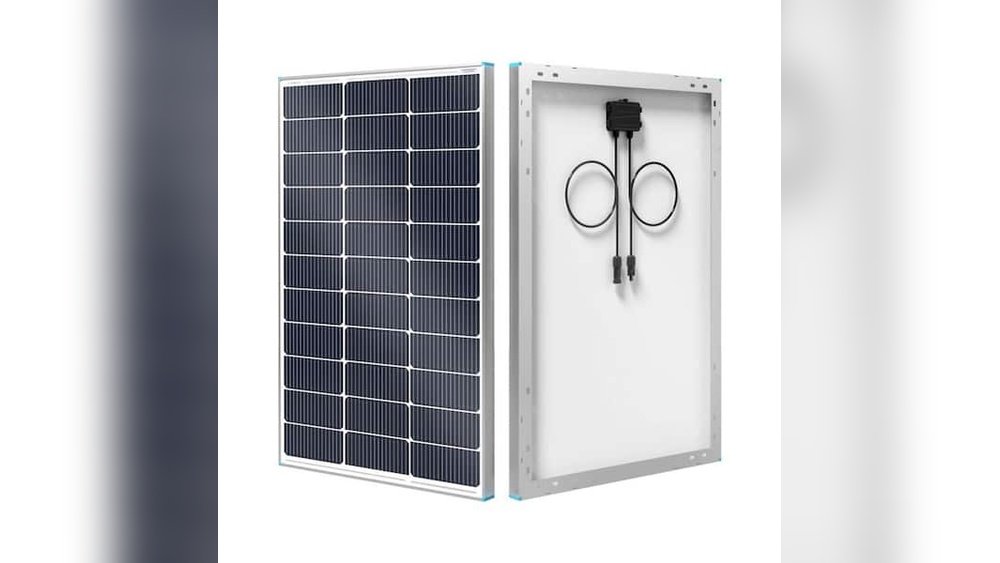
A 100 watt panel usually has 36 cells connected in series. Each cell produces about 0. 5V, so 36 x 0. 5 = 18V.
Some newer panels use 32, 36, or even 40 cells, depending on design. The total number of cells determines the max voltage. If one cell is damaged, the whole panel’s voltage drops.
7. Series Vs. Parallel Connections
If you connect panels in series, voltages add up. In parallel, the voltage stays the same, but current increases. For one 100 watt panel, the voltage is its own Vmp.
If you want to charge a 24V battery, you might connect two 12V panels in series to get double the voltage. For more current but the same voltage, connect in parallel. Always check the specs of your controller before wiring panels.
8. Temperature Effects
High temperatures lower voltage. For example, a panel rated at 18V at 25°C may drop to 16V or less on a hot roof.
Cold weather actually raises voltage, sometimes above the Voc label. This is why charge controllers and inverters must be rated for higher voltages than the panel’s Vmp or Voc. On a 40°C (104°F) day, you could lose 10% or more of your panel’s voltage.
9. Sunlight Intensity
Full sun gives the highest voltage. Cloudy or hazy days will lower both voltage and wattage.
Even a little haze or morning fog can drop voltage by a few volts. If you live in a place with lots of clouds, expect lower voltage most days.
10. Angle Of The Panel
If the panel is not facing the sun directly, voltage drops. The best voltage comes when the panel is at the right angle to the sun.
For example, if your roof faces east or west, the panel gets less direct light and voltage drops, especially at midday. Using an adjustable mount helps you get better voltage year-round.
11. Dust And Dirt
Dirty panels can lose voltage. Even a thin layer of dust can reduce output.
In dry areas, dust can build up quickly. Rain may wash some away, but sticky dirt or pollen can block sunlight. Cleaning your panel with a soft cloth every few weeks can keep voltage high.
12. Shadows
A shadow on one cell can lower the voltage of the whole panel, not just the shaded part.
If a leaf or bird dropping covers even one cell, voltage drops across all cells in the series. This is because current must flow through every cell. Some panels have bypass diodes to help reduce this effect, but it cannot be avoided fully.
13. Wire Length And Size
Long or thin wires can cause voltage drop. Using thick, short wires keeps voltage loss low.
For every foot of wire, there is some resistance. If you use long, thin wires, you can lose several volts before power reaches your battery or device. Always use the thickest wire practical, especially for runs over 10 feet.
14. Battery State
A nearly full battery will accept less current, and the voltage from the panel might rise slightly as it charges.
As batteries fill, their internal resistance goes up. This can cause voltage at the panel to rise, but current will drop. If your voltage seems high but batteries are not charging, they may be full or there may be a wiring problem.
15. Charge Controller Type
PWM controllers match panel voltage to battery voltage, losing some power. MPPT controllers convert extra voltage into more charging current, improving efficiency.
MPPT controllers are more expensive but can get 10-20% more power from your panel, especially in cold weather or with higher-voltage panels.
16. Measuring Voltage
Always use a multimeter to measure real voltage. Check both open-circuit and under-load voltages.
When measuring, do it in bright sun for best results. Measure at the panel’s terminals and again at the battery to check for voltage loss in wires.
17. Panel Age
Old panels can lose voltage as cells degrade. Expect a slow drop over 10-20 years.
Most panels lose about 0. 5% of voltage per year. After 20 years, you may see 10% less voltage than when new.
18. Panel Quality
High-quality panels keep their voltage closer to the rated value, even after years of use.
Cheap panels may have lower-quality cells, poor soldering, or bad connectors. These problems show up as voltage loss after a few years.
19. Manufacturer Differences
Different brands can have small differences in Vmp and Voc, even for the same wattage.
Always check the datasheet before buying. Some brands round up numbers, so measure the real voltage when you get the panel.
20. Label Vs. Real-world Voltage
The voltage on the label is usually higher than what you will see in daily use, especially if conditions are not perfect.
Don’t design your system using just the labeled voltage. Always plan for real-world drops.
21. Mounting Location
A panel on a hot roof will have lower voltage than one with air flowing under it.
Mounting panels with a small gap for airflow can keep them cooler and voltage higher.
22. Altitude
High altitude means thinner air, which can increase sunlight and voltage slightly.
If you live in the mountains, you may see voltage 1-2% higher than at sea level.
23. Time Of Day
Voltage is highest at noon, when the sun is strongest.
Morning and evening voltage is always lower, sometimes half the midday value.
24. Seasonal Changes
Winter sun is weaker, so voltage may be lower. Summer gives the best output.
In winter, the sun is lower in the sky and days are shorter, so expect less voltage even in full sun.
25. Inverter Requirements
Your inverter must accept the panel’s voltage. Too high or too low can cause problems.
Some small inverters have a very narrow voltage range. Always check before connecting your panel.
26. Battery Charging Needs
To charge a 12V battery, you need panel voltage above 13. 7V (the battery’s full charge). That’s why 100 watt panels are rated around 17-18V Vmp.
If your panel’s voltage is too low, batteries will never fully charge, which can damage them over time.
27. Bypass Diodes
Good panels have bypass diodes to keep voltage up if one cell is shaded.
Diodes allow current to “bypass” shaded or damaged cells, so voltage drop is less severe.
28. Solder Joint Quality
Poor soldering inside the panel can cause voltage loss.
Solder joints connect cells. If these crack or corrode, voltage drops. High-quality panels use better solder and sealing.
29. Internal Resistance
Older or damaged panels can have higher internal resistance, reducing voltage.
You can sometimes feel this as the panel gets hot even when not producing much power.
30. Panel Orientation
Panels facing south (in the Northern Hemisphere) get the best voltage most of the day.
East or west-facing panels get more voltage in the morning or evening but less at noon.
31. Seasonal Tilt Adjustment
Adjusting the panel’s tilt with the seasons keeps voltage high year-round.
In winter, tilt the panel more upright to catch low sun. In summer, lay it flatter.
32. Cloud Cover
Thick clouds drop voltage a lot, while light haze only lowers it a little.
On stormy days, you may get only 10-20% of the normal voltage.
33. Rain Cleaning
Rain can wash dust off, restoring voltage.
But heavy pollen or sticky dirt may need manual cleaning.
34. Snow Cover
Even a little snow can block sunlight and cut voltage to zero.
Brush off snow quickly to keep voltage up.
35. Bird Droppings
Hard spots of dirt or droppings can cause local voltage loss.
These can “hot spot” and damage cells if not removed.
36. Panel Frame Shadow
A shadow from the frame or mounting hardware can lower voltage if it falls on the cells.
Check your mounting so no part of the frame shades the cells during the day.
37. Reflection Losses
Light reflecting off the glass instead of entering the panel lowers voltage.
Wipe the glass with a clean, soft cloth to maximize light entry.
38. Anti-reflective Coating
Panels with anti-reflective coatings keep voltage higher in low light.
Check the specs for this feature if you live in a cloudy area.
39. Cell Cracks
Microscopic cracks in cells lower voltage over time.
You may not see these cracks, but voltage drops slowly if they spread.
40. Microinverters
A microinverter converts panel DC voltage to AC. It needs input voltage within its range to work well.
If your panel voltage drops too low, the microinverter stops working.
41. Overvoltage Protection
Some devices shut off if voltage is too high for safety.
This protects batteries and electronics from damage.
42. Undervoltage Protection
Some charge controllers stop charging if voltage drops too low.
This prevents battery damage or inefficient charging.
43. Wind Cooling
Wind blowing over the panel cools it, raising voltage slightly.
Panels installed in windy locations may perform better in summer.
44. Humidity
High humidity can reduce sunlight reaching the cells, lowering voltage.
In tropical climates, expect slightly lower voltage on humid days.
45. Panel Cover Material
Tempered glass lets more light in than plastic, keeping voltage higher.
Plastic covers can yellow and block light over time.
46. Wiring Connections
Loose or corroded connectors cause voltage drop.
Check connections every few months for corrosion or looseness.
47. Junction Box Quality
A poor-quality junction box can create extra resistance, lowering voltage.
Look for sealed, weatherproof junction boxes from reputable brands.
48. Cable Connectors
MC4 connectors are standard for solar panels. Bad connectors can cause voltage loss.
Always use genuine connectors and check for firm connections.
49. Panel Bypass Fuses
Some panels use fuses to protect cells. If a fuse blows, voltage drops.
Replace blown fuses with the correct type to restore voltage.
50. Thermal Expansion
Repeated heating and cooling can weaken solder joints, slowly lowering voltage.
Panels in places with big temperature swings may age faster.
51. Panel Size
Most 100 watt panels are about the same size, but small differences can affect cell temperature and voltage.
Larger panels may stay cooler, keeping voltage a bit higher.
52. Glass Thickness
Thicker glass can protect better but may slightly lower voltage by blocking a bit more light.
Choose panels with the right balance for your location.
53. Uv Degradation
Years of sunlight can degrade plastics and coatings, slowly reducing voltage.
Look for UV-resistant materials if you live in very sunny areas.
54. Shipping Damage
If a panel is dropped or bent, it may lose voltage even if it looks fine.
Test voltage before installing a new panel.
55. Flooding Damage
Water inside the panel damages cells and lowers voltage.
Install panels in places where water cannot pool.
56. Lightning Strikes
Direct or nearby strikes can destroy cells, making voltage drop.
Consider lightning protection if you live in stormy areas.
57. Wildlife Damage
Squirrels or birds chewing wires can cause voltage loss.
Use wire mesh or covers to protect wiring.
58. Grounding Issues
A poor ground can cause electrical problems, reducing voltage.
Check grounding connections during installation.
59. Serial Number Tracking
Top brands track panels by serial number for quality and warranty, helping keep voltage output reliable.
This also helps if you need a warranty claim for a voltage issue.
60. Quality Control Testing
Panels tested at the factory are more likely to deliver the voltage you expect.
Ask your supplier about quality control procedures.
61. Warranty
A long warranty (20-25 years) usually means the panel will keep most of its voltage over time.
Choose longer-warranty panels for the best long-term value.
62. Panel Certifications
Look for certifications like IEC 61215 to ensure the panel meets voltage and safety standards.
Certified panels are tested for voltage stability in different conditions.
63. Fire Safety Rating
Certified panels are less likely to lose voltage from fire or heat.
Fire damage can cause hidden voltage problems.
64. Mounting Type
Flush mounts can get hotter (lower voltage) than racks with airflow beneath.
Racks let air cool the panel, which helps voltage stay high.
65. Panel Age On Shelf
Old stock sitting in a warehouse may lose voltage before installation.
Check manufacturing dates when buying.
66. Installer Experience
A skilled installer can place panels for best voltage.
Poor installation can cause shadows, loose connections, and voltage loss.
67. System Monitoring
A system monitor helps you track real-time voltage, finding problems early.
Some monitors let you check data from your phone.
68. Mppt Controller Sizing
Pick an MPPT controller that matches your panel’s maximum voltage.
An undersized controller may shut down or fail.
69. Pwm Controller Sizing
PWM controllers need the panel’s Vmp to be just above battery voltage to work well.
If Vmp is too low, you waste power and charge slowly.
70. System Expansion
If you add more panels, make sure the combined voltage stays within controller and inverter limits.
Too much voltage can damage equipment.
71. Shading At Different Times
A panel may be in sun at noon but shaded in the evening, lowering voltage then.
Plan your layout to avoid shadows all day.
72. Seasonal Dirt
Pollen or dust in spring can lower voltage until rain or cleaning.
Check panels after pollen season for best results.
73. Inverter Efficiency
High-voltage input can help inverters run more efficiently.
Some inverters work best with input above 15V.
74. Dc Load Voltage
If you run DC devices, check that their voltage matches the panel output.
Some 12V appliances need at least 12V to run well.

Credit: www.youtube.com
75. Ac Load Compatibility
For AC devices, voltage is set by the inverter, not the panel.
But the inverter still needs enough input voltage to work correctly.
76. System Fuses
Blown fuses in the system can stop voltage from reaching your batteries.
Check fuses if voltage suddenly drops to zero.
77. Battery Type
Lead-acid, AGM, and lithium batteries have different charging voltage needs.
Lithium batteries often need higher voltage for fast charging.
78. Battery Temperature
Cold batteries need higher charging voltage, so panel voltage must be high enough.
Some controllers adjust for temperature automatically.
79. Solar Tracker Use
A solar tracker keeps panels facing the sun, maximizing voltage all day.
Trackers are more common in large systems but can help in off-grid cabins too.
80. Tilt Angle Adjustments
Adjusting the tilt improves year-round voltage.
A simple seasonal adjustment can boost winter voltage by 10-20%.
81. Reflection From Ground
Snow or light ground can reflect sunlight, boosting voltage a bit.
Install panels where ground reflection is possible for extra power.
82. Panel Degradation Rate
Most panels lose about 0. 5% of voltage per year.
After 10 years, expect about 5% less voltage than when new.
83. Module Efficiency
Higher efficiency panels can reach rated voltage with less sun.
This is useful in cloudy climates or for limited roof space.
84. Cell Interconnects
Better cell connections keep voltage higher, even if one cell is weak.
High-quality panels use thick, low-resistance interconnects.
85. Hot Spot Protection
Panels with good hot spot protection keep voltage steady in harsh conditions.
This is important for rooftop systems where some shading is likely.
86. Panel Cleaning Method
Gentle cleaning (soft cloth, no chemicals) keeps voltage from dropping.
Harsh chemicals can damage coatings and lower voltage.
87. System Voltage Matching
Make sure all parts of your system (panels, controller, battery) are matched for voltage.
Mismatched parts cause low efficiency and possible damage.
88. Rv Or Mobile Installations
Panels on moving vehicles can get hotter, lowering voltage.
Shade changes quickly, so expect voltage to go up and down as you drive.
89. Panel Flexibility
Flexible panels can run hotter and lose more voltage than rigid ones.
Use them only where rigid panels cannot fit.
90. Corrosion
Salt air near the sea can corrode wires, lowering voltage.
Check for rust and clean connections often in coastal areas.
91. Snow Load
Heavy snow can crack glass, causing voltage loss.
Use panels rated for snow load if you live in snowy areas.
92. Hail Impact
Hail can damage cells or glass, dropping voltage.
Choose panels with strong glass if hail is common.
93. Cell Sorting
Panels built with well-matched cells keep voltage more stable.
Poorly matched cells cause voltage to drop faster as they age.
94. Color Of Roof
Dark roofs get hotter, causing more voltage drop.
If possible, mount panels above a light-colored surface.
95. Power Optimizers
Using power optimizers can keep voltage high even if one panel is shaded.
Optimizers balance output so one weak panel does not drag down the whole system.
96. System Overload
Too many panels on one controller can push voltage too high, risking damage.
Always check voltage limits before expanding your system.
97. Label Accuracy
Some cheap panels are labeled higher than they really are. Measure to check.
Trust but verify, especially for unknown brands.
98. Brand Reputation
Well-known brands are more likely to deliver rated voltage.
Read reviews and check for real-world voltage tests online.
99. User Manual Guidance
Follow the manual for best voltage results.
Manufacturers give important advice for safe, efficient use.
100. Government Incentives
Some incentives require panels to meet voltage standards.
Check your local rules before buying.
—
Below is an example of how voltages compare for different weather and installation factors:
| Condition | Typical Vmp (Volts) | Effect on Voltage |
|---|---|---|
| Cool, sunny day | 18 | Best case |
| Hot, sunny day | 16 | Voltage drops |
| Cloudy day | 12 | Major voltage drop |
| Panel shaded | 5 | Severe voltage loss |
Credit: viox.com
Practical Examples Of Voltage Measurement
Measuring the voltage of a 100 watt panel is simple, but you need to know what to expect. Connect a multimeter to the panel’s wires in full sun. With nothing attached, you should see the Voc (about 20-22V). Connect a load (like a small light or battery charger), and you will see Vmp (about 17-18V).
If the panel is dirty, hot, or partly shaded, the voltage will be lower.
For example, on a clear morning, you might measure Voc at 21. 5V, but as the day warms up, voltage drops to 20V. If you lay your hand on the panel and feel it’s hot, expect Vmp to be 16V or less.
If you place a small object to cast a shadow on a cell, you will see voltage drop sharply, sometimes by half.
One practical tip: always measure voltage at both the panel and the battery/controller. If you see much lower voltage at the battery than at the panel, check your wires for problems.
How A 100 Watt Solar Panel Performs In Real Life
Let’s look at some practical scenarios:
- On a cool, clear day, you measure 18V at midday. This is ideal.
- On a hot roof, you measure 16V. This is normal due to heat.
- In the morning or late afternoon, you might see 12-15V.
- If clouds pass, voltage drops quickly.
- With even a small shadow, voltage can fall below 10V.
Another example: If you clean your panel after a few weeks of dust buildup, you might see voltage rise from 16V back to 18V in full sun. If you install the panel on a metal roof with airflow underneath, you may keep voltage 0.5-1V higher than a panel flush against hot shingles.
Choosing The Right Battery And Controller
A 100 watt panel with a Vmp of 17-18V is perfect for charging a 12V battery with an MPPT controller. If you use a PWM controller, you lose some power, because the voltage is “clipped” to match the battery.
For example, if your panel Vmp is 18V and your battery is 12V, a PWM controller wastes the difference, while an MPPT controller converts the extra voltage into more charging current. This makes a big difference in efficiency.
If you use lithium batteries, make sure your controller supports the higher voltage needed for full charging. Some lithium batteries require up to 14. 6V to charge fully. If your panel’s voltage is too low, you will never reach full charge, which shortens battery life.
Voltage Data Comparison For Top Brands
Here’s a look at three popular brands and their 100 watt panel voltage ratings:
| Brand | Vmp (Volts) | Voc (Volts) |
|---|---|---|
| Renogy | 18.6 | 22.3 |
| Rich Solar | 17.8 | 21.4 |
| HQST | 18.1 | 22.0 |
These numbers are typical for quality panels.
If you see a panel rated at 100W with a Vmp below 17V, be cautious. It may not charge 12V batteries efficiently, especially with a PWM controller.
Credit: viox.com
Why Voltage Matters For Your Setup
Voltage affects how well your system works:
- If voltage is too low, batteries charge slowly or not at all.
- If voltage is too high, you can damage batteries or controllers.
- Using the right voltage keeps everything safe and efficient.
For example, running a fridge on a 12V system needs steady voltage above 12V. If voltage drops, the fridge may shut off or run inefficiently. If you use an inverter, it needs enough voltage to convert DC to AC safely.
Common Mistakes To Avoid
Many beginners make these errors:
- Not checking real panel voltage before buying other parts.
- Using thin wires, causing voltage loss.
- Ignoring temperature effects.
- Assuming all 100 watt panels have the same voltage.
Another common mistake is placing panels where trees or chimneys cast shadows during the day. Even a few minutes of shadow can drop your voltage and reduce battery charging. Also, do not connect panels with very different voltages in the same string; the lower panel drags down the whole string.
Two Insights Most People Miss
First, the voltage you see in real life is often lower than the label, especially in summer heat. Always plan for this when sizing your system.
Second, even a small area of shade or dirt can drop voltage more than you expect, because all cells in a series affect each other. Clean and place your panel carefully.
Another insight is that many off-grid users forget about voltage drop in wires and connections. Over long distances, even with thick wire, you can lose 1-2 volts. Always measure voltage at the battery, not just the panel, to catch this problem.
How To Maximize Voltage From Your 100 Watt Panel
- Clean the panel every few weeks.
- Keep it cool with airflow underneath.
- Use thick, short wires.
- Adjust the angle seasonally.
- Use an MPPT controller for best charging.
If you live in a hot climate, install panels with a small gap underneath for airflow. If your system is portable, adjust the tilt each season for the best sun angle. Always check connections for corrosion and replace old wires if voltage drops.
Real-world Data Table: Voltage Vs. Current Output
| Sunlight Condition | Voltage (Vmp) | Current (Imp) | Power (W) |
|---|---|---|---|
| Full sun | 18 | 5.5 | 99 |
| Partial shade | 12 | 3.0 | 36 |
| Cloudy | 10 | 2.0 | 20 |
This shows why keeping your panel clean and in full sun is so important.
Using 100 Watt Panels In Different Applications
100 watt panels are common for:
- RVs and boats
- Small cabins
- Emergency backup power
- Portable power systems
Each use may have different voltage needs. Always match panel voltage to your batteries and controller.
For example, in an RV, voltage can change quickly as the vehicle moves in and out of shade. Portable systems often need extra wire, so thick cables are a must. For cabins, permanent mounts allow for better tilt and airflow, keeping voltage high year-round.
Some users try to run small AC appliances like laptops or fans through an inverter. Check that your inverter works well with your panel’s voltage, or you may get poor performance or overload warnings.
Final Thoughts
A 100 watt solar panel should typically produce a Vmp of 17-18 volts and a Voc of 20-22 volts in ideal conditions. Real-world voltage will usually be a bit lower, especially in hot weather or with some dirt or shade. Understanding all the factors that affect voltage helps you design a better solar system and avoid common mistakes.
The key is to measure and monitor your actual voltage, not just rely on the label. Use this guide to check every detail, and your system will be safer, more efficient, and last longer. For more technical details and standards, you can visit this Wikipedia page on solar panels.
Frequently Asked Questions
What Voltage Should I Expect From My 100 Watt Solar Panel?
You should expect about 17-18 volts Vmp (voltage at maximum power) and 20-22 volts Voc (open circuit voltage) in full sun, under standard conditions. Actual voltage may be lower with heat, shade, or dirt.
Can I Use A 100 Watt Solar Panel For A 12v Battery?
Yes, a 100 watt solar panel is designed for charging 12V batteries. Its Vmp is high enough to charge the battery fully, especially when using an MPPT charge controller.
Why Is My Panel Voltage Lower Than The Label Says?
Real-world voltage is often lower than the label due to heat, poor sunlight, dirt, or shade. Label values are measured in perfect lab conditions.
What Happens If Voltage Is Too High Or Too Low?
If voltage is too high, you can damage batteries or controllers. If it’s too low, batteries may not charge fully. Always use a controller and match panel voltage to your system.
How Can I Increase The Voltage Output From My Panel?
Keep the panel clean, mount it in full sun, use thick wires, and provide airflow to keep it cool. Adjust the angle seasonally. Using an MPPT controller helps convert extra voltage into more charging power.