When choosing solar panels, you want the best option that fits your needs and budget. But with so many materials out there, it can get confusing.
Two popular choices you might have heard of are ETFE and PET solar panels. Which one will give you better performance, durability, and value? You’ll discover the key differences between ETFE and PET solar panels. By the end, you’ll know exactly which material suits your solar project and why it matters for your energy savings.
Keep reading to make a smart choice for your solar investment.
Material Properties
Material properties play a key role in choosing between ETFE and PET for solar panels. These properties affect the panel’s life, efficiency, and cost. Understanding the differences helps in making the right choice for your needs.
Both ETFE and PET have unique qualities. Each has strengths and weaknesses based on its chemical makeup and physical traits. Let’s explore these material properties in detail.
Chemical Composition
ETFE stands for ethylene tetrafluoroethylene. It is a fluorine-based plastic. This makes it highly resistant to chemicals and UV rays. PET, or polyethylene terephthalate, is a polyester. It is widely used in packaging and bottles. PET is less resistant to harsh chemicals and sunlight compared to ETFE.
ETFE’s chemical structure gives it better stability over time. PET can degrade faster under strong sunlight or chemical exposure. This affects the solar panel’s durability and efficiency.
Durability And Flexibility
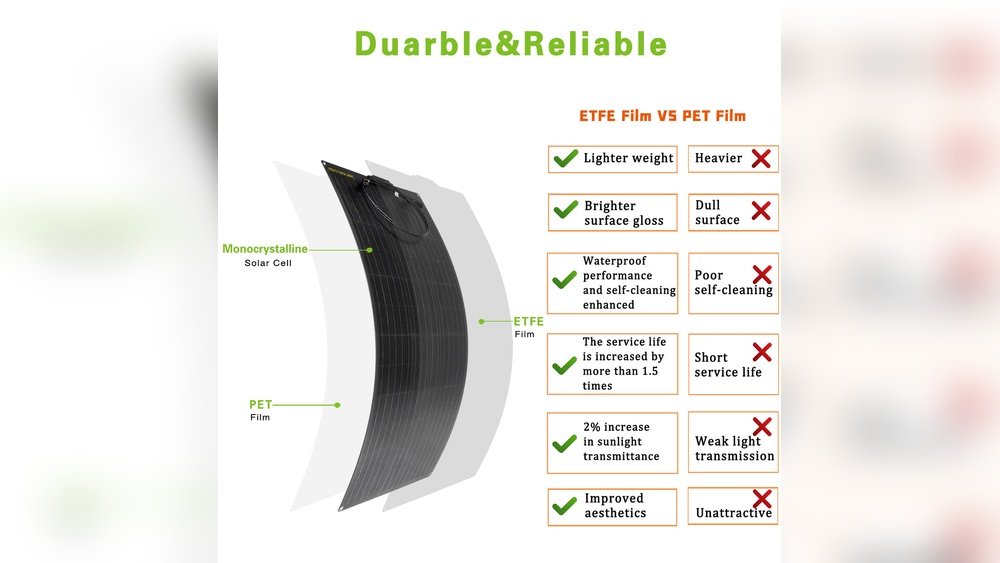
ETFE is known for its high durability. It can stretch without breaking, making it very flexible. This helps ETFE panels resist impacts and wind damage. PET is less flexible and more prone to cracking under stress. It is still strong but not as tough as ETFE.
ETFE also has excellent self-cleaning properties. Dirt and dust do not stick easily to ETFE surfaces. PET panels may require more cleaning and maintenance.
Temperature Resistance
ETFE can handle extreme temperatures. It works well in both hot and cold climates. ETFE stays stable up to 150°C (302°F). PET has a lower temperature tolerance, around 70°C (158°F). High heat can cause PET to warp or lose strength.
Solar panels often face high temperatures. ETFE’s ability to resist heat makes it ideal for long-term use. PET may need extra protection in hot environments.
Energy Efficiency
Energy efficiency is key in choosing solar panel materials. It affects how much sunlight turns into usable power. Both ETFE and PET have unique traits that influence this efficiency. Understanding these helps pick the right solar panel for your needs.
Light Transmission Rates
Light transmission means how much sunlight passes through the panel cover. ETFE has a high light transmission rate. It lets more sunlight reach the solar cells. PET has lower light transmission compared to ETFE. This can reduce the sunlight hitting the solar cells. More light means better energy production. ETFE usually supports more efficient energy capture.
Impact On Solar Cell Performance
The cover material affects solar cell health and output. ETFE resists UV damage well. It protects cells longer. PET can degrade faster under sunlight. This may lower cell performance over time. ETFE also handles heat better. High temperatures can reduce solar cell efficiency. ETFE keeps temperatures more stable. This helps cells work at their best for longer.
Environmental Impact
Choosing between ETFE and PET solar panels involves understanding their environmental impact. Solar panels help reduce reliance on fossil fuels, but their materials and production affect the planet too. Knowing how each type affects the environment guides better decisions.
Recyclability
ETFE is a durable plastic that can be recycled more easily than PET. It can be melted and reused without losing quality. PET also recycles well but may degrade after several cycles. Both materials reduce waste compared to non-recyclable plastics. ETFE’s recyclability helps cut down landfill waste over time.
Carbon Footprint
ETFE production requires more energy than PET, leading to a higher carbon footprint. PET has a lower production energy cost, making it greener initially. However, ETFE lasts longer, which can balance out its carbon impact over years. Considering the full life cycle is important to measure true carbon emissions.
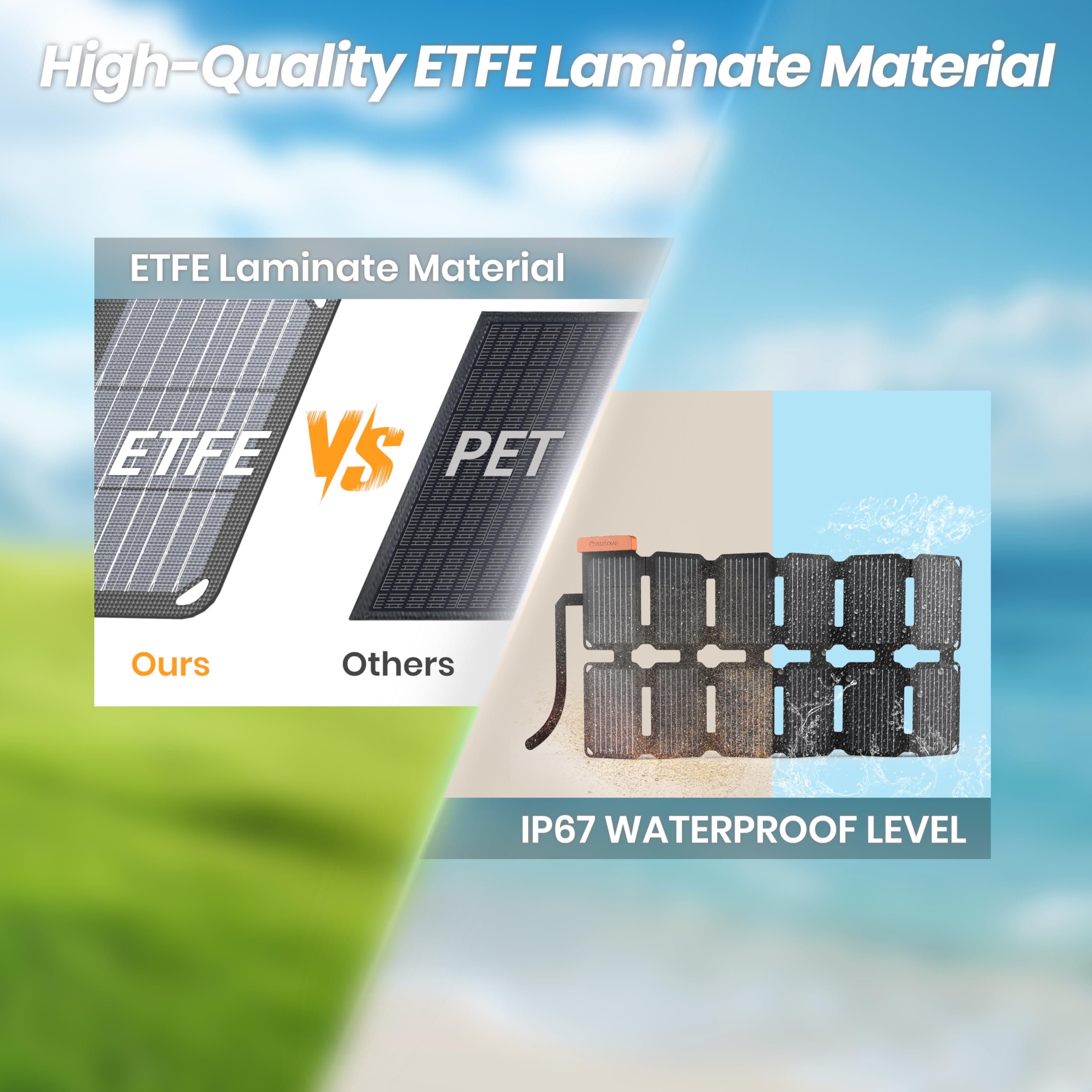
Credit: www.amazon.com
Cost Comparison
Comparing the costs of ETFE and PET solar panels is important for buyers. Understanding expenses helps make smart choices. Costs include upfront price and ongoing care. Both types vary in these areas. This section breaks down the main cost factors.
Initial Investment
ETFE panels usually cost more upfront. Their material is stronger and lasts longer. This quality raises the price. PET panels are cheaper at purchase. They use less costly materials. This makes PET a budget-friendly option. Buyers save money at the start with PET. But price is not the only factor.
Long-term Maintenance
ETFE panels need less maintenance over time. Their durability resists dirt and damage well. This reduces cleaning and repair costs. PET panels may require more care. They can wear out faster in harsh conditions. This means more frequent replacements or fixes. Over years, ETFE might save money. PET’s lower initial cost can be balanced by higher upkeep.
Installation And Maintenance
Installation and maintenance are key factors when choosing between ETFE and PET solar panels. They affect both cost and long-term performance. Understanding these aspects helps in making the right choice for your solar needs.
Ease Of Installation
ETFE solar panels are lightweight and flexible. This makes them easier to handle during installation. They can fit curved or uneven surfaces well. This reduces the need for extra supports or adjustments.
PET solar panels are also light but less flexible. They require more careful placement on flat surfaces. Installing PET panels might take more time and effort. Tools and supports may be needed to secure them properly.
Cleaning Requirements
ETFE panels have a smooth, non-stick surface. Dirt and dust slide off easily. This lowers the frequency of cleaning. It saves time and water used for maintenance.
PET panels attract more dirt due to their rougher surface. Cleaning must be done more often. Regular washing is needed to maintain good energy output. Extra care is required to avoid scratching the panels.

Credit: suns-power.com
Weather Resistance
Weather resistance is a key factor for solar panels. It affects how long panels last and how well they work. Solar panels face sun, rain, wind, and other tough conditions every day. Materials used in panels must handle these well to protect the solar cells inside. Two common materials are ETFE and PET. Their ability to resist weather varies and matters for panel performance.
Uv Stability
ETFE stands out with strong UV stability. It blocks harmful UV rays without breaking down. This keeps the panel clear and efficient over time. PET can degrade under long UV exposure. It may turn yellow and lose strength. Panels with ETFE cover last longer in sunny places.
Impact Resistance
ETFE is highly impact resistant. It can handle hail, debris, and drops without cracking. PET is less tough and can tear or dent more easily. Strong impact resistance helps prevent damage during storms or rough handling. This protects the solar cells and keeps energy output steady.
Waterproofing
Both ETFE and PET provide good waterproofing. They stop water from entering and harming the solar cells. ETFE has a slight edge with better sealing and less chance of water leaks. Waterproof panels avoid short circuits and corrosion, ensuring long-term reliability.
Applications And Suitability
Choosing the right material for solar panels depends on where and how you plan to use them. ETFE and PET have different strengths that fit various settings. Understanding their applications helps you pick the best option for your needs.
Residential Use
ETFE panels offer high durability and light weight. They handle weather changes well. This makes them good for homes in harsh climates. PET panels are cheaper and easy to install. They work well for small rooftop systems. Homeowners value PET for budget-friendly solar solutions.
Commercial Use
Businesses need solar panels that last long and cover large areas. ETFE suits large commercial roofs because it resists dirt and damage. It keeps panels clean and efficient. PET can be used in commercial settings but may need more maintenance. Companies with tight budgets might choose PET for cost savings.
Specialized Environments
ETFE stands out in special cases like greenhouses or solar facades. It lets sunlight pass through while protecting panels. Its strength supports unusual shapes and large spans. PET is less common here due to lower durability. ETFE fits places needing clear, tough, and flexible solar covers.

Credit: suns-power.com
Market Trends
Market trends show how ETFE and PET solar panels perform in the current energy sector. These trends help buyers and manufacturers decide which material suits their needs better. Understanding popularity and future developments gives a clear picture of the market direction.
Popularity And Adoption
ETFE panels are gaining attention for their durability and light weight. They perform well in harsh weather and last longer. PET panels remain popular due to their low cost and flexibility. Many small-scale solar projects choose PET for easy installation. Both materials find use in different solar applications. ETFE is common in large, long-term projects. PET fits well with portable and temporary solar setups.
Future Developments
Research focuses on improving ETFE’s efficiency and lowering production costs. New ETFE films may increase solar panel lifespan. PET development aims at better heat resistance and stronger durability. Scientists explore ways to recycle PET solar panels more easily. Advances in material science could make both ETFE and PET panels more eco-friendly. Future trends may also include hybrid panels using both materials. Innovation drives the market toward more sustainable solar solutions.
Frequently Asked Questions
What Are Etfe And Pet Solar Panels?
ETFE and PET are types of plastic films used as solar panel coverings. ETFE is known for durability and transparency. PET is cost-effective but less durable. Both protect solar cells while allowing sunlight to pass through.
Which Solar Panel Material Lasts Longer, Etfe Or Pet?
ETFE solar panels generally last longer than PET ones. ETFE resists UV damage and harsh weather well. PET tends to degrade faster under sunlight. For long-term use, ETFE panels are more reliable.
How Do Etfe And Pet Panels Compare In Efficiency?
ETFE panels usually offer better efficiency due to higher light transmission. PET panels have slightly lower efficiency but are more affordable. The choice depends on balancing cost with energy output needs.
Are Etfe Solar Panels More Expensive Than Pet?
Yes, ETFE solar panels typically cost more than PET panels. ETFE’s advanced features and durability increase its price. PET panels are a budget-friendly option but may require earlier replacement.
Conclusion
Choosing between ETFE and PET solar panels depends on your needs. ETFE panels offer high durability and better light transmission. PET panels are usually cheaper and lighter. Both materials work well under different conditions. Consider your budget, location, and panel use.
Each type has clear strengths. Think about what matters most: cost, strength, or efficiency. This helps you pick the best solar panel for your project.