Have you ever noticed your solar lights dimming or completely going out when winter arrives? It’s frustrating, especially when you rely on them to brighten your outdoor space during long, dark nights.
You might wonder why these lights, which worked perfectly in summer, suddenly stop shining. Understanding the real reasons behind this can help you fix the problem and keep your lights glowing all season long. Keep reading, and you’ll discover simple explanations and easy tips to ensure your solar lights don’t fade away when winter comes.
Credit: www.streetlights-solar.com
Reduced Sunlight Exposure
Solar lights rely on sunlight to charge their batteries. In winter, sunlight becomes less available. This reduction affects how well solar lights work. The main reason is reduced sunlight exposure during the colder months. Less sunlight means less energy for the lights. Understanding this helps explain why solar lights often stop working in winter.
Shorter Daylight Hours
Winter days are shorter than summer days. The sun rises late and sets early. This means solar panels get less time to absorb sunlight. Less charging time leads to weaker battery power. Solar lights may not store enough energy to stay on all night. Shorter daylight hours directly reduce solar light efficiency.
Low Sun Angle Impact
The sun sits lower in the sky during winter. Sunlight hits solar panels at a slant. This angle reduces the amount of light the panels receive. Less direct sunlight means less energy collected. Shadows last longer and cover solar panels more often. Low sun angle reduces solar light charging power significantly.
Battery Performance Issues
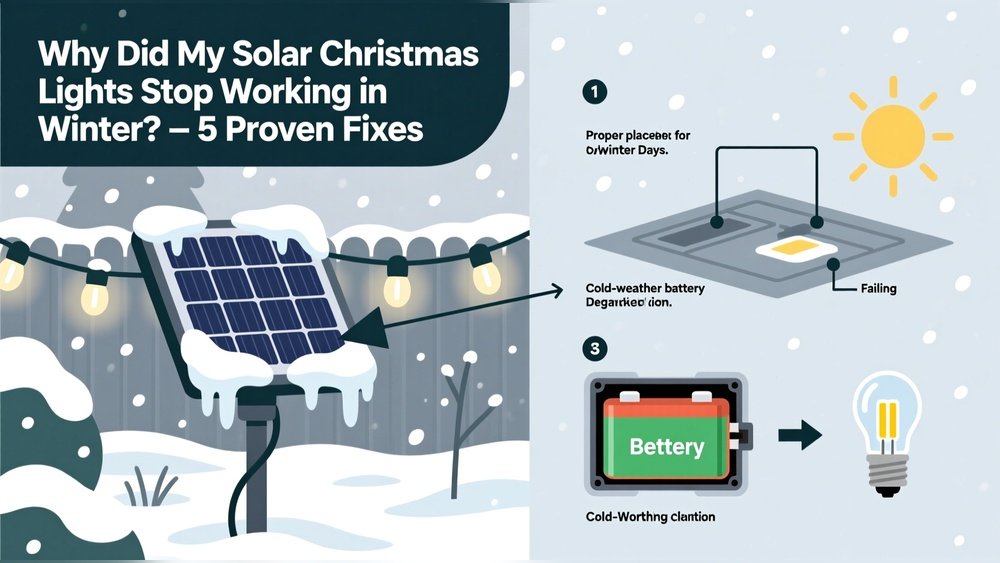
Solar lights depend heavily on their batteries to store energy. In winter, battery performance often drops. This causes the lights to stop working or shine dimly. Understanding battery problems helps fix or prevent these issues. Two main factors affect battery life in cold weather.
Effect Of Cold Temperatures
Cold weather slows down chemical reactions inside batteries. This reduces their ability to hold and release energy. Batteries produce less power in freezing temperatures. The lights may turn off sooner or not reach full brightness. Extreme cold can even stop batteries from working completely.
Battery Aging And Capacity Loss
Batteries lose their strength over time. Each charge and discharge cycle makes them weaker. Older batteries hold less energy and fail faster in winter. This is why solar lights work well at first but stop after a few seasons. Replacing old batteries can restore light performance.
Snow And Ice Coverage
Snow and ice can cause serious problems for solar lights during winter. These natural elements cover the solar panels and block sunlight. This stops the panels from collecting energy. Without sunlight, the lights cannot charge. Snow and ice also create moisture, which can harm the lights. Understanding how these factors affect solar lights helps keep them working well.
Blocking Solar Panels
Snow and ice sit on top of solar panels. This stops sunlight from reaching the solar cells. Without sunlight, the panels cannot make electricity. Even a small layer of snow can reduce power greatly. Thick ice makes the problem worse. Solar lights need clear panels to charge during the day. Regularly removing snow and ice keeps the lights bright and working.
Moisture Damage Risks
Snow and ice melt during the day, creating water. Water can seep into the solar light’s parts. Moisture causes corrosion and short circuits inside. This damage can stop the lights from working at all. Poor sealing or cracks let water in easily. Choosing lights with good waterproof ratings helps. Drying and cleaning the lights after snow melts also protects them.

Credit: cgja.org
Dirty Or Obstructed Panels
Solar lights depend on clean panels to work well. Dirt and objects can block sunlight from reaching the panels. This is a common problem during winter. Snow, leaves, and dust often cover the panels. This stops the solar lights from charging fully. It also lowers their brightness and working time.
Accumulated Debris
Leaves, dirt, and snow often build up on solar panels. This layer blocks sunlight from entering the panel. Even a small amount of debris can reduce light absorption. Debris can also trap moisture, causing damage over time. Cleaning the panels regularly helps keep them clear. Clear panels collect more sunlight and work better.
Reduced Energy Absorption
Solar panels need direct sunlight for maximum energy. Dirt and obstructions reduce the light that panels can absorb. Less light means less energy stored in the battery. This causes the lights to dim or stop working early. In winter, shorter days and weak sunlight add to the problem. Keeping panels clean helps them absorb more energy and work longer.
Wiring And Component Failures
Solar lights rely on wiring and components to work well. These parts face many challenges in winter. Cold temperatures and moisture can cause damage. This damage may stop lights from working. Understanding these issues helps you fix or avoid problems.
Cold-related Wear
Cold weather makes wires and parts stiff. This stiffness can cause cracks in the plastic or rubber. Cracks let air and water inside. Metal parts may shrink and break loose. These breaks stop electricity from flowing. Lights may flicker or turn off completely.
Water Ingress Problems
Water can get inside the light housing during rain or snow. Once inside, water can freeze and expand. This expansion damages wires and connections. Wet parts can also cause short circuits. Short circuits prevent the light from working. Proper sealing is key to keep water out.
Maintenance Tips For Winter
Solar lights need extra care during winter to work well. Cold weather and less sunlight can make them stop working. Simple maintenance can keep your lights bright and lasting longer. Follow these easy tips to help your solar lights shine all winter.
Regular Cleaning
Dirt and snow block sunlight from reaching solar panels. Clean the panels often with a soft cloth. Remove snow and ice gently to avoid damage. Clear panels collect more sunlight and charge better. Clean lights stay brighter and last longer.
Battery Replacement
Batteries lose power faster in cold weather. Check your solar light batteries before winter starts. Replace old or weak batteries with new ones made for cold climates. Fresh batteries hold charge better and keep lights glowing. Change batteries every year for best results.
Proper Placement
Place solar lights where they get the most sun. Avoid shaded areas or places blocked by snow. Position lights facing south for maximum sunlight. Move lights if trees or buildings block the sun. Proper placement ensures stronger light and longer use.
Credit: www.alibaba.com
Frequently Asked Questions
Why Do Solar Lights Fail In Winter Months?
Solar lights fail in winter due to reduced sunlight hours. Shorter days and weak sunlight limit battery charging. Cold temperatures also reduce battery efficiency. Snow or ice can block solar panels, preventing energy absorption. These factors combined cause solar lights to stop working.
How Does Cold Weather Affect Solar Light Batteries?
Cold weather slows down battery chemical reactions. This reduces the battery’s ability to hold a charge. In low temperatures, batteries drain faster and recharge slower. As a result, solar lights have shorter operating times or may fail completely.
Can Snow And Ice Block Solar Light Panels?
Yes, snow and ice can cover solar panels. This blocks sunlight from reaching the panels. Without sunlight, the panels cannot generate power. Regular cleaning of panels in winter ensures proper solar charging and light operation.
Do Shorter Daylight Hours Impact Solar Light Performance?
Shorter daylight hours limit the time solar panels collect energy. Less sunlight means batteries receive less charge. This causes solar lights to run out of power quickly. Hence, lights may turn off earlier or not work at all.
Conclusion
Solar lights need sunlight to work well. Winter days are shorter and darker. Cold weather can also affect batteries inside. Snow or dirt on panels blocks sunlight too. Keep panels clean and batteries warm for best use. Choosing lights made for cold helps a lot.
Small steps can keep your solar lights shining bright. Don’t let winter stop your outdoor glow.